 Rocksday
Amber vs Libyan Desert Glass
How to tell them apart
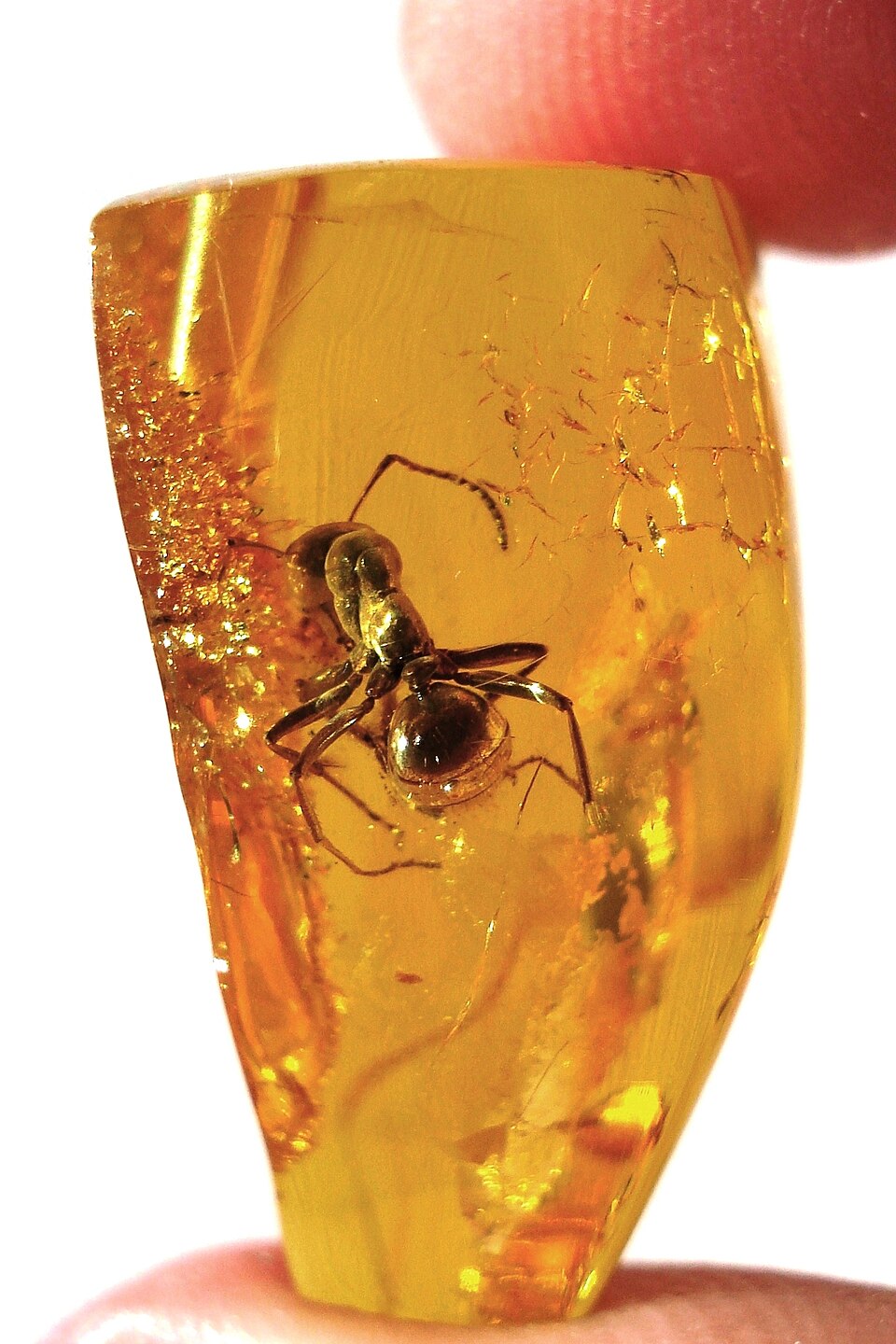
Fossilized tree resin, millions of years old. It sometimes traps insects, feathers and plants in perfect detail.
Photo: Anders L. Damgaard - www.amber-inclusions.dk - Baltic-amber-beetle, CC BY-SA 4.0
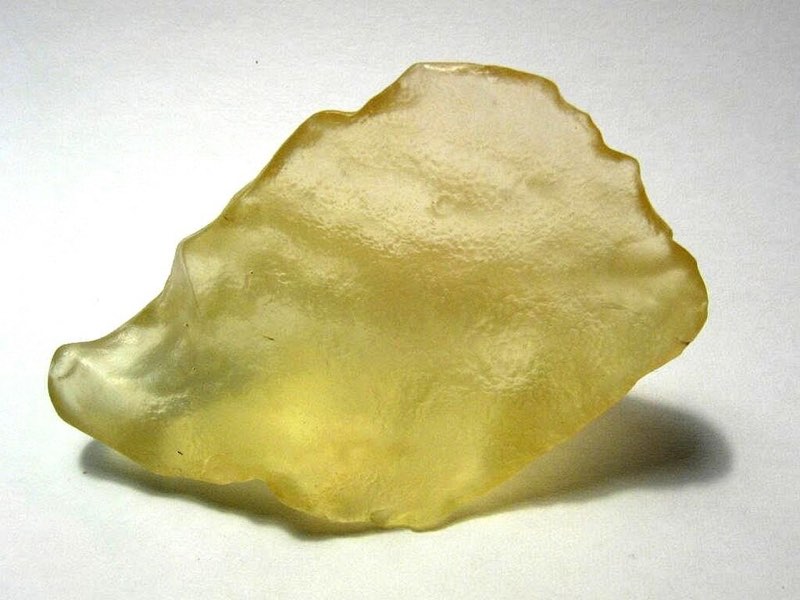
Pale yellow, almost pure silica glass scattered across the Sahara, likely formed by a meteorite impact or airburst about 29 million years ago.
Photo: H. Raab (User:Vesta), CC BY-SA 3.0
Quick tests
- Scratch glass: Libyan Desert Glass scratches glass (Mohs 6); Amber can't (Mohs 2–2.5).
- Heft: Libyan Desert Glass feels noticeably heavier for its size (specific gravity 2.2 vs 1.05–1.1).
Key differences
- Amber is far softer and lighter.
Side by side
| Property | Amber | Libyan Desert Glass |
|---|---|---|
| Type | Mineraloid | Mineraloid |
| Mohs hardness | 2–2.5 | 6 |
| Luster | Resinous | Vitreous |
| Streak | White | — |
| Colors | Yellow, Orange, Brown | Yellow, Clear |
| Crystal system / structure | Amorphous (organic) | Amorphous (silica glass) |
| Specific gravity | 1.05–1.1 | 2.2 |
| Found in | Baltic Sea coast; Dominican Republic | Great Sand Sea, Egypt and Libya |
Properties that are the same for both are grayed out.
How to identify amber
- Warm to the touch and very light.
- Floats in salty water.
- Smells like pine when rubbed hard or heated.
- May contain bubbles or ancient insects.
Structure: Amorphous (organic)
Full Amber guide →How to identify libyan desert glass
- Pale yellow to clear, sandblasted surface.
- Bubbles and dark wispy inclusions.
- Lighter than quartz.
Structure: Amorphous (silica glass)
Full Libyan Desert Glass guide →More comparisons
Could you tell them apart from a blurry close-up?
Play today's Rocksday