 Rocksday
Amber vs Copal
How to tell them apart
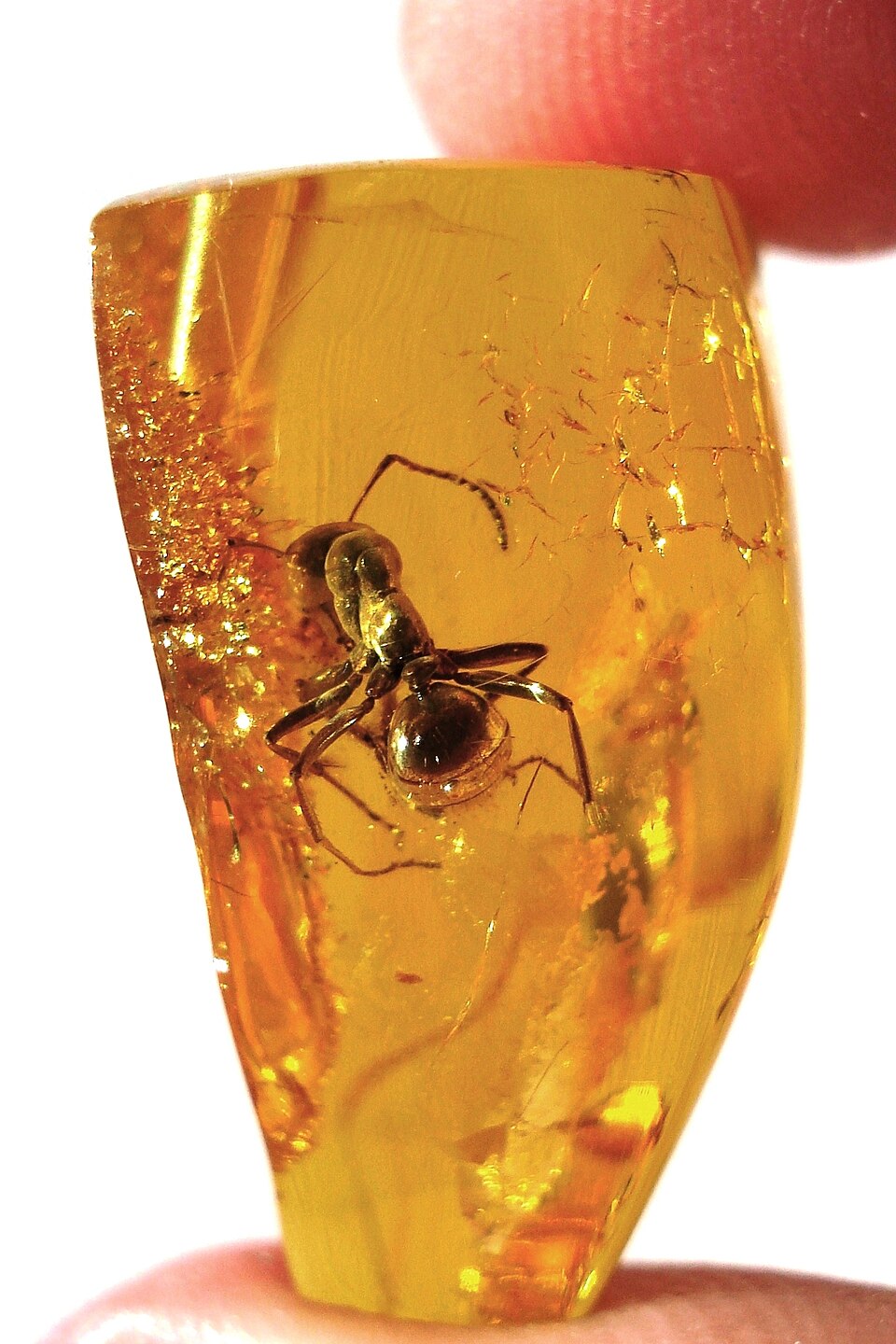
Fossilized tree resin, millions of years old. It sometimes traps insects, feathers and plants in perfect detail.
Photo: Anders L. Damgaard - www.amber-inclusions.dk - Baltic-amber-beetle, CC BY-SA 4.0
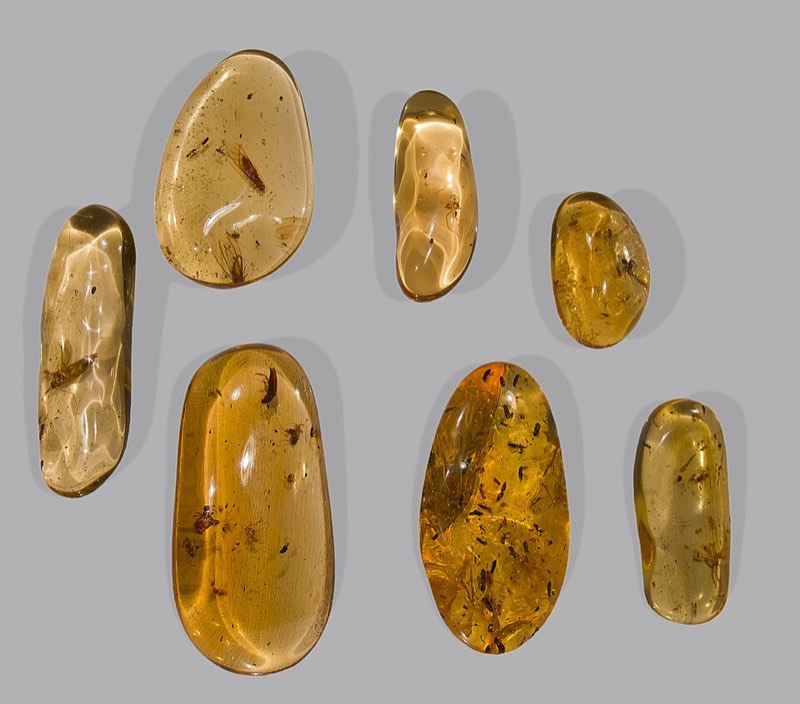
Hardened tree resin that is younger than amber and not fully fossilized. It's often sold as amber.
Photo: Didier Descouens, CC BY-SA 4.0
Key differences
- Amber resists acetone and is older and harder.
Side by side
| Property | Amber | Copal |
|---|---|---|
| Type | Mineraloid | Mineraloid |
| Mohs hardness | 2–2.5 | 1.5–2 |
| Luster | Resinous | Resinous |
| Streak | White | — |
| Colors | Yellow, Orange, Brown | Yellow, Orange, Clear |
| Crystal system / structure | Amorphous (organic) | Amorphous (organic resin) |
| Specific gravity | 1.05–1.1 | 1.03–1.08 |
| Found in | Baltic Sea coast; Dominican Republic | Colombia; Madagascar |
Properties that are the same for both are grayed out.
How to identify amber
- Warm to the touch and very light.
- Floats in salty water.
- Smells like pine when rubbed hard or heated.
- May contain bubbles or ancient insects.
Structure: Amorphous (organic)
Full Amber guide →How to identify copal
- Pale yellow, very light and soft.
- Gets sticky with a drop of acetone (amber doesn't).
- Often crazed with fine surface cracks.
Structure: Amorphous (organic resin)
Full Copal guide →More comparisons
Could you tell them apart from a blurry close-up?
Play today's Rocksday