 Rocksday
Albite vs Anorthite
To tell Albite from Anorthite: Albite is the sodium feldspar and is a bit lighter.
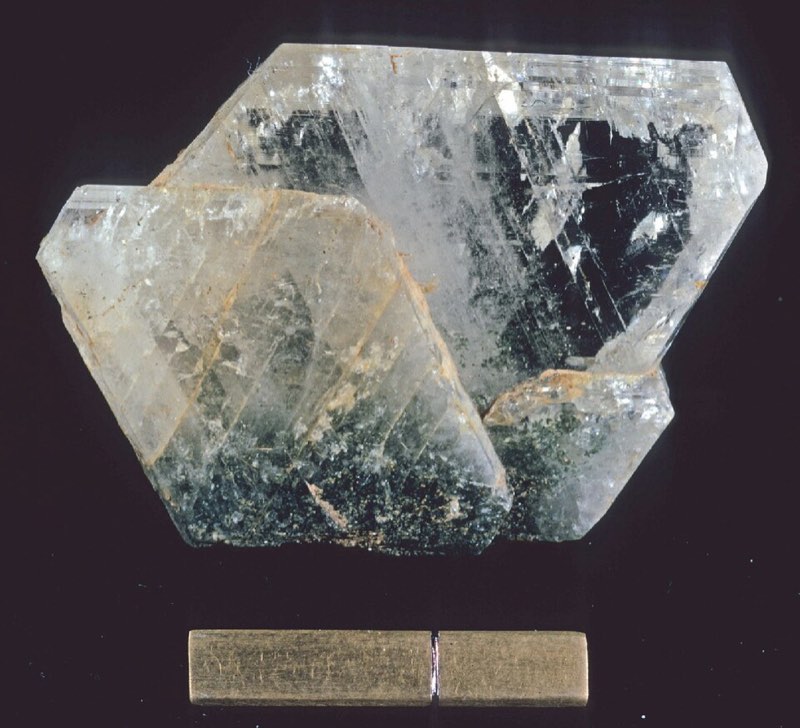
The sodium-rich plagioclase feldspar. In pegmatites it forms white platy crystals that often host tourmaline and other gems.
Photo: Rock Currier, CC BY 3.0
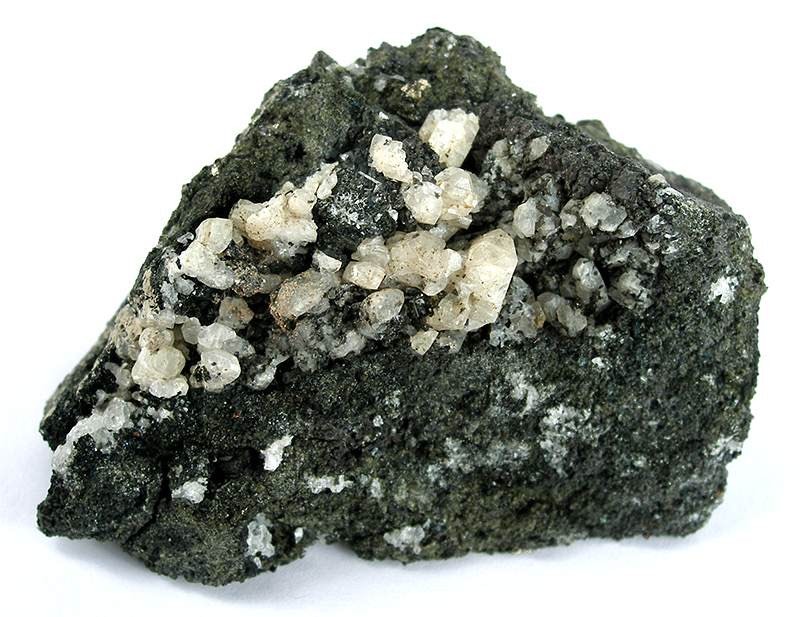
The calcium end of the plagioclase feldspars. Albite is the sodium end; labradorite sits in between.
Photo: Robert M. Lavinsky, CC BY-SA 3.0
Key differences
- Albite is the sodium feldspar and is a bit lighter.
Side by side
| Property | Albite | Anorthite |
|---|---|---|
| Type | Mineral | Mineral |
| Mohs hardness | 6–6.5 | 6–6.5 |
| Luster | Vitreous to pearly | Vitreous |
| Streak | White | White |
| Colors | White, Clear | White, Gray |
| Crystal system | Triclinic | Triclinic |
| Specific gravity | 2.6–2.65 | 2.74–2.76 |
| Formula | NaAlSi₃O₈ | CaAl₂Si₂O₈ |
| Found in | Minas Gerais, Brazil; Gilgit-Baltistan, Pakistan | Miyake-jima, Japan; Mount Vesuvius, Italy |
Properties that are the same for both are grayed out.
How to identify albite
- White, platy or bladed crystals.
- Fine parallel striations on cleavage faces.
- Hardness about 6.
Crystal system: Triclinic
Full Albite guide →How to identify anorthite
- White to gray blocky crystals with feldspar cleavage.
- Hardness about 6.
- Heavier than albite. Often in calcium-rich volcanic rocks or anorthosite.
Crystal system: Triclinic
Full Anorthite guide →More comparisons
Frequently asked questions
What is the difference between albite and anorthite?
Albite is a mineral (NaAlSi₃O₈) with a Mohs hardness of 6–6.5 and a vitreous to pearly luster, usually white or colorless. Anorthite is a mineral (CaAl₂Si₂O₈) with a Mohs hardness of 6–6.5 and a vitreous luster, usually white or gray.
How can you tell albite from anorthite?
Albite is the sodium feldspar and is a bit lighter.
Could you tell them apart from a blurry close-up?
Play today's Rocksday