 Rocksday
Scorodite
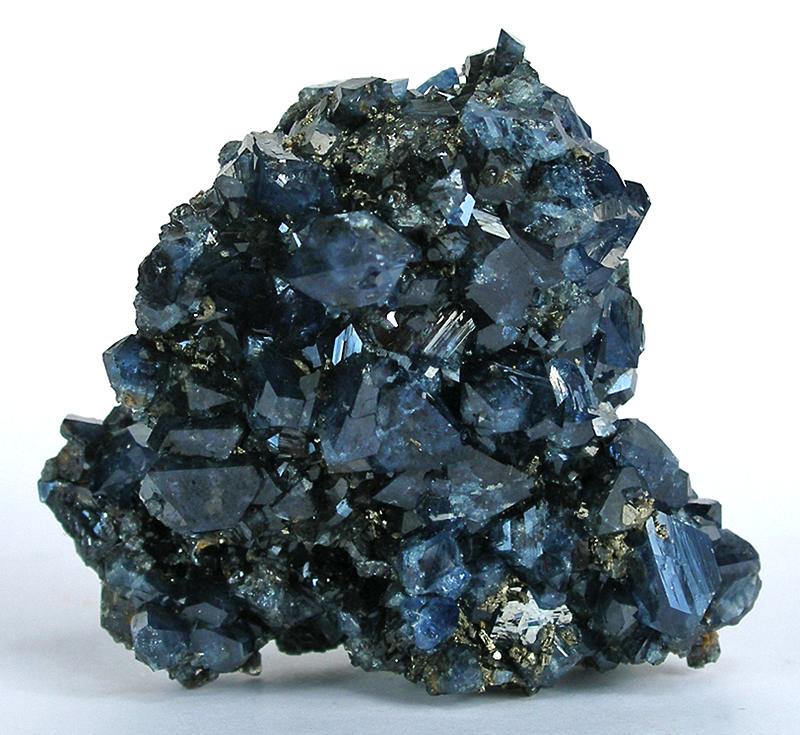
Scorodite is a mineral (FeAsO₄·2H₂O) with a Mohs hardness of 3.5–4 and a vitreous to earthy luster, usually green, blue, gray or brown.
A hydrated iron arsenate that forms pale green or blue crystals where arsenic ores weather.
How to identify scorodite
- Pale green, blue-green or gray pyramidal crystals or crusts.
- Hardness about 3.5–4.
- On or near arsenopyrite or other arsenic minerals.
Often confused with
Where it's found
- Tsumeb, Namibia
- Ojuela mine, Mapimí, Mexico
- Cornwall, England
Uses
Collector specimens. A sign of arsenic in the rock.
Rock tumbling
Not suitable for tumbling. Contains arsenic.
Did you know?
The name comes from the Greek for garlic, because some specimens smell of it when heated.
Scorodite FAQ
What is scorodite?
Scorodite is a mineral (FeAsO₄·2H₂O) with a Mohs hardness of 3.5–4 and a vitreous to earthy luster, usually green, blue, gray or brown. A hydrated iron arsenate that forms pale green or blue crystals where arsenic ores weather.
How do you identify scorodite?
Pale green, blue-green or gray pyramidal crystals or crusts. Hardness about 3.5–4. On or near arsenopyrite or other arsenic minerals.
How hard is scorodite?
Scorodite has a Mohs hardness of 3.5–4. A steel knife scratches Scorodite, but a fingernail doesn't.
Where is scorodite found?
Notable localities include Tsumeb, Namibia; Ojuela mine, Mapimí, Mexico; and Cornwall, England.
What is scorodite used for?
Collector specimens. A sign of arsenic in the rock.
Can you tumble scorodite?
It isn't a good choice for a rock tumbler. Contains arsenic.
What is scorodite often confused with?
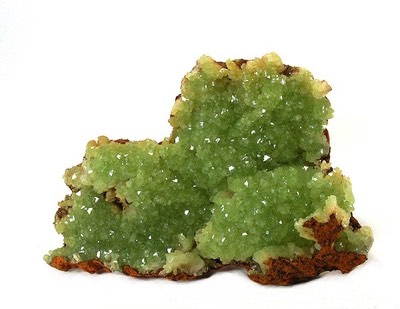
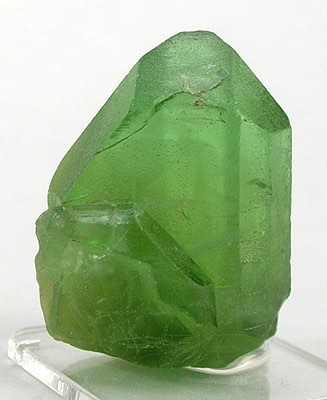
Scorodite is most often confused with Adamite and Olivine. Adamite is usually brighter yellow-green and is a zinc arsenate. Olivine is much harder and does not form on weathered ore.
Think you could spot it from a blurry close-up?
Play today's Rocksday