 Rocksday
Nummulite
Nummulite is a fossil with a Mohs hardness of about 3 and a dull luster, usually white, gray or yellow.
Coin-shaped shells of giant foraminifera, common in Eocene and Miocene limestones around the Mediterranean.
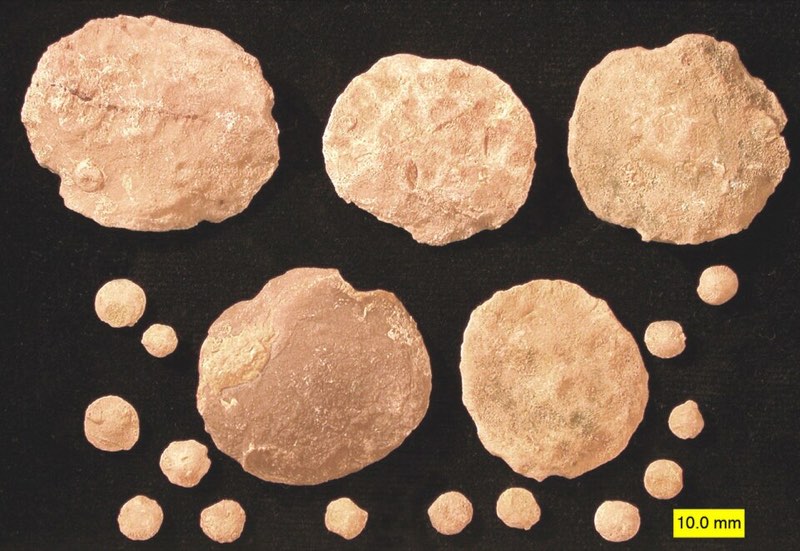
How to identify nummulite
- Flat disks from about a centimeter to a few centimeters across.
- A broken one shows a tight spiral of tiny chambers.
- The limestone fizzes in acid.
Often confused with
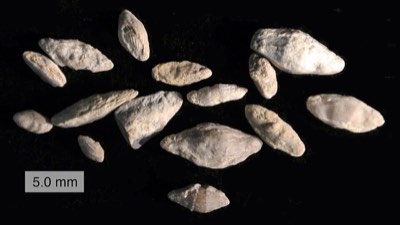 Fusulinid
s are rice-grain shaped and are older, from the late Paleozoic.
Compare side by side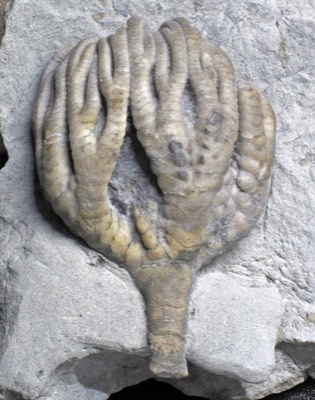 Crinoid
 stem pieces are small discs, often with a center hole, not a spiral coin.
Compare side by side
Where it's found
- Egypt
- Mediterranean region
- Pakistan
Uses
Dating Eocene rocks. The limestone itself is a building stone.
Rock tumbling
Not suitable for tumbling.
Did you know?
Egyptian pyramid limestone is full of them. Ancient writers compared the disks to petrified lentils.
Nummulite FAQ
What is nummulite?
Nummulite is a fossil with a Mohs hardness of about 3 and a dull luster, usually white, gray or yellow. Coin-shaped shells of giant foraminifera, common in Eocene and Miocene limestones around the Mediterranean.
How do you identify nummulite?
Flat disks from about a centimeter to a few centimeters across. A broken one shows a tight spiral of tiny chambers. The limestone fizzes in acid.
How hard is nummulite?
Nummulite has a Mohs hardness of about 3. A steel knife scratches Nummulite, but a fingernail doesn't.
Where is nummulite found?
Notable localities include Egypt, Mediterranean region and Pakistan.
What is nummulite used for?
Dating Eocene rocks. The limestone itself is a building stone.
Can you tumble nummulite?
It isn't a good choice for a rock tumbler.
What is nummulite often confused with?
Nummulite is most often confused with Fusulinid and Crinoid. Fusulinids are rice-grain shaped and are older, from the late Paleozoic. Crinoid stem pieces are small discs, often with a center hole, not a spiral coin.
Think you could spot it from a blurry close-up?
Play today's Rocksday