 Rocksday
Fusulinid
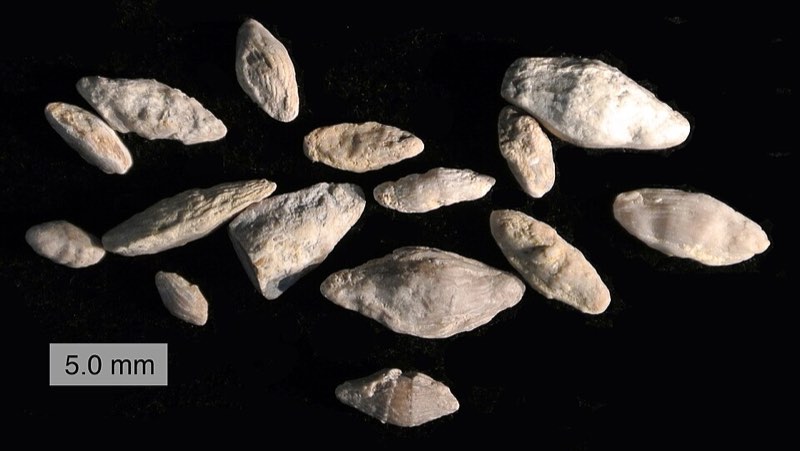
Fusulinid is a fossil with a Mohs hardness of about 3–4 and a dull luster, usually gray, white or brown.
Wheat- or rice-shaped shells of late Paleozoic foraminifera. A limestone can be made of almost nothing else.
How to identify fusulinid
- Tiny grains the size of rice or wheat in limestone.
- A broken grain shows coiled chambers.
- The rock fizzes in acid.
Often confused with
Where it's found
- Kansas
- Texas
- Russia
- China
Uses
Dating Pennsylvanian and Permian limestones.
Rock tumbling
Can be tumbled with care. The limestone can take a polish; loose grains will not.
Did you know?
In Kansas and Texas, some limestones look grainy because they are packed with fusulinids.
Fusulinid FAQ
What is fusulinid?
Fusulinid is a fossil with a Mohs hardness of about 3–4 and a dull luster, usually gray, white or brown. Wheat- or rice-shaped shells of late Paleozoic foraminifera. A limestone can be made of almost nothing else.
How do you identify fusulinid?
Tiny grains the size of rice or wheat in limestone. A broken grain shows coiled chambers. The rock fizzes in acid.
How hard is fusulinid?
Fusulinid has a Mohs hardness of about 3–4. A steel knife scratches Fusulinid, but a fingernail doesn't.
Where is fusulinid found?
Notable localities include Kansas, Texas, Russia and China.
What is fusulinid used for?
Dating Pennsylvanian and Permian limestones.
Can you tumble fusulinid?
Yes, with care. The limestone can take a polish; loose grains will not.
What is fusulinid often confused with?
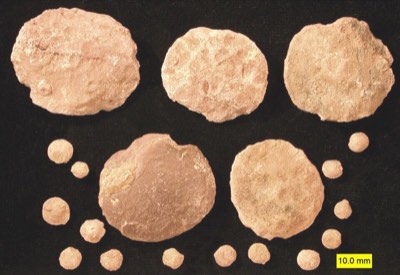
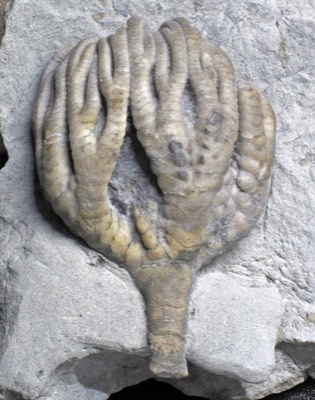
Fusulinid is most often confused with Nummulite and Crinoid. Nummulites are coin-shaped and much younger (Eocene and later). Crinoid bits are round discs or plates, not spindles.
Think you could spot it from a blurry close-up?
Play today's Rocksday