 Rocksday
Hiddenite
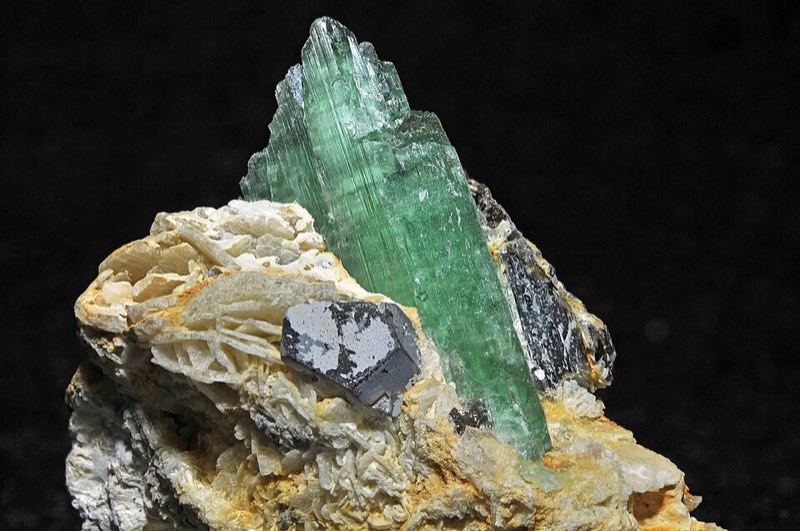
Hiddenite is a mineral (LiAlSi₂O₆) with a Mohs hardness of 6.5–7 and a vitreous luster, usually green or yellow.
Green spodumene. The original North Carolina stones are colored by chromium; pale green spodumene from elsewhere is often sold under the same name.
How to identify hiddenite
- Yellow-green to emerald-green flattened prisms.
- Two cleavages nearly at right angles.
- Hardness about 6.5–7, so a knife blade does not scratch it.
Often confused with
Where it's found
- Alexander County, North Carolina
- Afghanistan
- Minas Gerais, Brazil
- Madagascar
Uses
Gemstones.
Rock tumbling
Not suitable for tumbling. Splits along cleavage.
Did you know?
The first crystals turned up around 1879 near Stony Point in Alexander County, North Carolina.
Hiddenite FAQ
What is hiddenite?
Hiddenite is a mineral (LiAlSi₂O₆) with a Mohs hardness of 6.5–7 and a vitreous luster, usually green or yellow. Green spodumene. The original North Carolina stones are colored by chromium; pale green spodumene from elsewhere is often sold under the same name.
How do you identify hiddenite?
Yellow-green to emerald-green flattened prisms. Two cleavages nearly at right angles. Hardness about 6.5–7, so a knife blade does not scratch it.
How hard is hiddenite?
Hiddenite has a Mohs hardness of 6.5–7. Hiddenite scratches glass, and a steel knife can't scratch it.
Where is hiddenite found?
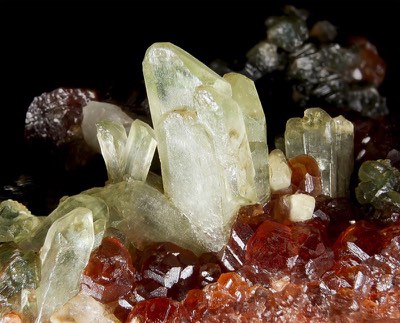
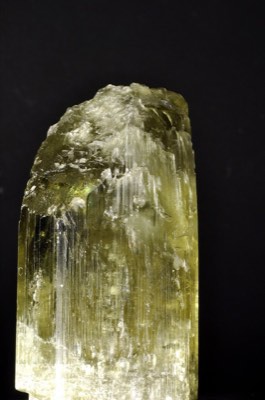
Notable localities include Alexander County, North Carolina; Afghanistan; Minas Gerais, Brazil; and Madagascar.
What is hiddenite used for?
Gemstones.
Can you tumble hiddenite?
It isn't a good choice for a rock tumbler. Splits along cleavage.
What is hiddenite often confused with?
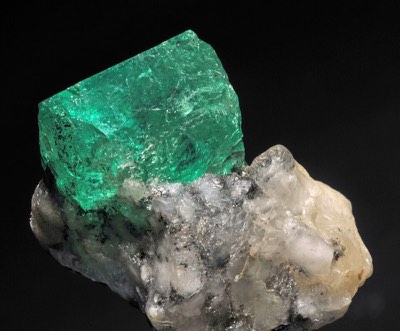
Hiddenite is most often confused with Emerald, Diopside and Spodumene. Emerald is harder, hexagonal and has no cleavage. Chrome diopside is a deeper green and a different pyroxene. This is the green gem form of spodumene.
Think you could spot it from a blurry close-up?
Play today's Rocksday