 Rocksday
Grape Agate
Grape Agate is a mineral (SiO₂) with a Mohs hardness of 6.5–7 and a waxy to vitreous luster, usually purple, green or blue.
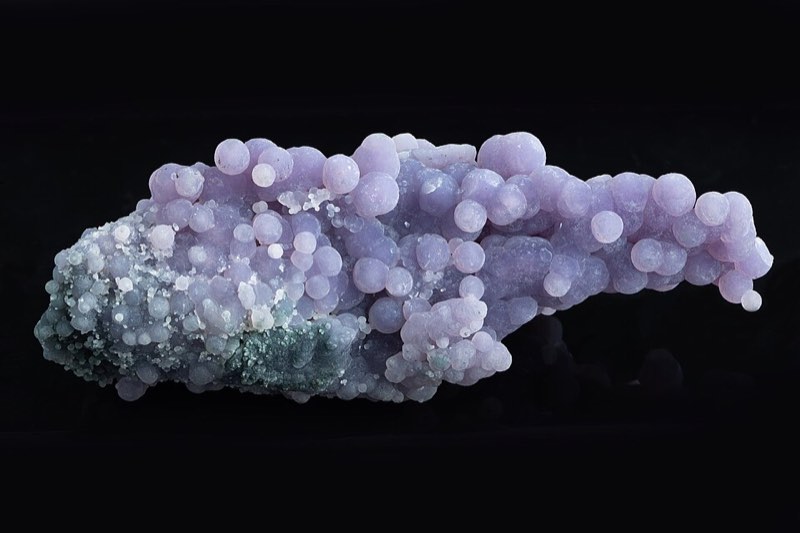
Clusters of tiny purple quartz spheres from West Sulawesi that look like a bunch of grapes.
How to identify grape agate
- Round purple (sometimes green or blue) balls packed together.
- Each ball is smooth quartz, not a pointed crystal.
- Scratches glass.
Often confused with
 Chalcedony
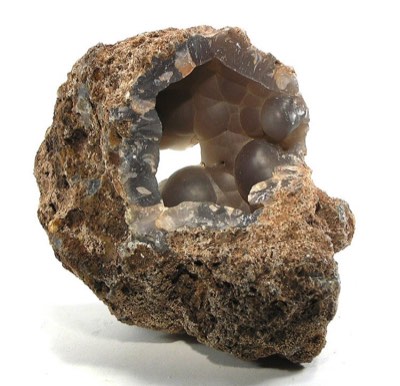
Ordinary chalcedony is a smooth crust, not a cluster of separate balls.
Compare side by side
Where it's found
- West Sulawesi, Indonesia
Uses
Collector specimens and cabochons.
Rock tumbling
Can be tumbled with care. The spheres knock off if the piece is loosely grown.
Did you know?
It reached the world market only in the mid-2010s, after a find in West Sulawesi around 2014.
Grape Agate FAQ
What is grape agate?
Grape Agate is a mineral (SiO₂) with a Mohs hardness of 6.5–7 and a waxy to vitreous luster, usually purple, green or blue. Clusters of tiny purple quartz spheres from West Sulawesi that look like a bunch of grapes.
How do you identify grape agate?
Round purple (sometimes green or blue) balls packed together. Each ball is smooth quartz, not a pointed crystal. Scratches glass.
How hard is grape agate?
Grape Agate has a Mohs hardness of 6.5–7. Grape Agate scratches glass, and a steel knife can't scratch it.
Where is grape agate found?
Notable localities include West Sulawesi, Indonesia.
What is grape agate used for?
Collector specimens and cabochons.
Can you tumble grape agate?
Yes, with care. The spheres knock off if the piece is loosely grown.
What is grape agate often confused with?
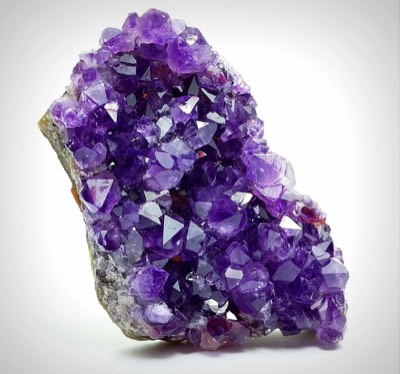
Grape Agate is most often confused with Amethyst and Chalcedony. Amethyst grows as pointed crystals, not spheres. Ordinary chalcedony is a smooth crust, not a cluster of separate balls.
Think you could spot it from a blurry close-up?
Play today's Rocksday