 Rocksday
Eudialyte
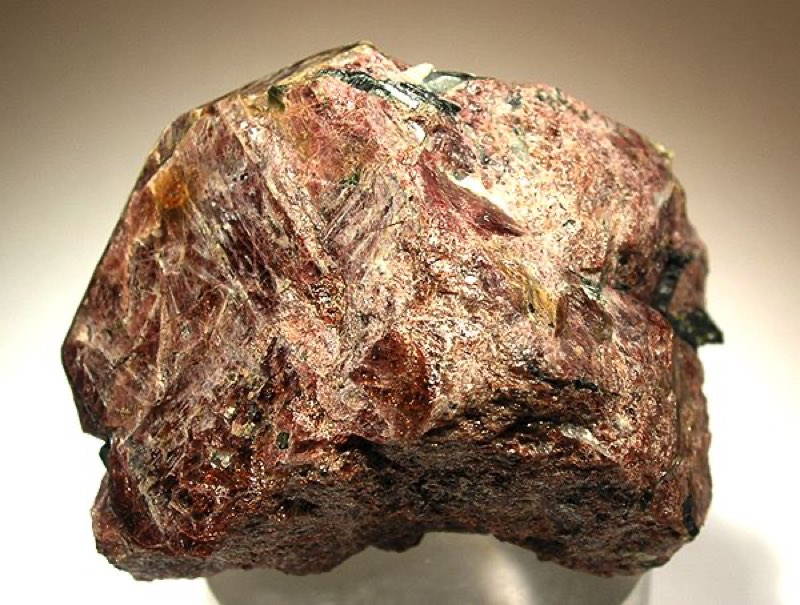
Eudialyte is a mineral with a Mohs hardness of 5–5.5 and a vitreous luster, usually red, pink or brown.
A complex sodium-zirconium silicate, usually raspberry red, from nepheline syenites.
How to identify eudialyte
- Raspberry-red masses or blocky crystals in a pale syenite.
- Hardness about 5–5.5 — a knife scratches it.
- Not as heavy as garnet.
Often confused with
 Rhodonite
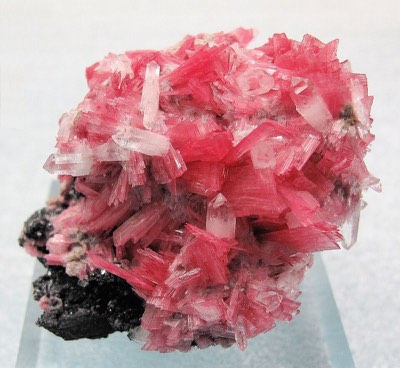
 is usually pink with black veins and is a manganese silicate.
Compare side by side
Where it's found
- Khibiny, Kola Peninsula, Russia
- Ilímaussaq, Greenland
- Mont Saint-Hilaire, Quebec
- Kipawa, Quebec
Uses
Minor zirconium ore and collector specimens.
Rock tumbling
Not suitable for tumbling.
Did you know?
The name means 'easy to dissolve' — unlike many silicates, it breaks down in acids.
Eudialyte FAQ
What is eudialyte?
Eudialyte is a mineral with a Mohs hardness of 5–5.5 and a vitreous luster, usually red, pink or brown. A complex sodium-zirconium silicate, usually raspberry red, from nepheline syenites.
How do you identify eudialyte?
Raspberry-red masses or blocky crystals in a pale syenite. Hardness about 5–5.5 — a knife scratches it. Not as heavy as garnet.
How hard is eudialyte?
Eudialyte has a Mohs hardness of 5–5.5. A steel knife scratches Eudialyte, but a fingernail doesn't.
Where is eudialyte found?
Notable localities include Khibiny, Kola Peninsula, Russia; Ilímaussaq, Greenland; Mont Saint-Hilaire, Quebec; and Kipawa, Quebec.
What is eudialyte used for?
Minor zirconium ore and collector specimens.
Can you tumble eudialyte?
It isn't a good choice for a rock tumbler.
What is eudialyte often confused with?
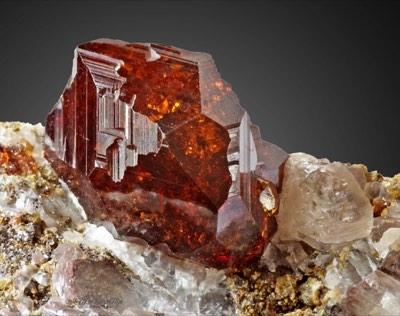
Eudialyte is most often confused with Garnet and Rhodonite. Garnet is harder (about 7) and heavier. Rhodonite is usually pink with black veins and is a manganese silicate.
Think you could spot it from a blurry close-up?
Play today's Rocksday