 Rocksday
Brookite
Brookite is a mineral (TiO₂) with a Mohs hardness of 5.5–6 and an adamantine luster, usually brown, black or red.
The orthorhombic form of TiO₂, typically thin brown or black plates.
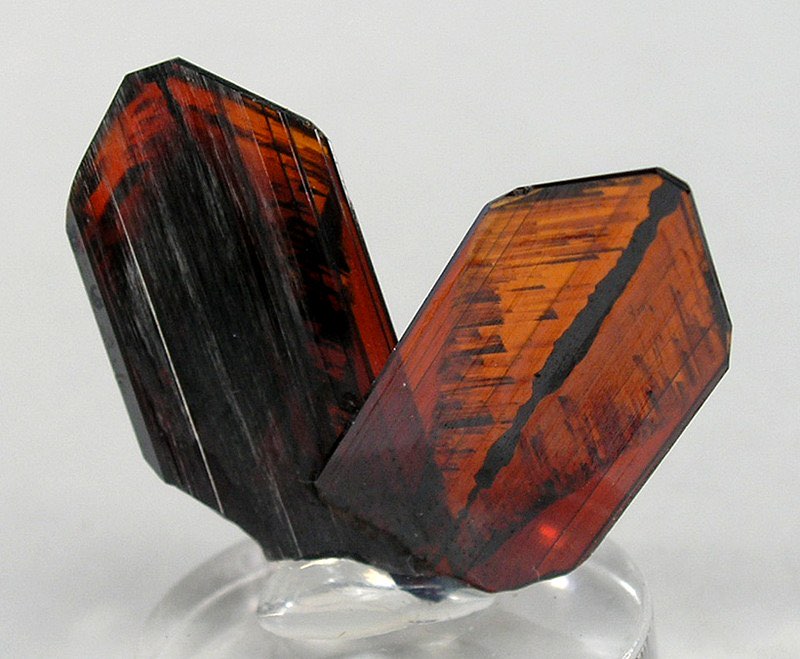
How to identify brookite
- Flat, wafer-like brown to black crystals.
- Strong shine and a white to pale streak.
- Hardness about 5.5–6.
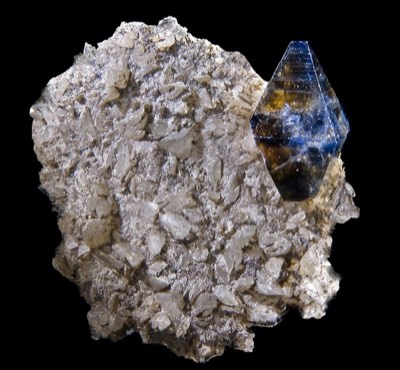
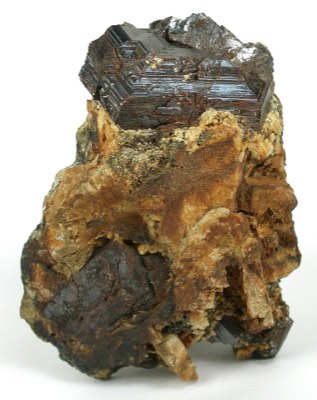
Often confused with
Where it's found
- Magnet Cove, Arkansas
- Alps
- Pakistan
- Wales
Uses
Collector specimens.
Rock tumbling
Not suitable for tumbling.
Did you know?
Magnet Cove, Arkansas, is a classic place for brookite plates.
Brookite FAQ
What is brookite?
Brookite is a mineral (TiO₂) with a Mohs hardness of 5.5–6 and an adamantine luster, usually brown, black or red. The orthorhombic form of TiO₂, typically thin brown or black plates.
How do you identify brookite?
Flat, wafer-like brown to black crystals. Strong shine and a white to pale streak. Hardness about 5.5–6.
How hard is brookite?
Brookite has a Mohs hardness of 5.5–6. Brookite scratches glass, and a steel knife can't scratch it.
Where is brookite found?
Notable localities include Magnet Cove, Arkansas; Alps; Pakistan; and Wales.
What is brookite used for?
Collector specimens.
Can you tumble brookite?
It isn't a good choice for a rock tumbler.
What is brookite often confused with?
Brookite is most often confused with Anatase and Rutile. Anatase forms steep pyramids rather than plates. Rutile is usually needles or striated prisms and is slightly harder.
Think you could spot it from a blurry close-up?
Play today's Rocksday