 Rocksday
Axinite
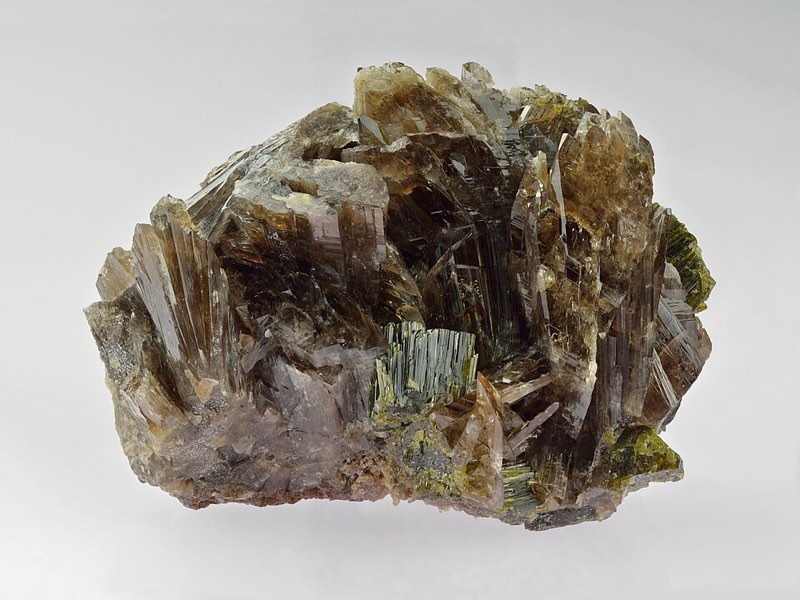
Axinite is a mineral with a Mohs hardness of 6.5–7 and a vitreous luster, usually brown, purple or gray.
A borosilicate that forms sharp, clove-brown wedges. The name comes from the axe-like shape.
How to identify axinite
- Thin wedge or axe-head crystals, usually brown with a violet tint.
- Hardness about 6.5–7.
- Strongly glassy.
Often confused with
Where it's found
- Bourg d'Oisans, France
- Dalnegorsk, Russia
- New Jersey
- Tasmania
Uses
Collector specimens.
Rock tumbling
Can be tumbled with care.
Did you know?
Greek axine means axe — the crystals look like thin axe heads.
Axinite FAQ
What is axinite?
Axinite is a mineral with a Mohs hardness of 6.5–7 and a vitreous luster, usually brown, purple or gray. A borosilicate that forms sharp, clove-brown wedges. The name comes from the axe-like shape.
How do you identify axinite?
Thin wedge or axe-head crystals, usually brown with a violet tint. Hardness about 6.5–7. Strongly glassy.
How hard is axinite?
Axinite has a Mohs hardness of 6.5–7. Axinite scratches glass, and a steel knife can't scratch it.
Where is axinite found?
Notable localities include Bourg d'Oisans, France; Dalnegorsk, Russia; New Jersey; and Tasmania.
What is axinite used for?
Collector specimens.
Can you tumble axinite?
Yes, with care.
What is axinite often confused with?
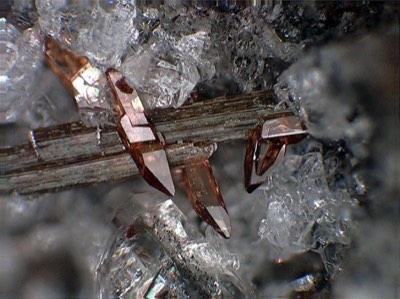
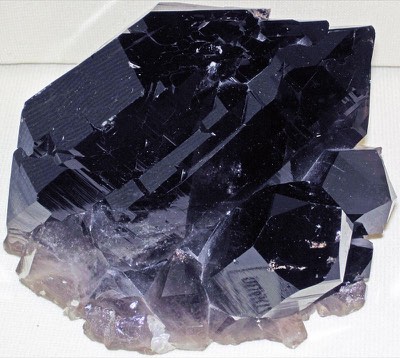
Axinite is most often confused with Titanite and Smoky Quartz. Titanite wedges are often honey-colored and softer (about 5–5.5). Smoky quartz has no wedge habit and no cleavage.
Think you could spot it from a blurry close-up?
Play today's Rocksday