 Rocksday
Astrophyllite
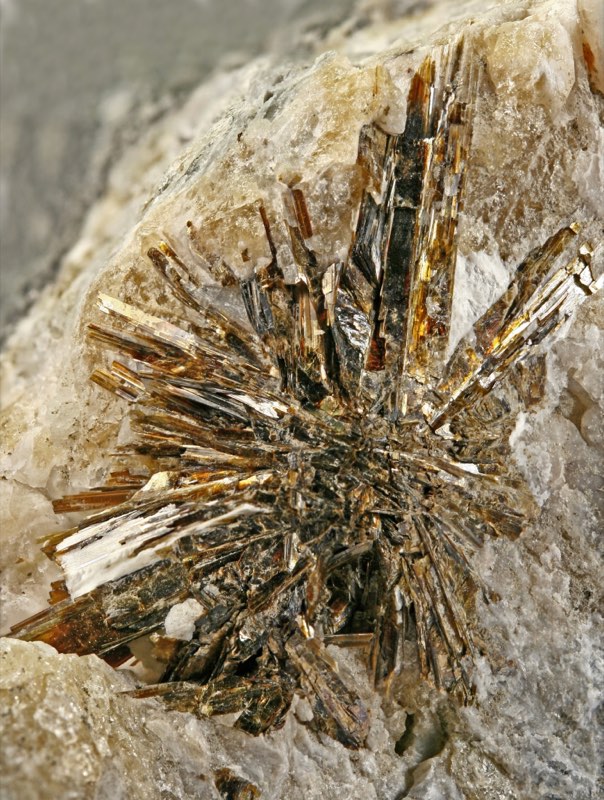
Astrophyllite is a mineral with a Mohs hardness of 3 and a submetallic to pearly luster, usually brown, golden or yellow.
A titanium silicate that grows as bronze, star-like sprays of flat blades.
How to identify astrophyllite
- Golden-brown blades in starbursts.
- A copper coin scratches it.
- Blades are brittle, not elastic like mica.
Often confused with
Where it's found
- Khibiny, Kola Peninsula, Russia
- Pikes Peak area, Colorado
- Mont Saint-Hilaire, Quebec
Uses
Collector specimens.
Rock tumbling
Not suitable for tumbling.
Did you know?
The name means 'star leaf,' from the sprays.
Astrophyllite FAQ
What is astrophyllite?
Astrophyllite is a mineral with a Mohs hardness of 3 and a submetallic to pearly luster, usually brown, golden or yellow. A titanium silicate that grows as bronze, star-like sprays of flat blades.
How do you identify astrophyllite?
Golden-brown blades in starbursts. A copper coin scratches it. Blades are brittle, not elastic like mica.
How hard is astrophyllite?
Astrophyllite has a Mohs hardness of 3. A steel knife scratches Astrophyllite, but a fingernail doesn't.
Where is astrophyllite found?
Notable localities include Khibiny, Kola Peninsula, Russia; Pikes Peak area, Colorado; and Mont Saint-Hilaire, Quebec.
What is astrophyllite used for?
Collector specimens.
Can you tumble astrophyllite?
It isn't a good choice for a rock tumbler.
What is astrophyllite often confused with?
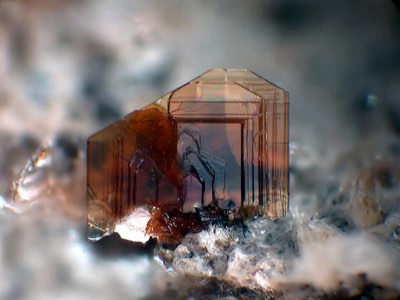
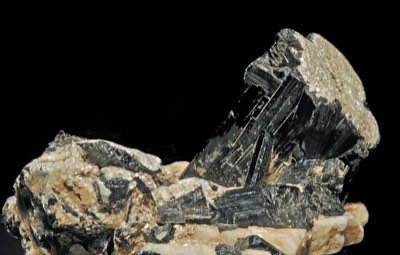
Astrophyllite is most often confused with Biotite and Black Tourmaline. Biotite sheets bend and spring back; astrophyllite blades snap. Schorl forms hard prisms, not soft bronze stars.
Think you could spot it from a blurry close-up?
Play today's Rocksday