 Rocksday
Achondrite
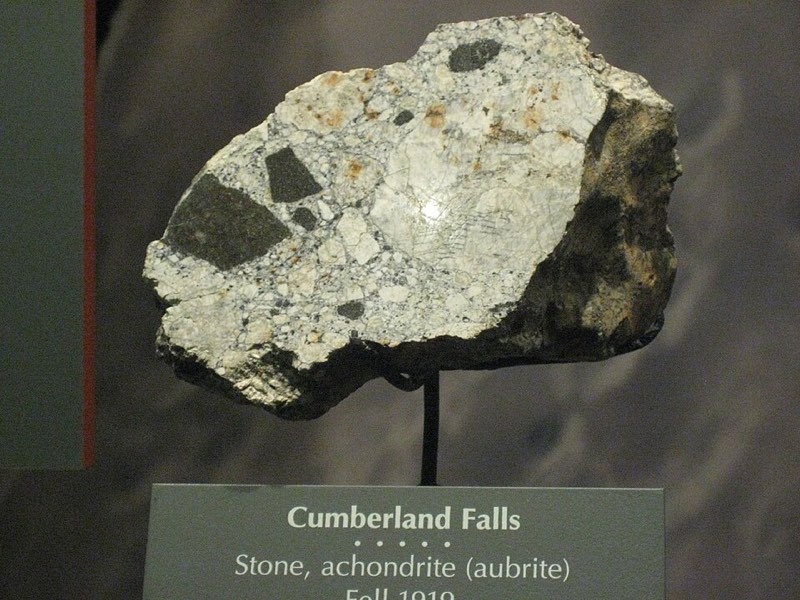
Achondrite is an igneous rock with a Mohs hardness of about 6–7 and a dull luster, usually gray, white or black.
A stony meteorite from a melted parent body, so it has no chondrules. The common ones, eucrites, look like a fine basalt and many are thought to come from the asteroid Vesta.
How to identify achondrite
- Fine gray crystalline rock, sometimes with a thin black fusion crust.
- No round chondrules.
- Heavier than a pumice, lighter than an iron. A magnet may tug only weakly, if metal grains are present.
Often confused with
 Iron Meteorite
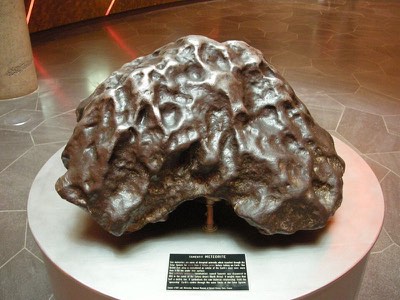
Iron meteorites are metal all the way through and strongly magnetic.
Compare side by side
Where it's found
- Millbillillie, Australia
- Camel Donga, Australia
- Stannern, Czech Republic
- Johnstown, Colorado
Uses
Scientific samples and collector specimens.
Rock tumbling
Not suitable for tumbling.
Did you know?
Eucrites, howardites and diogenites are grouped as HED meteorites and are widely linked to Vesta.
Achondrite FAQ
What is achondrite?
Achondrite is an igneous rock with a Mohs hardness of about 6–7 and a dull luster, usually gray, white or black. A stony meteorite from a melted parent body, so it has no chondrules. The common ones, eucrites, look like a fine basalt and many are thought to come from the asteroid Vesta.
How do you identify achondrite?
Fine gray crystalline rock, sometimes with a thin black fusion crust. No round chondrules. Heavier than a pumice, lighter than an iron. A magnet may tug only weakly, if metal grains are present.
How hard is achondrite?
Achondrite has a Mohs hardness of about 6–7. Achondrite scratches glass, and a steel knife can't scratch it.
Where is achondrite found?
Notable localities include Millbillillie, Australia; Camel Donga, Australia; Stannern, Czech Republic; and Johnstown, Colorado.
What is achondrite used for?
Scientific samples and collector specimens.
Can you tumble achondrite?
It isn't a good choice for a rock tumbler.
What is achondrite often confused with?
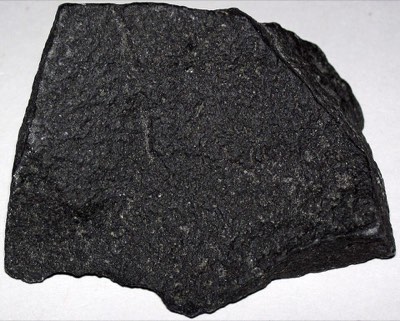
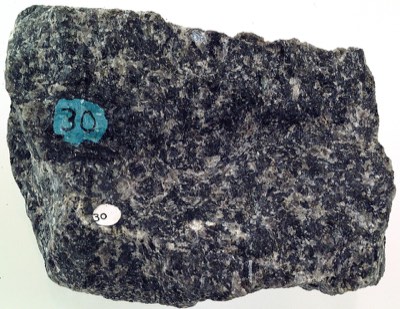
Achondrite is most often confused with Basalt, Gabbro and Iron Meteorite. Earth basalt has no fusion crust and is not a meteorite fall. Gabbro is coarser and is a terrestrial plutonic rock. Iron meteorites are metal all the way through and strongly magnetic.
Think you could spot it from a blurry close-up?
Play today's Rocksday