 Rocksday
Achondrite vs Iron Meteorite
The quickest way to tell Achondrite from Iron Meteorite: Achondrite scratches glass (Mohs 6–7); Iron Meteorite can't (Mohs 4–5).
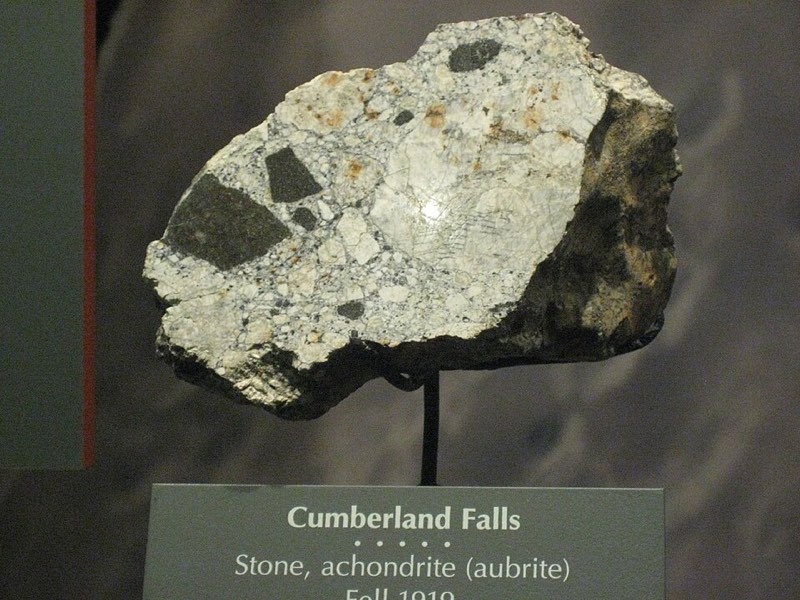
A stony meteorite from a melted parent body, so it has no chondrules. The common ones, eucrites, look like a fine basalt and many are thought to come from the asteroid Vesta.
Photo: Claire H., CC BY-SA 2.0
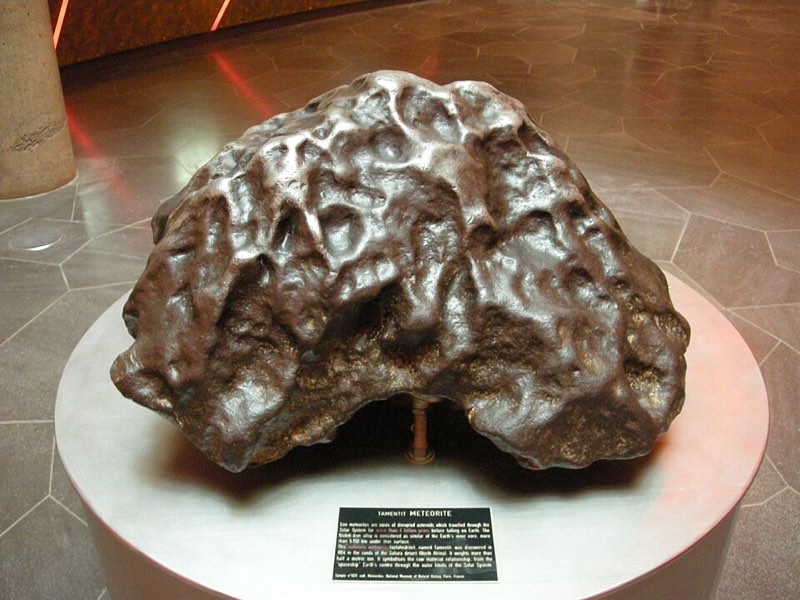
Nickel-iron from the core of a melted asteroid. It is heavy, strongly magnetic, and shows a crisscross pattern on an etched slice.
Photo: Ji-Elle, Public domain
Quick tests
- Scratch glass: Achondrite scratches glass (Mohs 6–7); Iron Meteorite can't (Mohs 4–5).
- Magnet: A magnet sticks to Iron Meteorite but not to Achondrite.
- Streak (rub on unglazed porcelain): Achondrite leaves a white streak; Iron Meteorite leaves gray.
- Heft: Iron Meteorite feels noticeably heavier for its size (specific gravity 7.3–8 vs 2.8–3.3).
- Luster: Iron Meteorite looks metallic; Achondrite doesn't.
Key differences
- Iron meteorites are metal all the way through and strongly magnetic.
Side by side
| Property | Achondrite | Iron Meteorite |
|---|---|---|
| Type | Igneous rock | Igneous rock |
| Mohs hardness | 6–7 | 4–5 |
| Luster | Dull | Metallic |
| Streak | White | Gray |
| Colors | Gray, White, Black | Gray, Silver, Brown |
| Crystal system / structure | Crystalline stony meteorite | Nickel-iron crystals (Widmanstätten pattern) |
| Specific gravity | 2.8–3.3 | 7.3–8 |
| Found in | Millbillillie, Australia; Camel Donga, Australia | Canyon Diablo, Arizona; Gibeon, Namibia |
Properties that are the same for both are grayed out.
How to identify achondrite
- Fine gray crystalline rock, sometimes with a thin black fusion crust.
- No round chondrules.
- Heavier than a pumice, lighter than an iron. A magnet may tug only weakly, if metal grains are present.
Structure: Crystalline stony meteorite
Full Achondrite guide →How to identify iron meteorite
- Very heavy for its size, and a magnet sticks hard.
- Thumbprint dimples (regmaglypts) or a rusty brown crust.
- No cubes. A gray streak, not the black streak of magnetite.
- A polished and etched slice shows interlocking bands.
Structure: Nickel-iron crystals (Widmanstätten pattern)
Full Iron Meteorite guide →More comparisons
Frequently asked questions
What is the difference between achondrite and iron meteorite?
Achondrite is an igneous rock with a Mohs hardness of about 6–7 and a dull luster, usually gray, white or black. Iron Meteorite is an igneous rock with a Mohs hardness of about 4–5 and a metallic luster, usually gray, silvery or brown.
How can you tell achondrite from iron meteorite?
Achondrite scratches glass (Mohs 6–7); Iron Meteorite can't (Mohs 4–5). A magnet sticks to Iron Meteorite but not to Achondrite. Achondrite leaves a white streak; Iron Meteorite leaves gray. Iron Meteorite feels noticeably heavier for its size (specific gravity 7.3–8 vs 2.8–3.3). Iron Meteorite looks metallic; Achondrite doesn't. Iron meteorites are metal all the way through and strongly magnetic.
Could you tell them apart from a blurry close-up?
Play today's Rocksday