 Rocksday
Travertine vs Tufa
How to tell them apart
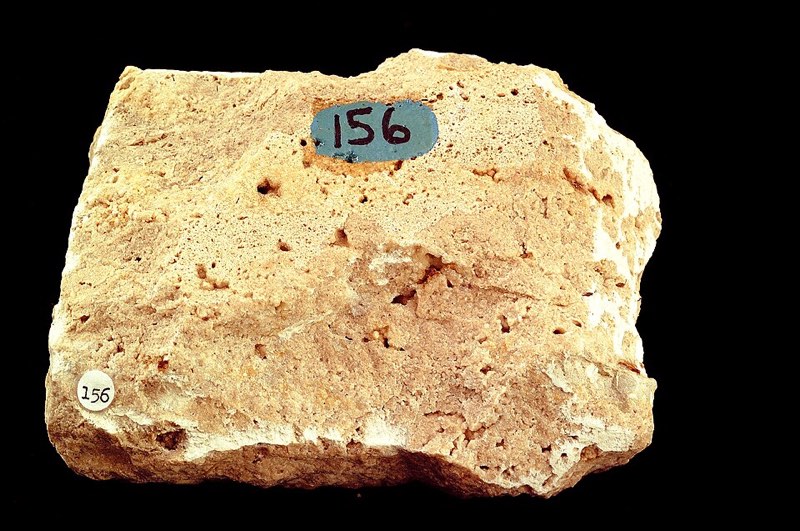
Banded limestone deposited by hot springs, full of small holes.
Photo: Nessa Eull, CC0
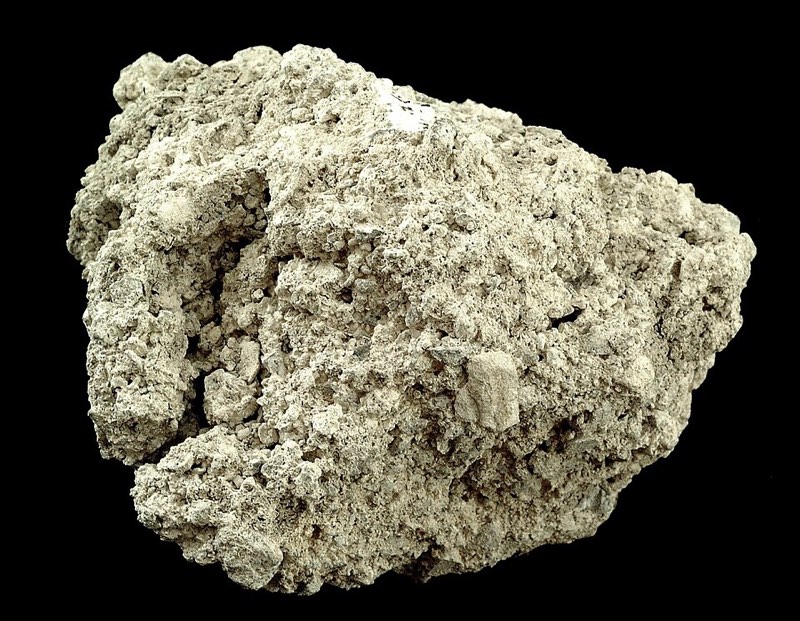
Spongy limestone that precipitates from cool, mineral-rich springs and lakes.
Photo: Darla Sondrol, CC0
Quick tests
- Heft: Travertine feels noticeably heavier for its size (specific gravity 2.4–2.7 vs 1.5–2.2).
Key differences
- Tufa is spongier and forms in cool water.
- Travertine is denser and banded.
Side by side
| Property | Travertine | Tufa |
|---|---|---|
| Type | Sedimentary rock | Sedimentary rock |
| Mohs hardness | 3–4 | 2–3 |
| Luster | Dull to waxy | Dull |
| Colors | White, Yellow, Brown, Orange | White, Gray, Brown |
| Crystal system / structure | Banded, porous calcite | Porous, spongy calcite |
| Specific gravity | 2.4–2.7 | 1.5–2.2 |
| Found in | Tivoli, Italy; Mammoth Hot Springs, Yellowstone | Mono Lake, California; Pyramid Lake, Nevada |
Properties that are the same for both are grayed out.
How to identify travertine
- Cream to tan with wavy bands.
- Small elongated holes.
- Fizzes in acid.
Structure: Banded, porous calcite
Full Travertine guide →How to identify tufa
- Very porous and light, like a sponge.
- Often coats plant stems and moss.
- Fizzes in acid.
Structure: Porous, spongy calcite
Full Tufa guide →More comparisons
Could you tell them apart from a blurry close-up?
Play today's Rocksday