 Rocksday
Pumice vs Tufa
How to tell them apart
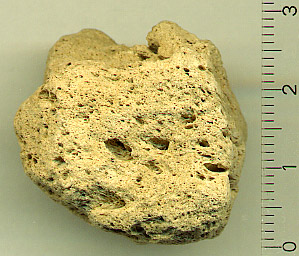
Volcanic glass so full of gas bubbles that it floats on water. It forms in explosive, gas-rich eruptions.
Photo: User MPF on en.wikipedia, CC BY-SA 3.0
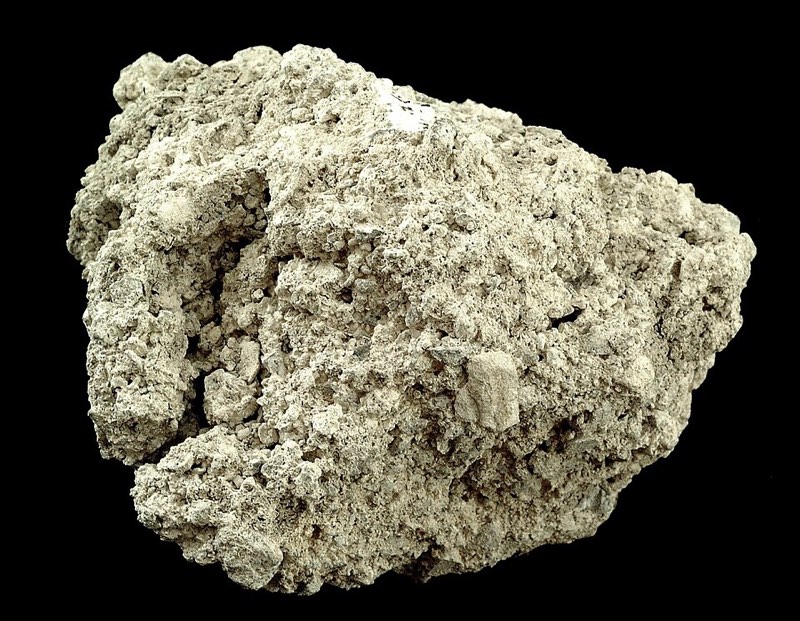
Spongy limestone that precipitates from cool, mineral-rich springs and lakes.
Photo: Darla Sondrol, CC0
Quick tests
- Hardness: Pumice is clearly harder: Mohs 5.5–6 versus 2–3.
- Acid (vinegar or dilute HCl): Tufa fizzes; Pumice doesn't.
- Heft: Tufa feels noticeably heavier for its size (specific gravity 1.5–2.2 vs 0.25–0.9).
Key differences
- Pumice is volcanic glass and doesn't fizz.
Side by side
| Property | Pumice | Tufa |
|---|---|---|
| Type | Igneous rock | Sedimentary rock |
| Mohs hardness | 5.5–6 | 2–3 |
| Luster | Dull to silky | Dull |
| Colors | White, Gray | White, Gray, Brown |
| Crystal system / structure | Vesicular (frothy) | Porous, spongy calcite |
| Specific gravity | 0.25–0.9 | 1.5–2.2 |
| Found in | Lipari, Italy; Santorini, Greece | Mono Lake, California; Pyramid Lake, Nevada |
Properties that are the same for both are grayed out.
How to identify pumice
- Very light — it floats.
- Pale gray or white.
- Full of tiny bubbles and stretched fibers.
- Feels rough and scratchy.
Structure: Vesicular (frothy)
Full Pumice guide →How to identify tufa
- Very porous and light, like a sponge.
- Often coats plant stems and moss.
- Fizzes in acid.
Structure: Porous, spongy calcite
Full Tufa guide →More comparisons
Could you tell them apart from a blurry close-up?
Play today's Rocksday