 Rocksday
Serpentine vs Serpentinite
How to tell them apart
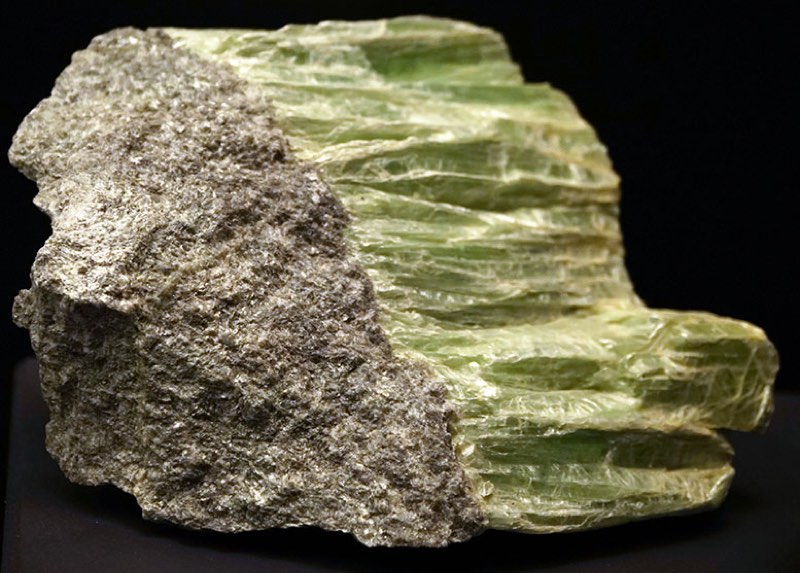
A group of green magnesium silicates formed when mantle rocks react with water. Smooth, greasy and often mottled like snakeskin.
Photo: Tiia Monto, CC BY-SA 3.0
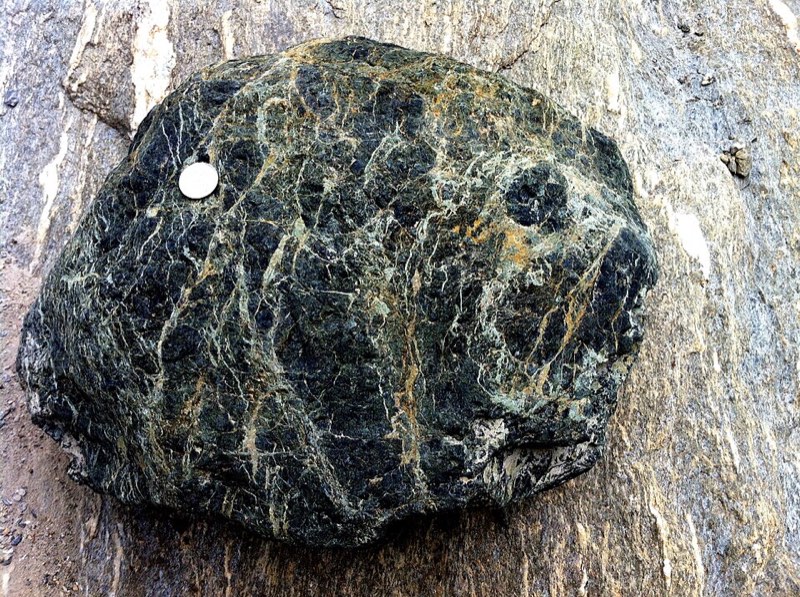
Rock of serpentine minerals, formed when mantle rock reacts with seawater. Slick, green and mottled.
Photo: Gabriel HM, CC BY-SA 4.0
Quick tests
- Texture: Serpentinite is a rock — a mix of grains or minerals; Serpentine is a single mineral.
Key differences
- Serpentine is the mineral; serpentinite is the rock.
Side by side
| Property | Serpentine | Serpentinite |
|---|---|---|
| Type | Mineral | Metamorphic rock |
| Mohs hardness | 2.5–5 | 3–5 |
| Luster | Greasy to waxy | Waxy to greasy |
| Streak | White | — |
| Colors | Green, Yellow, Black | Green, Black |
| Crystal system / structure | Monoclinic | Massive, often sheared |
| Specific gravity | 2.5–2.6 | 2.5–2.8 |
| Formula | Mg₃Si₂O₅(OH)₄ | — |
| Found in | California; Liaoning, China | California Coast Ranges; Newfoundland |
Properties that are the same for both are grayed out.
How to identify serpentine
- Mottled green, often with darker streaks.
- Greasy or waxy feel when polished.
- Usually scratched by a knife.
Crystal system: Monoclinic
Full Serpentine guide →How to identify serpentinite
- Green to black with a waxy, slippery look.
- Polished, scaly surfaces where it was sheared.
- Softer than it looks.
Structure: Massive, often sheared
Full Serpentinite guide →More comparisons
Could you tell them apart from a blurry close-up?
Play today's Rocksday