 Rocksday
Rutilated Quartz vs Rutile
How to tell them apart
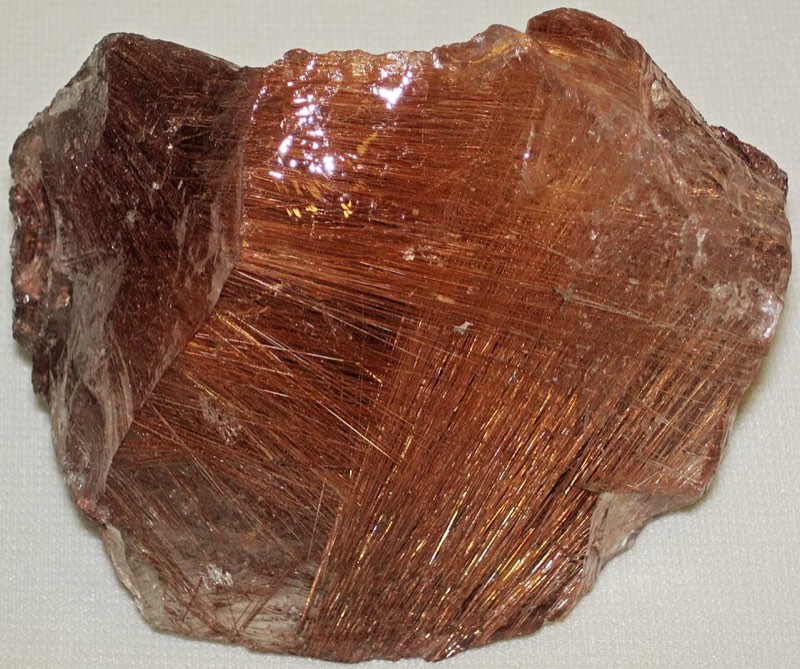
Clear quartz threaded with golden or reddish needles of the mineral rutile.
Photo: James St. John, CC BY 2.0
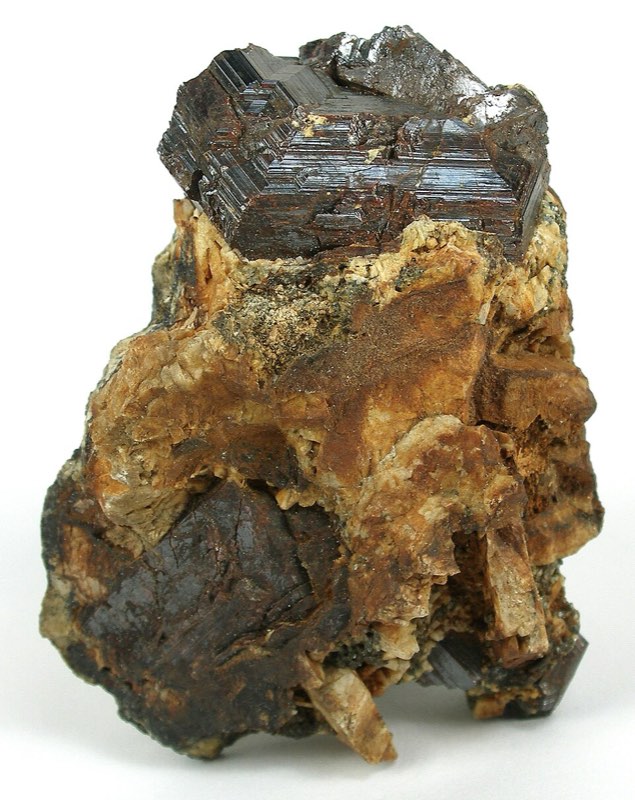
Titanium dioxide, forming red-brown to black striated prisms or golden needles inside quartz.
Photo: Robert M. Lavinsky, CC BY-SA 3.0
Quick tests
- Streak (rub on unglazed porcelain): Rutilated Quartz leaves a white streak; Rutile leaves pale brown.
- Heft: Rutile feels noticeably heavier for its size (specific gravity 4.2–4.3 vs 2.65–2.7).
Key differences
- Rutile alone is opaque and metallic-looking.
Side by side
| Property | Rutilated Quartz | Rutile |
|---|---|---|
| Type | Mineral | Mineral |
| Mohs hardness | 7 | 6–6.5 |
| Luster | Vitreous | Adamantine to submetallic |
| Streak | White | Pale brown |
| Colors | Clear, Gold | Red, Brown, Black, Gold |
| Crystal system | Trigonal | Tetragonal |
| Specific gravity | 2.65–2.7 | 4.2–4.3 |
| Formula | SiO₂ with TiO₂ needles | TiO₂ |
| Found in | Minas Gerais and Bahia, Brazil; Madagascar | Graves Mountain, Georgia; Minas Gerais, Brazil |
Properties that are the same for both are grayed out.
How to identify rutilated quartz
- Clear quartz with fine gold, copper or black needles inside.
- Hardness 7.
- Needles run in straight lines, often criss-crossing.
Crystal system: Trigonal
Full Rutilated Quartz guide →How to identify rutile
- Deep red to black prisms with lengthwise striations.
- Very bright, almost metallic luster.
- Often as golden hair-like needles inside quartz.
Crystal system: Tetragonal
Full Rutile guide →More comparisons
Could you tell them apart from a blurry close-up?
Play today's Rocksday