 Rocksday
Franklinite vs Magnetite
How to tell them apart
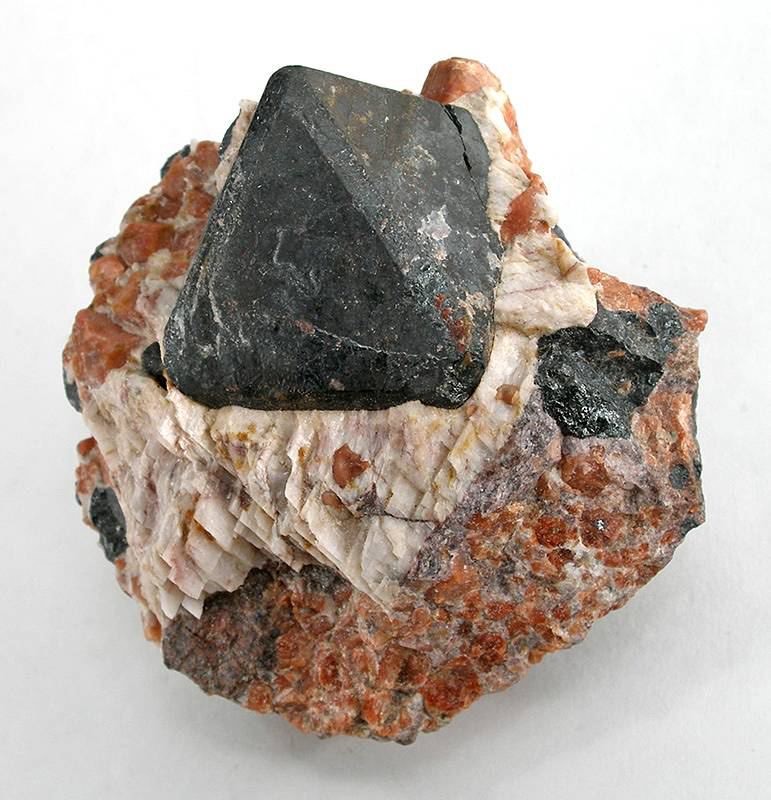
A black zinc iron oxide almost unique to the famous zinc mines of New Jersey.
Photo: Robert M. Lavinsky, CC BY-SA 3.0
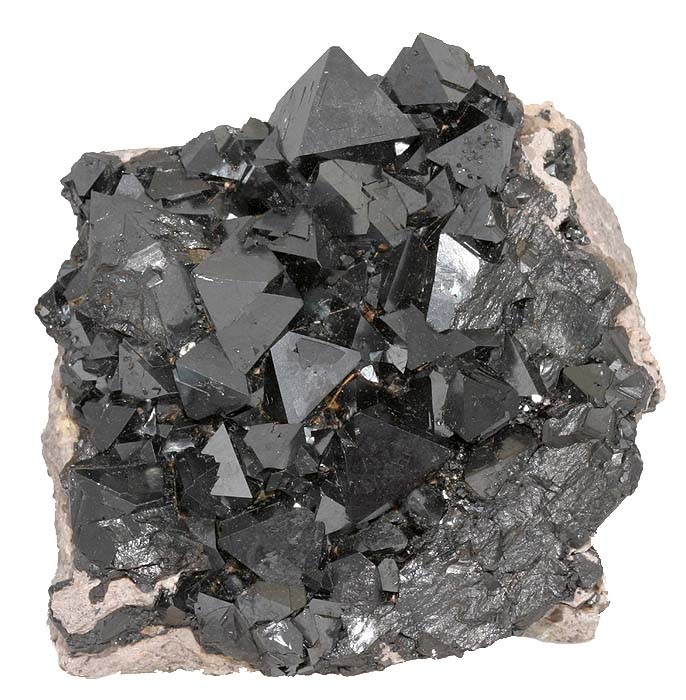
The most magnetic naturally occurring mineral. Black, heavy and often found as eight-sided crystals or as black sand on beaches.
Photo: Robert M. Lavinsky, CC BY-SA 3.0
Quick tests
- Magnet: A magnet sticks to Magnetite but not to Franklinite.
- Streak (rub on unglazed porcelain): Franklinite leaves a reddish brown streak; Magnetite leaves black.
Key differences
- Magnetite is strongly magnetic with a black streak.
Side by side
| Property | Franklinite | Magnetite |
|---|---|---|
| Type | Mineral | Mineral |
| Mohs hardness | 5.5–6 | 5.5–6.5 |
| Luster | Metallic | Metallic |
| Streak | Reddish brown | Black |
| Colors | Black | Black |
| Crystal system | Cubic | Cubic |
| Specific gravity | 5.1–5.2 | 5.1–5.2 |
| Formula | (Zn,Mn,Fe)(Fe,Mn)₂O₄ | Fe₃O₄ |
| Found in | Franklin and Sterling Hill, New Jersey | Kiruna, Sweden; Adirondack Mountains, New York |
Properties that are the same for both are grayed out.
How to identify franklinite
- Black octahedral grains in white calcite.
- Weakly magnetic.
- Reddish-brown streak.
Crystal system: Cubic
Full Franklinite guide →How to identify magnetite
- Strongly attracts a magnet (some pieces are magnets themselves).
- Black streak.
- Heavy, black, metallic.
- Octahedral crystals when well-formed.
Crystal system: Cubic
Full Magnetite guide →More comparisons
Could you tell them apart from a blurry close-up?
Play today's Rocksday