 Rocksday
Chrysotile vs Tiger's Eye
How to tell them apart
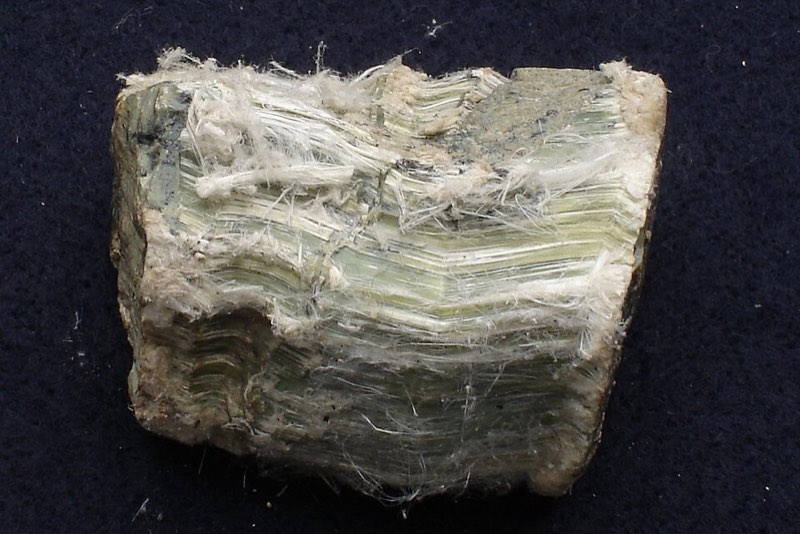
Fibrous serpentine — the most common form of asbestos. Hazardous if its fibers are inhaled.
Photo: Eurico Zimbres, CC BY-SA 2.5
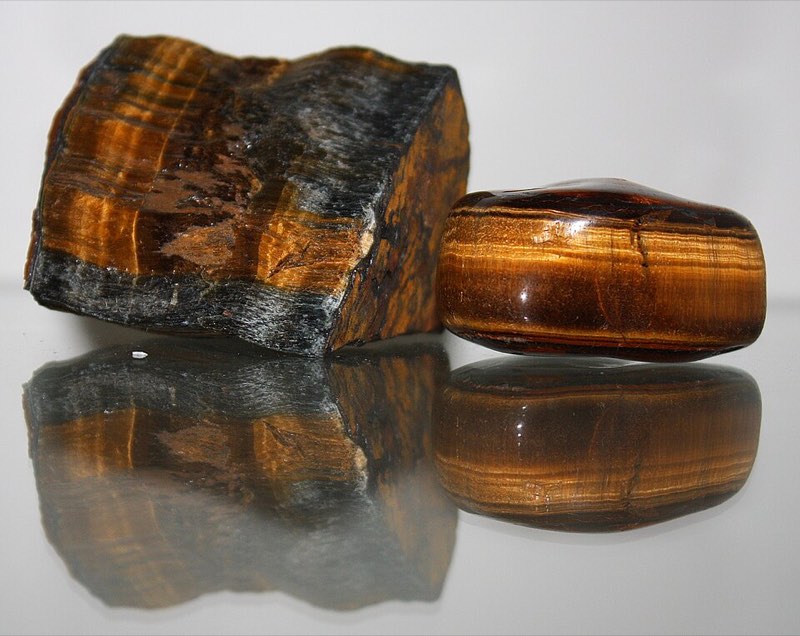
Golden-brown quartz with a silky, shifting band of light (chatoyancy) caused by parallel fibers inside.
Photo: Marek Novotnak, CC BY-SA 4.0
Quick tests
- Scratch glass: Tiger's Eye scratches glass (Mohs 6.5–7); Chrysotile can't (Mohs 2.5–3).
- Streak (rub on unglazed porcelain): Chrysotile leaves a white streak; Tiger's Eye leaves white to brown.
Key differences
- Tiger's eye is hard quartz, not soft fibers.
Side by side
| Property | Chrysotile | Tiger's Eye |
|---|---|---|
| Type | Mineral | Mineral |
| Mohs hardness | 2.5–3 | 6.5–7 |
| Luster | Silky | Silky |
| Streak | White | White to brown |
| Colors | White, Green, Yellow | Gold, Brown, Yellow |
| Crystal system | Monoclinic (fibrous) | Fibrous quartz |
| Specific gravity | 2.5–2.6 | 2.64–2.71 |
| Formula | Mg₃Si₂O₅(OH)₄ | SiO₂ |
| Found in | Thetford Mines, Quebec; Asbest, Russia | Northern Cape, South Africa; Western Australia |
Properties that are the same for both are grayed out.
How to identify chrysotile
- Silky fibers in veins, running across the vein.
- Fibers can be teased apart like thread.
- Inside green serpentine rock.
Crystal system: Monoclinic (fibrous)
Full Chrysotile guide →How to identify tiger's eye
- Gold and brown stripes that shimmer and move as you tilt it.
- Silky luster, especially when polished.
- Hard — scratches glass.
Crystal system: Fibrous quartz
Full Tiger's Eye guide →More comparisons
Could you tell them apart from a blurry close-up?
Play today's Rocksday