 Rocksday
Chrysoprase vs Jadeite
How to tell them apart
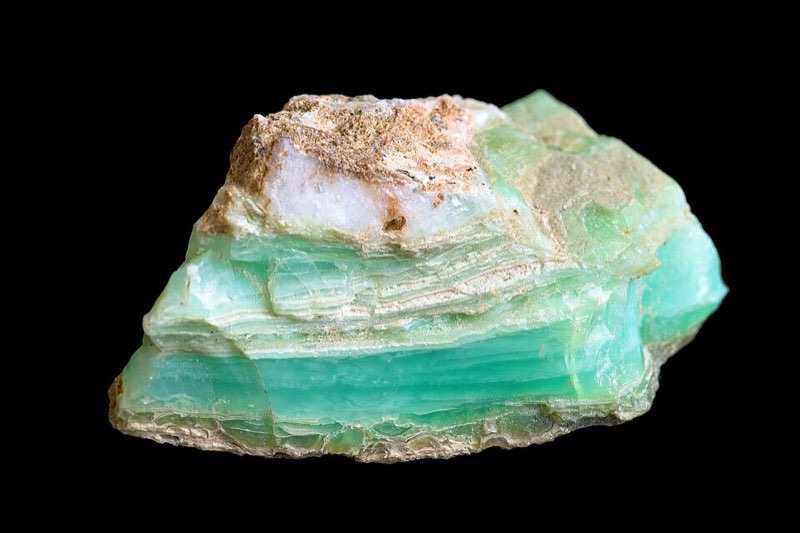
Apple-green chalcedony colored by nickel — the most valuable chalcedony variety.
Photo: Xth-Floor, CC BY-SA 3.0
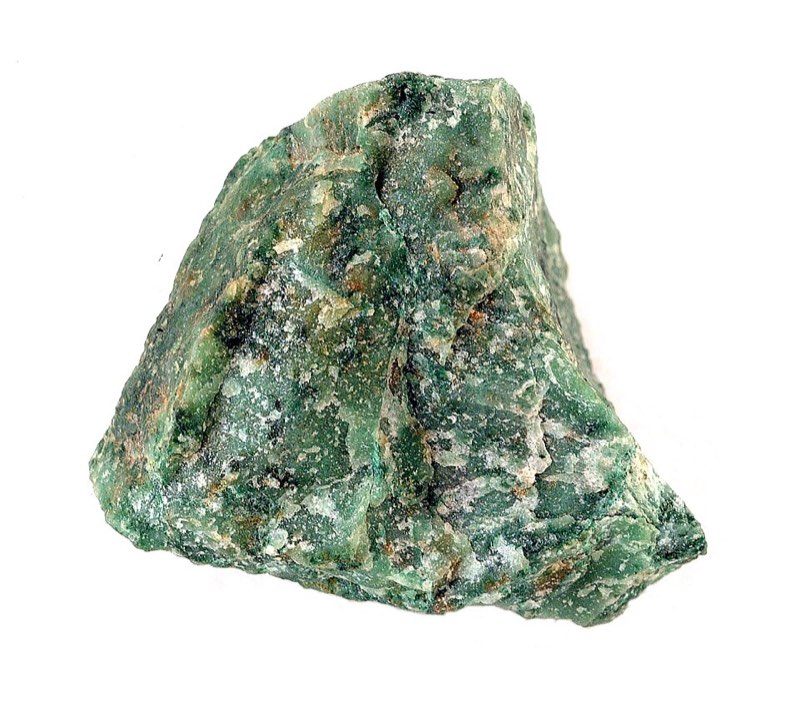
One of the two minerals called jade. Its tightly interlocked crystals make it extremely tough.
Photo: Shannon Heinle, CC0
Key differences
- Jade is tougher and slightly heavier; testing often needs a lab.
- Chrysoprase is lighter and more translucent.
Side by side
| Property | Chrysoprase | Jadeite |
|---|---|---|
| Type | Mineral | Mineral |
| Mohs hardness | 6.5–7 | 6.5–7 |
| Luster | Waxy | Vitreous to greasy |
| Streak | White | White |
| Colors | Green | Green, White, Purple |
| Crystal system | Microcrystalline quartz (chalcedony) | Monoclinic |
| Specific gravity | 2.58–2.64 | 3.24–3.43 |
| Formula | SiO₂ | NaAlSi₂O₆ |
| Found in | Queensland, Australia; Poland | Hpakant, Myanmar; Motagua Valley, Guatemala |
Properties that are the same for both are grayed out.
How to identify chrysoprase
- Bright apple to mint green, translucent.
- Even color with a waxy surface.
- Scratches glass.
Crystal system: Microcrystalline quartz (chalcedony)
Full Chrysoprase guide →How to identify jadeite
- Very tough — hard to chip or break.
- Feels heavy and cold, with a slightly greasy polish.
- Green, white or lavender, often mottled.
Crystal system: Monoclinic
Full Jadeite guide →More comparisons
Could you tell them apart from a blurry close-up?
Play today's Rocksday