 Rocksday
Chalk vs Sepiolite
How to tell them apart
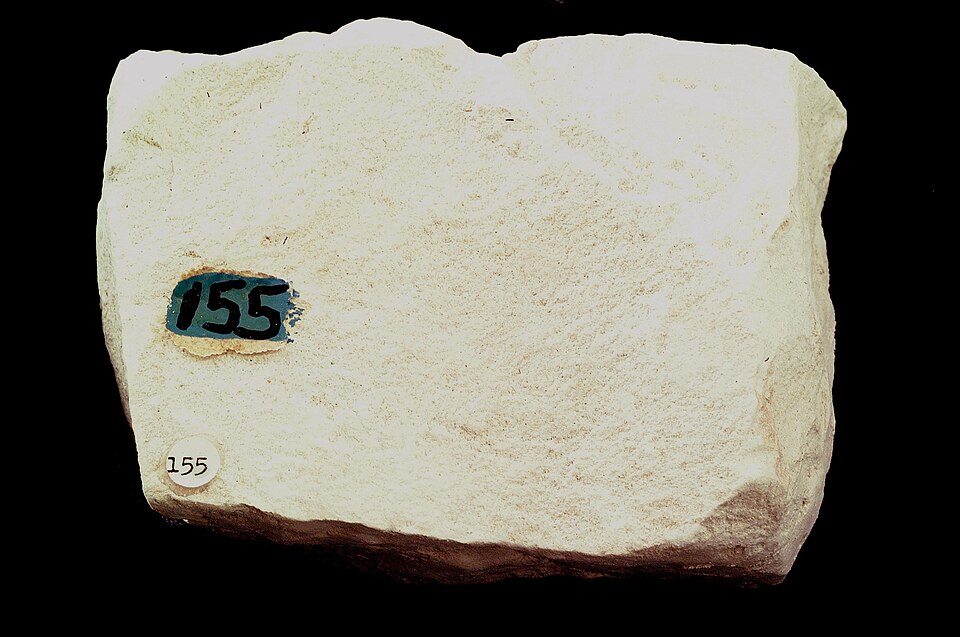
A soft, white limestone made of trillions of microscopic plates shed by ocean algae.
Photo: Nessa Eull, CC0
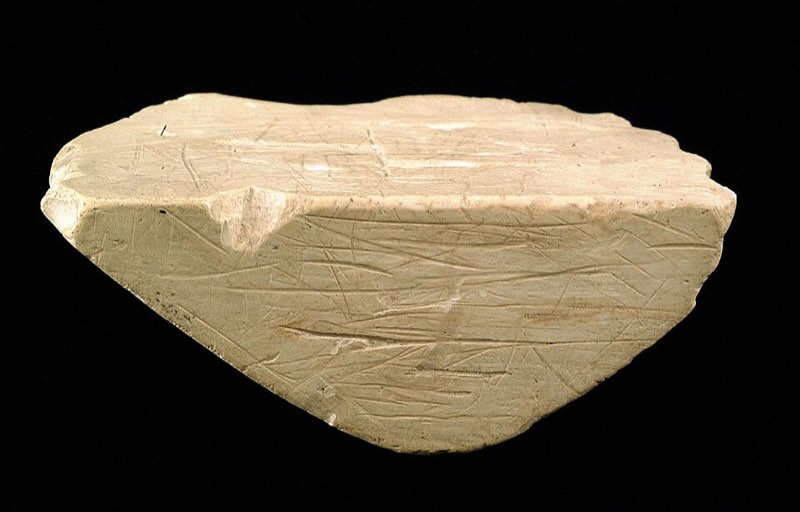
A soft, porous clay mineral that's light enough to float when dry. It's carved into meerschaum pipes.
Photo: Shannon Heinle, CC0
Quick tests
- Acid (vinegar or dilute HCl): Chalk fizzes; Sepiolite doesn't.
- Texture: Chalk is a rock — a mix of grains or minerals; Sepiolite is a single mineral.
Key differences
- Chalk fizzes in acid.
Side by side
| Property | Chalk | Sepiolite |
|---|---|---|
| Type | Sedimentary rock | Mineral |
| Mohs hardness | 2–3 | 2–2.5 |
| Luster | Dull, earthy | Dull to earthy |
| Streak | — | White |
| Colors | White | White, Yellow, Gray |
| Crystal system / structure | Very fine, microfossil-rich | Orthorhombic |
| Specific gravity | 1.8–2.3 | 2 |
| Formula | — | Mg₄Si₆O₁₅(OH)₂·6H₂O |
| Found in | White Cliffs of Dover, England; Champagne, France | Eskişehir, Turkey; Spain |
Properties that are the same for both are grayed out.
How to identify chalk
- Bright white and powdery.
- Leaves white marks on hands and surfaces.
- Fizzes in acid.
- Very light and porous.
Structure: Very fine, microfossil-rich
Full Chalk guide →How to identify sepiolite
- White to cream, chalky and very light.
- Sticks to the tongue.
- Easily carved with a knife.
Crystal system: Orthorhombic
Full Sepiolite guide →More comparisons
Could you tell them apart from a blurry close-up?
Play today's Rocksday