 Rocksday
Chalcocite vs Galena
How to tell them apart
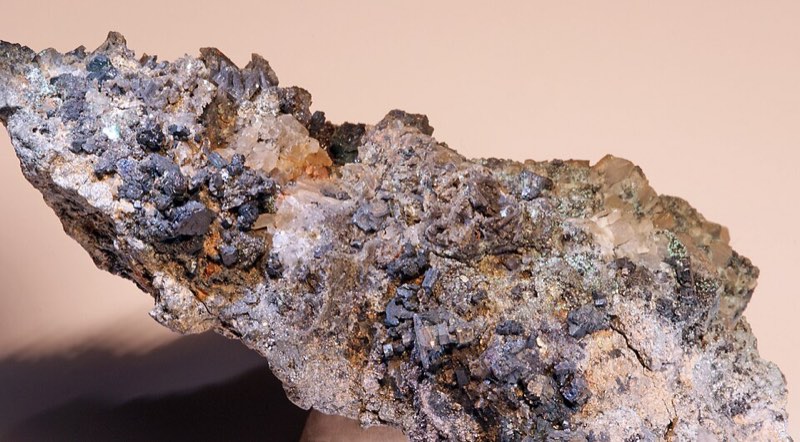
A dark gray copper sulfide and one of the richest copper ores.
Photo: Didier Descouens, CC BY-SA 3.0
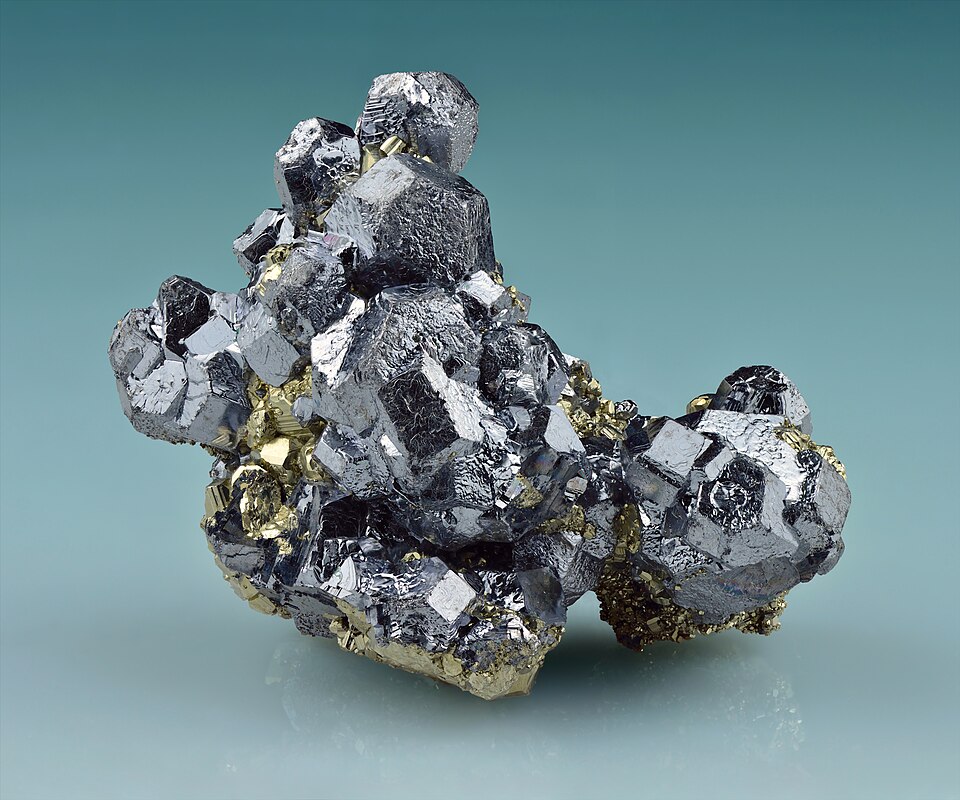
Lead sulfide and the world's main lead ore. Bright silvery cubes that feel astonishingly heavy for their size.
Photo: Ivar Leidus, CC BY-SA 4.0
Quick tests
- Streak (rub on unglazed porcelain): Chalcocite leaves a dark gray streak; Galena leaves lead gray.
- Heft: Galena feels noticeably heavier for its size (specific gravity 7.4–7.6 vs 5.5–5.8).
Key differences
- Galena is brighter, heavier and breaks into cubes.
Side by side
| Property | Chalcocite | Galena |
|---|---|---|
| Type | Mineral | Mineral |
| Mohs hardness | 2.5–3 | 2.5–2.75 |
| Luster | Metallic | Metallic |
| Streak | Dark gray | Lead gray |
| Colors | Gray, Black | Silver, Gray |
| Crystal system | Monoclinic | Cubic |
| Specific gravity | 5.5–5.8 | 7.4–7.6 |
| Formula | Cu₂S | PbS |
| Found in | Bristol, Connecticut; Cornwall, England | Viburnum Trend, Missouri; Tri-State district, USA |
Properties that are the same for both are grayed out.
How to identify chalcocite
- Dark lead-gray, dulling to black.
- Soft and sectile — a knife shaves it.
- Heavy.
Crystal system: Monoclinic
Full Chalcocite guide →How to identify galena
- Very heavy — noticeably heavier than any similar-sized rock.
- Bright silver-gray metallic, dulling over time.
- Breaks into perfect little cubes.
- Soft enough to scratch with a fingernail edge or coin.
Crystal system: Cubic
Full Galena guide →More comparisons
Could you tell them apart from a blurry close-up?
Play today's Rocksday