 Rocksday
Calcite vs Fluorite
How to tell them apart
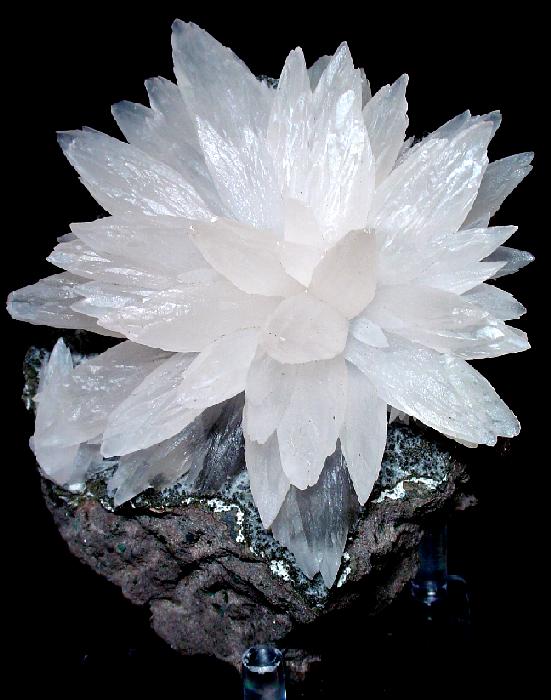
One of the most common minerals on Earth and the main ingredient of limestone and marble. It breaks into perfect slanted boxes (rhombs) and fizzes in acid.
Photo: Robert M. Lavinsky, CC BY-SA 3.0
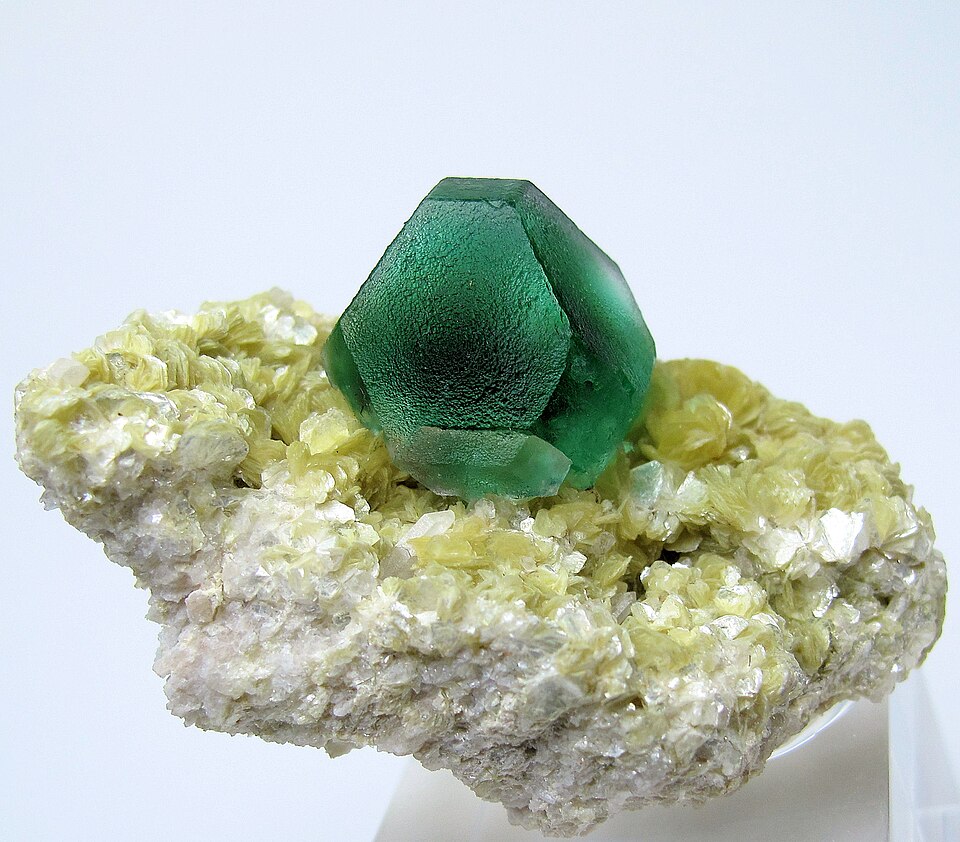
A colorful mineral that grows as cubes and splits into octahedrons. Many specimens glow under ultraviolet light — the word 'fluorescence' was coined from it.
Photo: CarlesMillan, CC BY-SA 3.0
Quick tests
- Acid (vinegar or dilute HCl): Calcite fizzes; Fluorite doesn't.
Key differences
- Calcite fizzes in acid and cleaves into rhombs, not octahedrons.
Side by side
| Property | Calcite | Fluorite |
|---|---|---|
| Type | Mineral | Mineral |
| Mohs hardness | 3 | 4 |
| Luster | Vitreous | Vitreous |
| Streak | White | White |
| Colors | Clear, White, Orange, Yellow, Blue, Green | Purple, Green, Blue, Yellow, Clear |
| Crystal system | Trigonal | Cubic |
| Specific gravity | 2.71 | 3.18 |
| Formula | CaCO₃ | CaF₂ |
| Found in | Iceland; Chihuahua, Mexico | Cave-in-Rock, Illinois; Weardale, England |
Properties that are the same for both are grayed out.
How to identify calcite
- Fizzes in cold dilute hydrochloric acid (or slowly in vinegar).
- Breaks into rhomb-shaped pieces along three cleavage planes.
- Hardness 3 — a copper coin barely scratches it, a knife easily does.
- Clear pieces show double images of text underneath.
Crystal system: Trigonal
Full Calcite guide →How to identify fluorite
- Cubic crystals, often with color zoning in purple and green.
- Cleaves into eight-sided octahedral fragments.
- Hardness 4 — a knife scratches it, but a coin doesn't.
- Often glows blue or violet under a UV flashlight.
Crystal system: Cubic
Full Fluorite guide →More comparisons
Could you tell them apart from a blurry close-up?
Play today's Rocksday