 Rocksday
Brazilianite vs Chrysoberyl
How to tell them apart
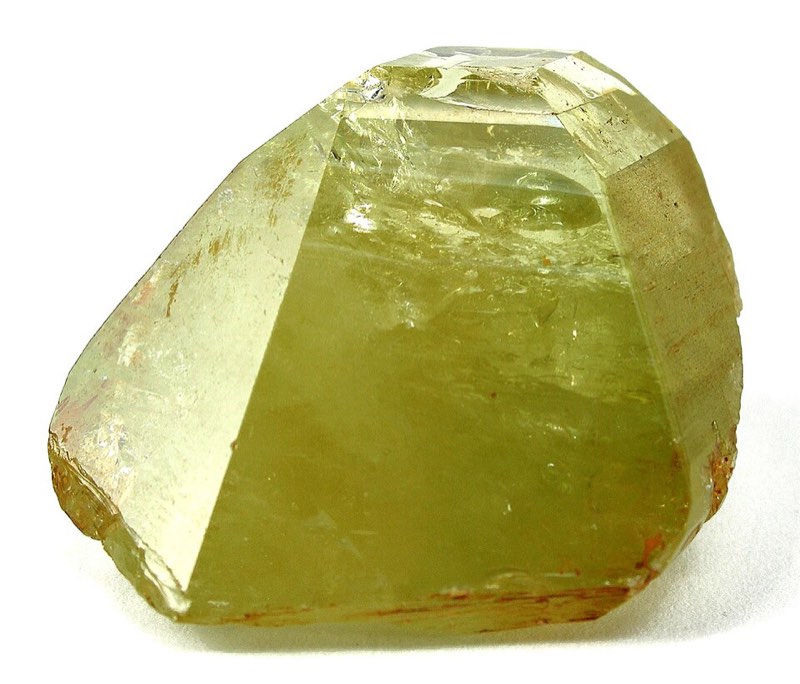
A chartreuse-yellow phosphate forming sharp, glassy crystals in Brazilian pegmatites.
Photo: Robert M. Lavinsky, CC BY-SA 3.0
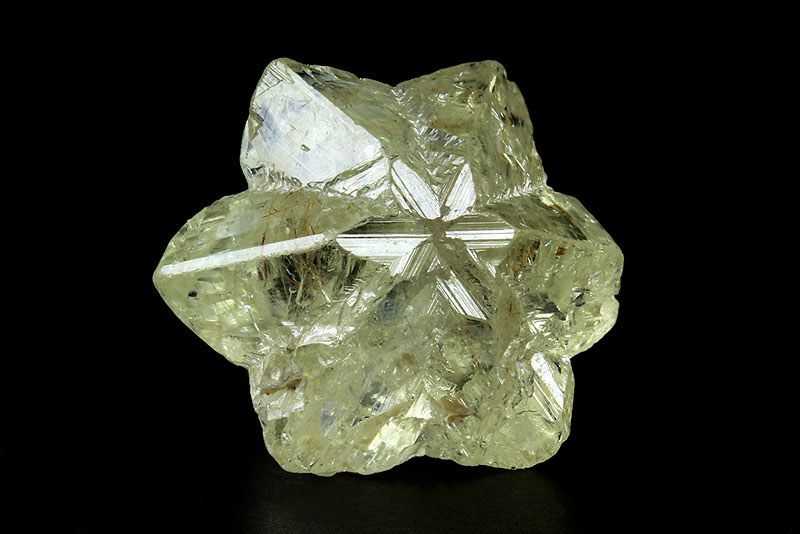
A very hard beryllium aluminum oxide. Its varieties include color-changing alexandrite and cat's eye.
Photo: Matteo Chinellato, CC BY-SA 3.0
Quick tests
- Hardness: Chrysoberyl is clearly harder: Mohs 8.5 versus 5.5.
Key differences
- Chrysoberyl is much harder and heavier.
Side by side
| Property | Brazilianite | Chrysoberyl |
|---|---|---|
| Type | Mineral | Mineral |
| Mohs hardness | 5.5 | 8.5 |
| Luster | Vitreous | Vitreous |
| Streak | White | White |
| Colors | Yellow, Green | Yellow, Green, Brown |
| Crystal system | Monoclinic | Orthorhombic |
| Specific gravity | 2.98 | 3.7–3.8 |
| Formula | NaAl₃(PO₄)₂(OH)₄ | BeAl₂O₄ |
| Found in | Minas Gerais, Brazil; New Hampshire | Sri Lanka; Minas Gerais, Brazil |
Properties that are the same for both are grayed out.
How to identify brazilianite
- Yellow-green, glassy, wedge-shaped crystals.
- Hardness about 5.5.
- Light in weight.
Crystal system: Monoclinic
Full Brazilianite guide →How to identify chrysoberyl
- Hardness 8.5 — harder than topaz.
- Yellow-green, often in heart-shaped or six-pointed twinned crystals.
- Alexandrite looks green in daylight and red under incandescent light.
Crystal system: Orthorhombic
Full Chrysoberyl guide →More comparisons
Could you tell them apart from a blurry close-up?
Play today's Rocksday