 Rocksday
Apatite vs Brazilianite
How to tell them apart
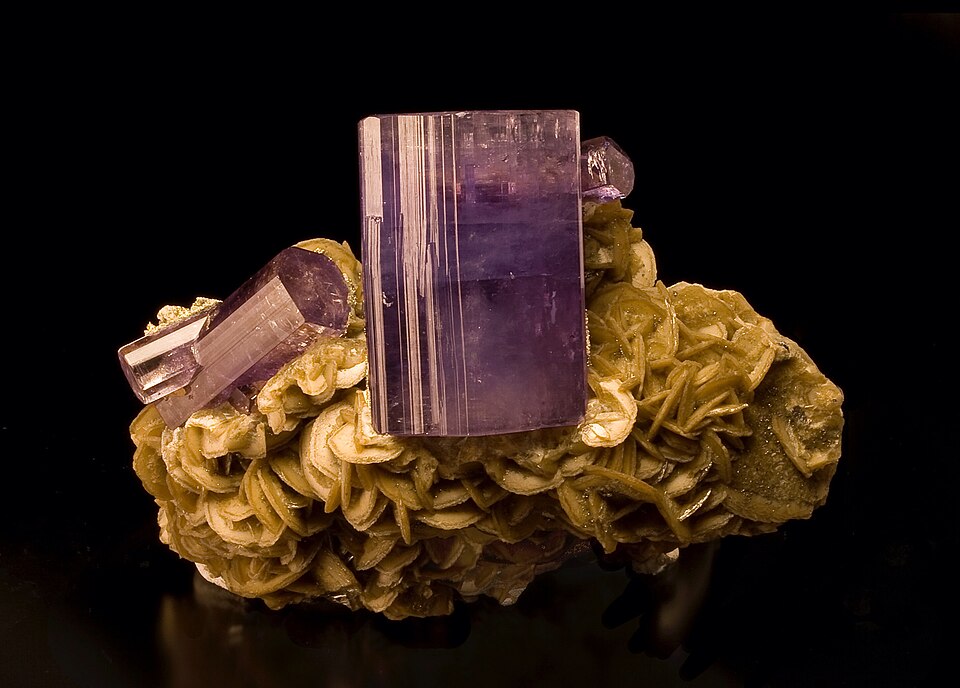
A calcium phosphate group of minerals — the same family that makes up your teeth and bones.
Photo: Thomas Spann, CC BY 2.0
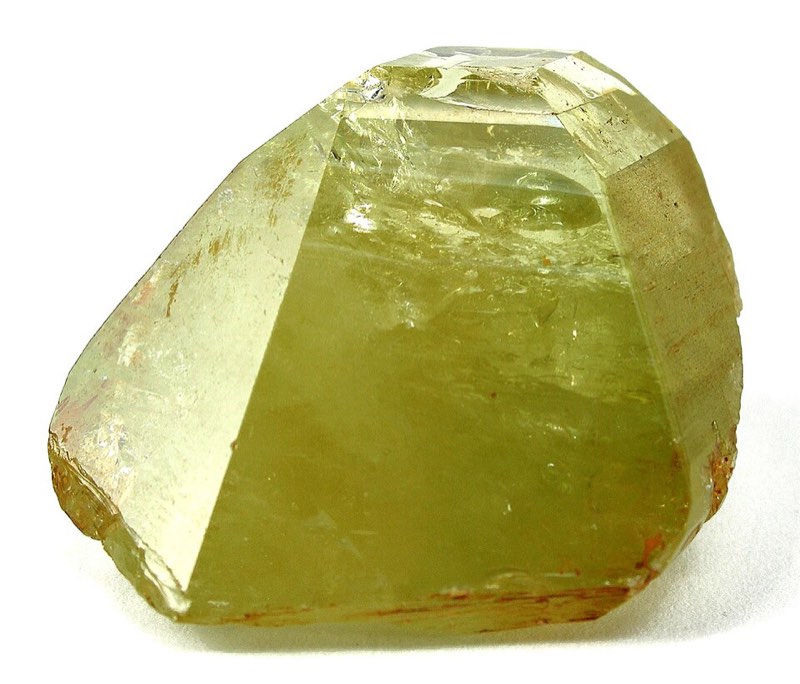
A chartreuse-yellow phosphate forming sharp, glassy crystals in Brazilian pegmatites.
Photo: Robert M. Lavinsky, CC BY-SA 3.0
Key differences
- Apatite forms hexagonal prisms.
Side by side
| Property | Apatite | Brazilianite |
|---|---|---|
| Type | Mineral | Mineral |
| Mohs hardness | 5 | 5.5 |
| Luster | Vitreous | Vitreous |
| Streak | White | White |
| Colors | Green, Blue, Yellow, Purple | Yellow, Green |
| Crystal system | Hexagonal | Monoclinic |
| Specific gravity | 3.16–3.22 | 2.98 |
| Formula | Ca₅(PO₄)₃(F,Cl,OH) | NaAl₃(PO₄)₂(OH)₄ |
| Found in | Durango, Mexico; Madagascar | Minas Gerais, Brazil; New Hampshire |
Properties that are the same for both are grayed out.
How to identify apatite
- Six-sided prisms, often with flat ends.
- Hardness 5 — a knife just scratches it.
- Glassy, often yellow-green or neon blue.
- No obvious cleavage.
Crystal system: Hexagonal
Full Apatite guide →How to identify brazilianite
- Yellow-green, glassy, wedge-shaped crystals.
- Hardness about 5.5.
- Light in weight.
Crystal system: Monoclinic
Full Brazilianite guide →More comparisons
Could you tell them apart from a blurry close-up?
Play today's Rocksday