 Rocksday
Basalt vs Lamprophyre
To tell Basalt from Lamprophyre: Basalt's crystals, if any, are usually pale feldspar or green olivine, not big mica books.
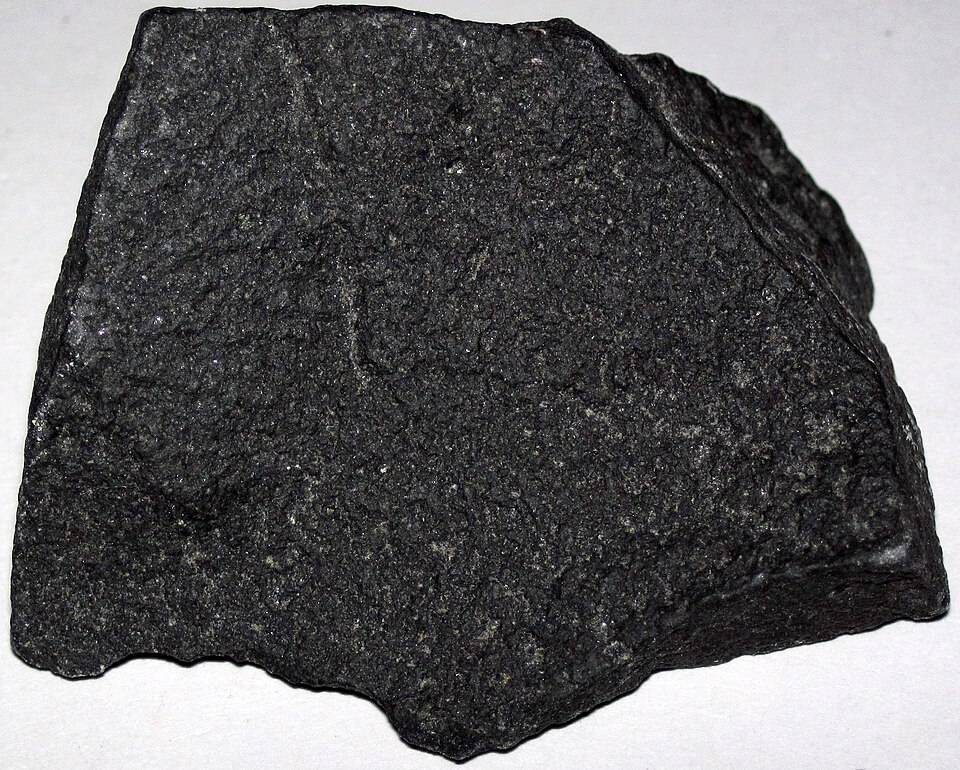
The most common volcanic rock on Earth. Dark, fine-grained lava that forms the ocean floor and vast lava plains.
Photo: James St. John, CC BY 2.0
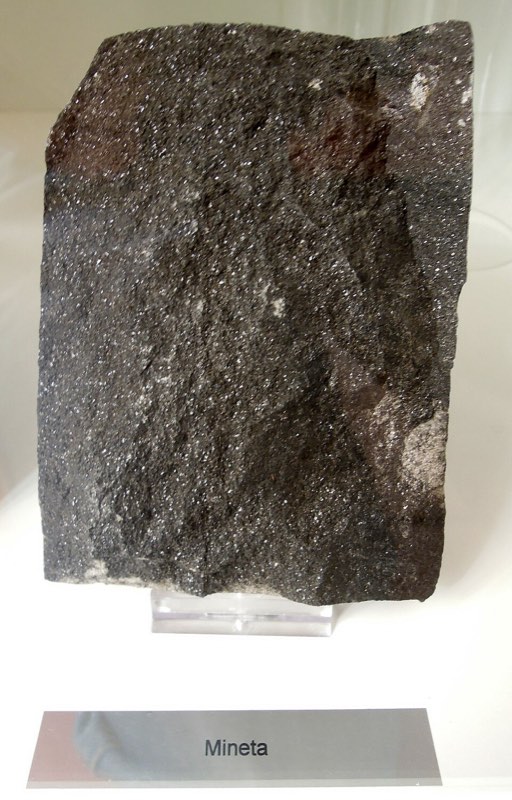
A dark dike rock whose large crystals are mica or amphibole, not feldspar.
Photo: Pelex, CC BY 3.0
Key differences
- Basalt's crystals, if any, are usually pale feldspar or green olivine, not big mica books.
Side by side
| Property | Basalt | Lamprophyre |
|---|---|---|
| Type | Igneous rock | Igneous rock |
| Mohs hardness | 6 | 5–6 |
| Luster | Dull | Sparkling |
| Colors | Black, Gray | Black, Gray, Green, Brown |
| Crystal system / structure | Fine-grained (aphanitic) | Porphyritic dike rock |
| Specific gravity | 2.9–3.1 | 2.7–3 |
| Found in | Hawaii; Iceland | Vosges, France; Lake District, England |
Properties that are the same for both are grayed out.
How to identify basalt
- Dark gray to black and heavy.
- Grains too small to see.
- Often has gas bubbles (vesicles).
- May show six-sided columns in outcrops.
Structure: Fine-grained (aphanitic)
Full Basalt guide →How to identify lamprophyre
- Dark, with shiny black or brown flakes or needles in a fine matrix.
- Occurs as thin dikes cutting other rocks.
- The big crystals are biotite, phlogopite or amphibole.
Structure: Porphyritic dike rock
Full Lamprophyre guide →More comparisons
Frequently asked questions
What is the difference between basalt and lamprophyre?
Basalt is an igneous rock with a Mohs hardness of about 6 and a dull luster, usually black or gray. Lamprophyre is an igneous rock with a Mohs hardness of about 5–6 and a sparkling luster, usually black, gray, green or brown.
How can you tell basalt from lamprophyre?
Basalt's crystals, if any, are usually pale feldspar or green olivine, not big mica books.
Could you tell them apart from a blurry close-up?
Play today's Rocksday