 Rocksday
Basalt vs Diabase
How to tell them apart
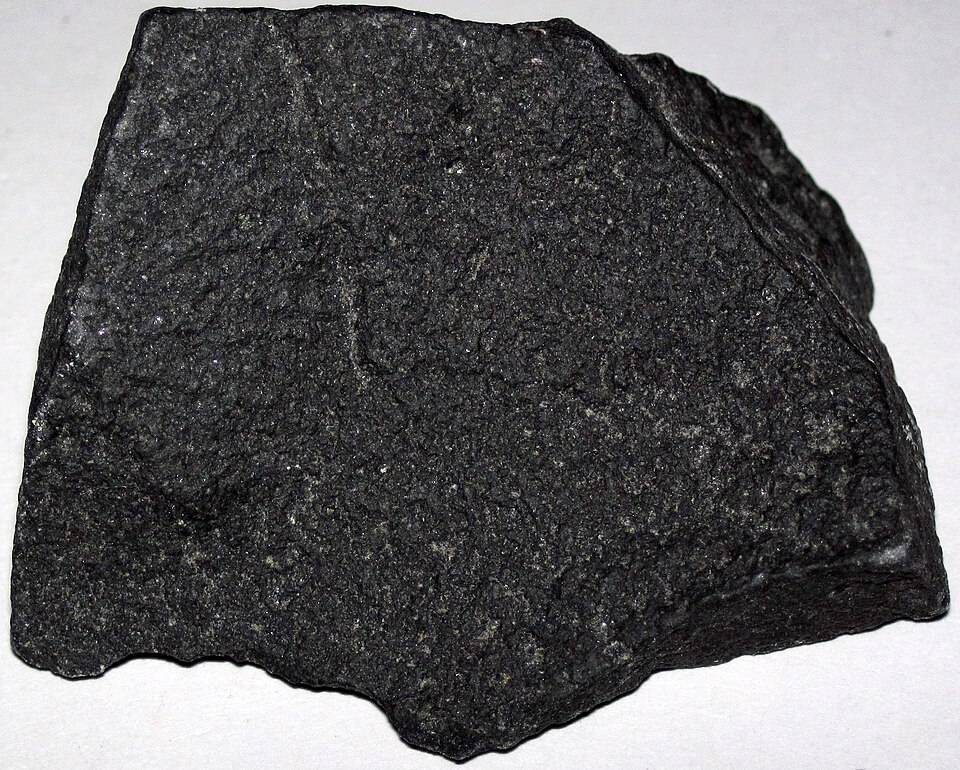
The most common volcanic rock on Earth. Dark, fine-grained lava that forms the ocean floor and vast lava plains.
Photo: James St. John, CC BY 2.0
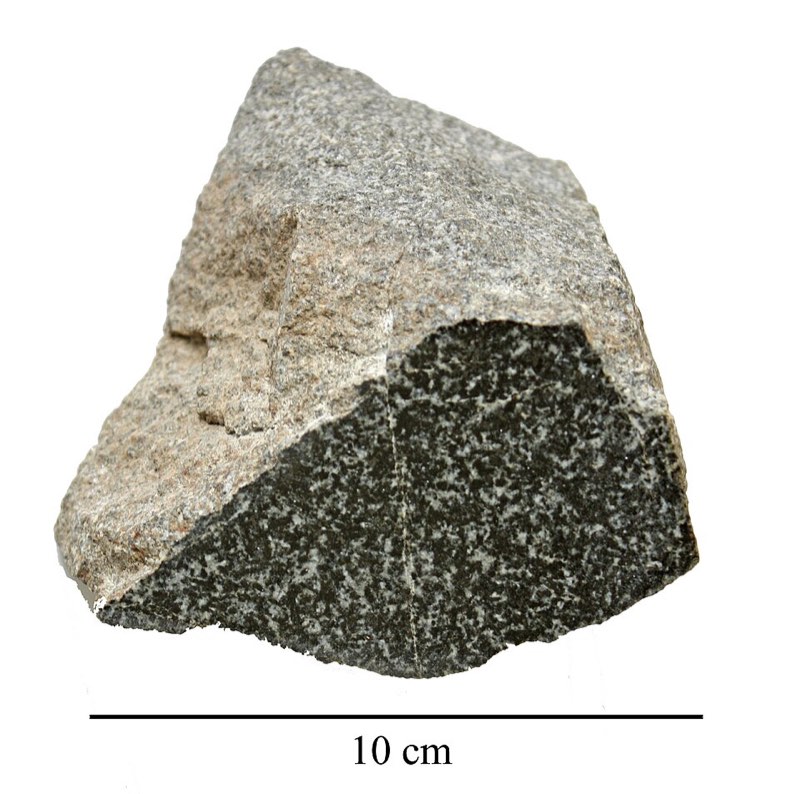
Basalt's medium-grained cousin, formed in shallow sills and dikes.
Photo: CrankyScorpion at English Wikipedia, CC BY-SA 3.0
Key differences
- Basalt's crystals are too small to see.
Side by side
| Property | Basalt | Diabase |
|---|---|---|
| Type | Igneous rock | Igneous rock |
| Mohs hardness | 6 | 6 |
| Luster | Dull | Granular |
| Colors | Black, Gray | Black, Gray, Green |
| Crystal system / structure | Fine-grained (aphanitic) | Medium-grained |
| Specific gravity | 2.9–3.1 | 2.9–3.1 |
| Found in | Hawaii; Iceland | Palisades, New Jersey; Preseli Hills, Wales |
Properties that are the same for both are grayed out.
How to identify basalt
- Dark gray to black and heavy.
- Grains too small to see.
- Often has gas bubbles (vesicles).
- May show six-sided columns in outcrops.
Structure: Fine-grained (aphanitic)
Full Basalt guide →How to identify diabase
- Dark gray to black with small visible crystals.
- Heavy and tough.
- Lath-shaped feldspar between dark pyroxene.
Structure: Medium-grained
Full Diabase guide →More comparisons
Could you tell them apart from a blurry close-up?
Play today's Rocksday