 Rocksday
Barite vs Witherite
How to tell them apart
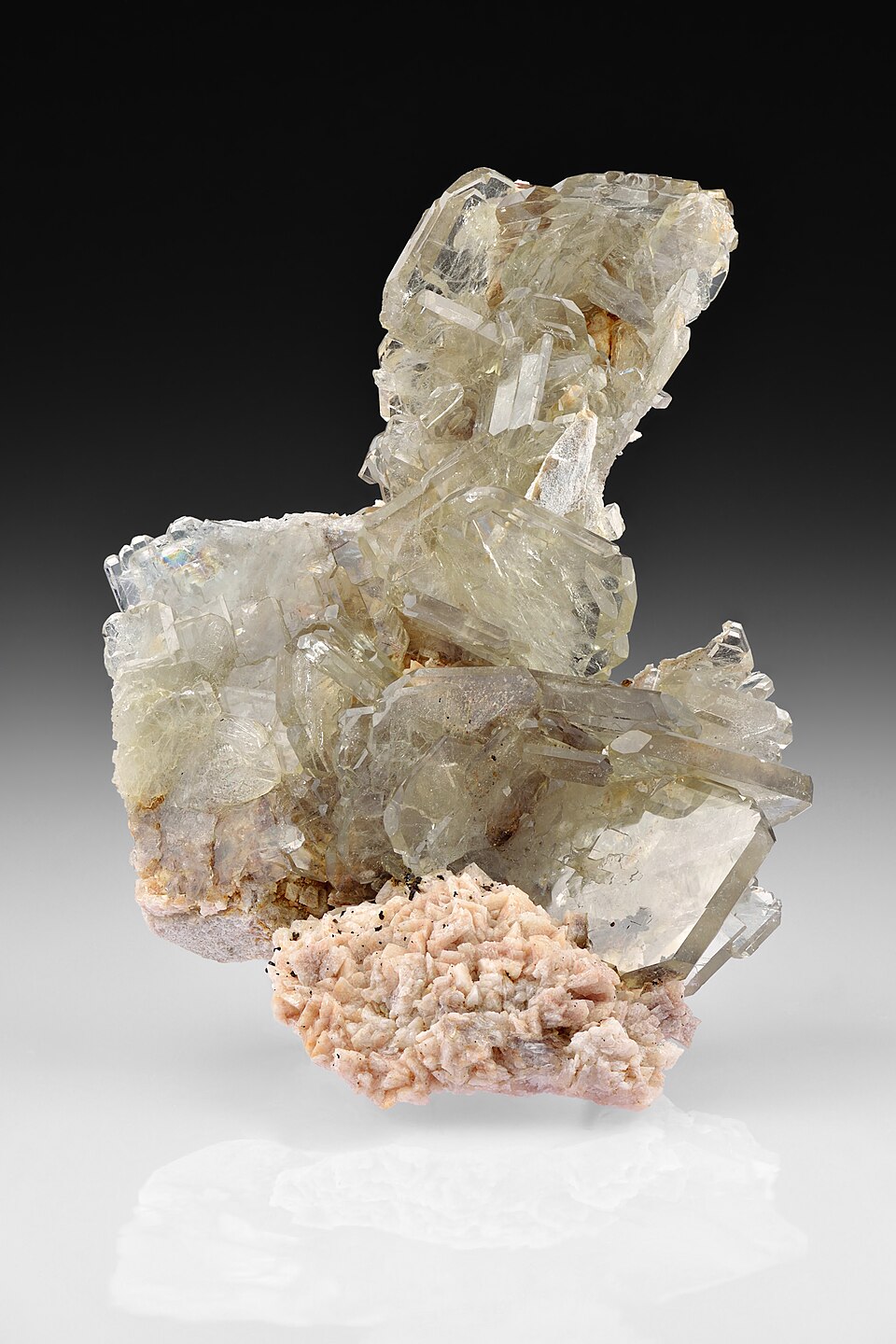
Barium sulfate — a pale mineral that is surprisingly heavy. Sand-filled rosettes from Oklahoma are known as rose rocks.
Photo: Ivar Leidus, CC BY-SA 4.0
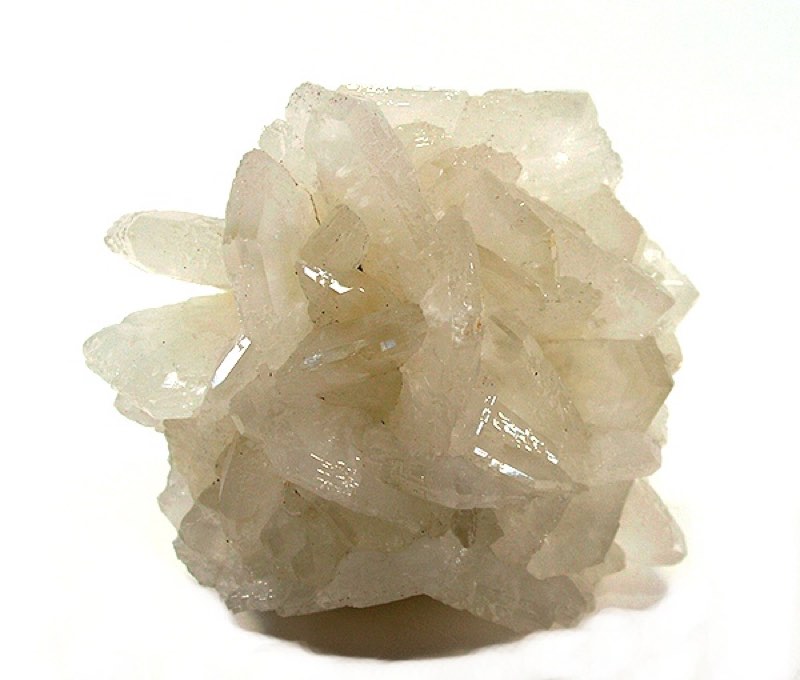
Barium carbonate: heavy, pale, and often in six-sided twinned pyramids.
Photo: Robert M. Lavinsky, CC BY-SA 3.0
Quick tests
- Acid (vinegar or dilute HCl): Witherite fizzes; Barite doesn't.
Key differences
- Barite doesn't fizz.
Side by side
| Property | Barite | Witherite |
|---|---|---|
| Type | Mineral | Mineral |
| Mohs hardness | 3–3.5 | 3–3.5 |
| Luster | Vitreous to pearly | Vitreous to resinous |
| Streak | White | White |
| Colors | White, Clear, Blue, Yellow, Brown | White, Gray, Yellow |
| Crystal system | Orthorhombic | Orthorhombic |
| Specific gravity | 4.3–4.5 | 4.3 |
| Formula | BaSO₄ | BaCO₃ |
| Found in | Norman, Oklahoma; Morocco | Northumberland, England; Cave-in-Rock, Illinois |
Properties that are the same for both are grayed out.
How to identify barite
- Unusually heavy for a light-colored mineral.
- Tabular, bladed crystals.
- Hardness about 3 — a knife scratches it.
- Doesn't fizz in acid.
Crystal system: Orthorhombic
Full Barite guide →How to identify witherite
- Heavy pale crystals, often double pyramids.
- Fizzes in acid.
- May glow under UV.
Crystal system: Orthorhombic
Full Witherite guide →More comparisons
Could you tell them apart from a blurry close-up?
Play today's Rocksday