 Rocksday
Arsenopyrite vs Marcasite
How to tell them apart
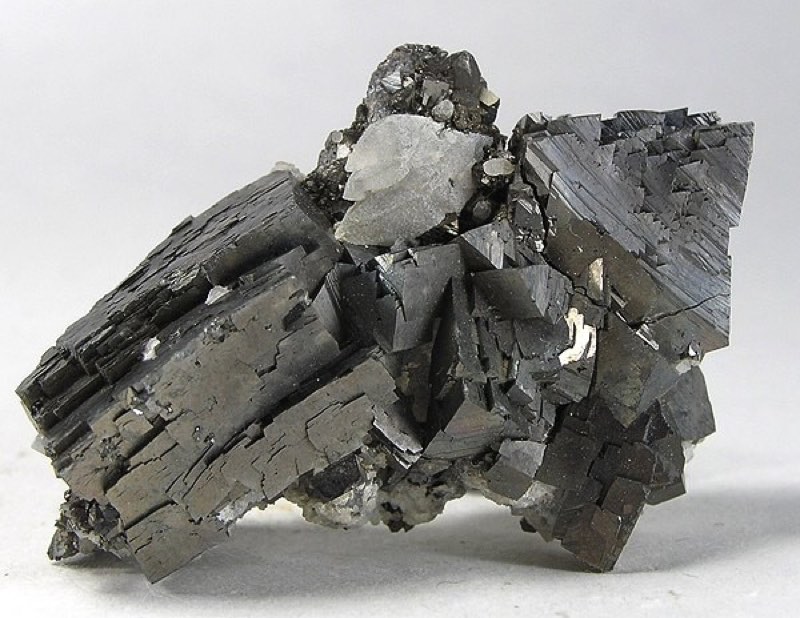
An iron arsenic sulfide and the main ore of arsenic. It smells of garlic when struck.
Photo: Robert M. Lavinsky, CC BY-SA 3.0
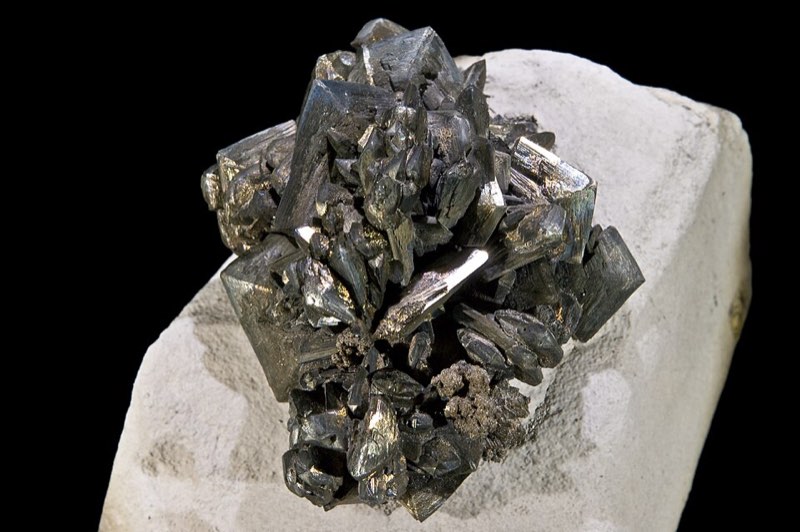
Same chemistry as pyrite but a different crystal structure; paler and more prone to crumbling.
Photo: Didier Descouens, CC BY-SA 4.0
Quick tests
- Streak (rub on unglazed porcelain): Arsenopyrite leaves a dark gray streak; Marcasite leaves greenish black.
Key differences
- Marcasite is paler brass-yellow.
- Arsenopyrite smells of garlic when struck.
Side by side
| Property | Arsenopyrite | Marcasite |
|---|---|---|
| Type | Mineral | Mineral |
| Mohs hardness | 5.5–6 | 6–6.5 |
| Luster | Metallic | Metallic |
| Streak | Dark gray | Greenish black |
| Colors | Silver, Gray | Gold, Silver |
| Crystal system | Monoclinic | Orthorhombic |
| Specific gravity | 6–6.2 | 4.8–4.9 |
| Formula | FeAsS | FeS₂ |
| Found in | Panasqueira, Portugal; Hunan, China | Chalk cliffs of Dover, England; Bohemia, Czech Republic |
Properties that are the same for both are grayed out.
How to identify arsenopyrite
- Silvery-white metallic, diamond-shaped prisms.
- Garlic smell when hammered.
- Harder than a knife.
Crystal system: Monoclinic
Full Arsenopyrite guide →How to identify marcasite
- Pale brass to tin-white, often in spear or cockscomb shapes.
- Nodules in chalk with radiating insides.
- May crumble to white powder in humid storage.
Crystal system: Orthorhombic
Full Marcasite guide →More comparisons
Could you tell them apart from a blurry close-up?
Play today's Rocksday