 Rocksday
Ammonite vs Goniatite
To tell Ammonite from Goniatite: Jurassic and Cretaceous ammonites have much more frilled sutures.
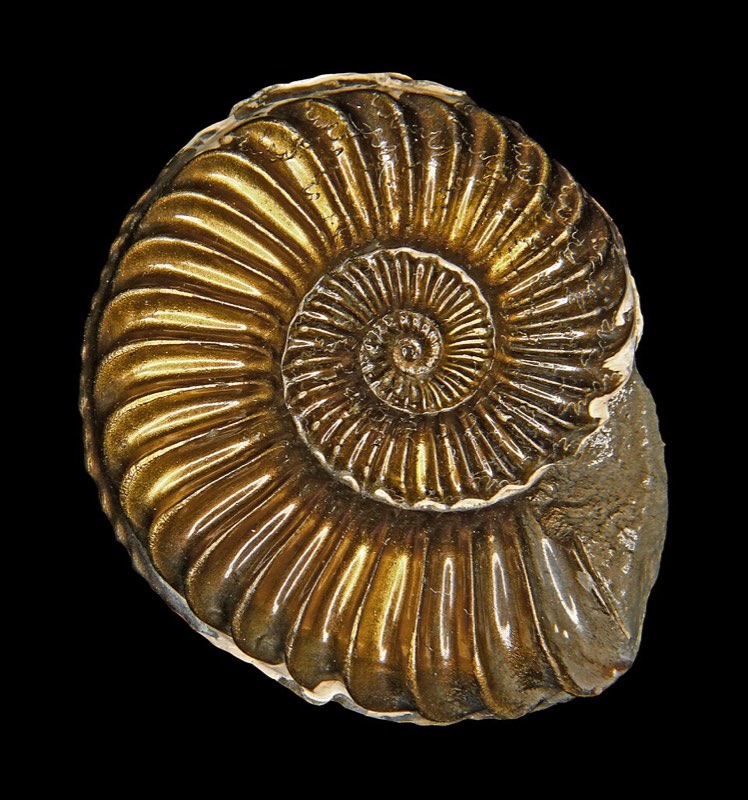
Coiled shells of extinct squid-like sea creatures that vanished with the dinosaurs.
Photo: Llez (H. Zell)., CC BY-SA 3.0
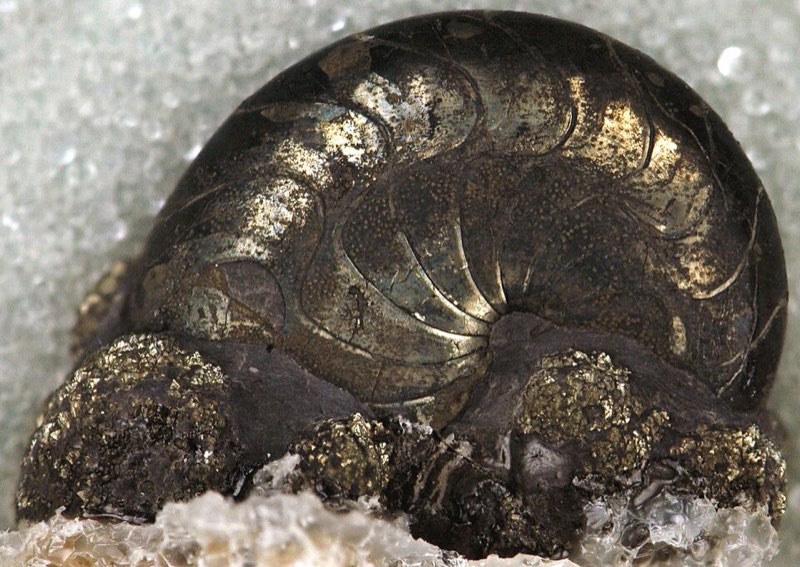
An early ammonoid with a coiled shell and simple zigzag sutures, common in Paleozoic rocks.
Photo: James St. John, CC BY 2.0
Key differences
- Jurassic and Cretaceous ammonites have much more frilled sutures.
Side by side
| Property | Ammonite | Goniatite |
|---|---|---|
| Type | Fossil | Fossil |
| Mohs hardness | 3–4 | 3–4 |
| Luster | Pearly to dull | Dull |
| Colors | Brown, Gray, Gold, White | Gray, Brown, White |
| Crystal system / structure | Coiled shell (aragonite, calcite or pyrite) | Coiled shell with zigzag sutures |
| Specific gravity | 2.6–2.9 | 2.6–2.8 |
| Found in | Jurassic Coast, England; Mahajanga, Madagascar | Morocco; Oklahoma |
Properties that are the same for both are grayed out.
How to identify ammonite
- Flat spiral shell with ribs.
- Wavy, frilly suture lines where internal walls met the shell.
- Often split and polished to show chambers.
Structure: Coiled shell (aragonite, calcite or pyrite)
Full Ammonite guide →How to identify goniatite
- A coil, often preserved as a disk.
- Sutures are sharp zigzags, not the leafy frills of later ammonites.
- Shell material fizzes in acid.
Structure: Coiled shell with zigzag sutures
Full Goniatite guide →More comparisons
Frequently asked questions
What is the difference between ammonite and goniatite?
Ammonite is a fossil with a Mohs hardness of about 3–4 and a pearly to dull luster, usually brown, gray, golden or white. Goniatite is a fossil with a Mohs hardness of about 3–4 and a dull luster, usually gray, brown or white.
How can you tell ammonite from goniatite?
Jurassic and Cretaceous ammonites have much more frilled sutures.
Could you tell them apart from a blurry close-up?
Play today's Rocksday