 Rocksday
Pyrargyrite
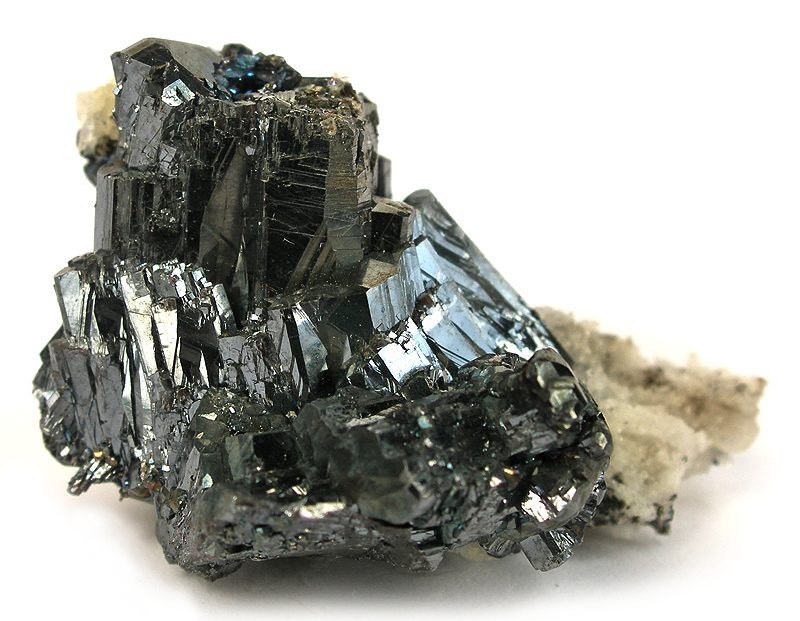
Pyrargyrite is a mineral (Ag₃SbS₃) with a Mohs hardness of 2.5 and an adamantine luster, usually red or black.
Dark ruby silver, the antimony partner of proustite. Deep red crystals that darken in the light.
How to identify pyrargyrite
- Dark crimson to nearly black, with a brilliant luster.
- Dark red streak — darker than proustite's scarlet.
- Soft (2.5) and very heavy. Turns gray if left in strong light.
Often confused with
Where it's found
- Freiberg, Germany
- Guanajuato, Mexico
- Potosí, Bolivia
- Colorado
Uses
Silver ore and collector specimens.
Rock tumbling
Not suitable for tumbling.
Did you know?
Dealers keep fine crystals in the dark so the red does not dull.
Pyrargyrite FAQ
What is pyrargyrite?
Pyrargyrite is a mineral (Ag₃SbS₃) with a Mohs hardness of 2.5 and an adamantine luster, usually red or black. Dark ruby silver, the antimony partner of proustite. Deep red crystals that darken in the light.
How do you identify pyrargyrite?
Dark crimson to nearly black, with a brilliant luster. Dark red streak — darker than proustite's scarlet. Soft (2.5) and very heavy. Turns gray if left in strong light.
How hard is pyrargyrite?
Pyrargyrite has a Mohs hardness of 2.5. Pyrargyrite is soft enough to scratch with a fingernail.
Where is pyrargyrite found?
Notable localities include Freiberg, Germany; Guanajuato, Mexico; Potosí, Bolivia; and Colorado.
What is pyrargyrite used for?
Silver ore and collector specimens.
Can you tumble pyrargyrite?
It isn't a good choice for a rock tumbler.
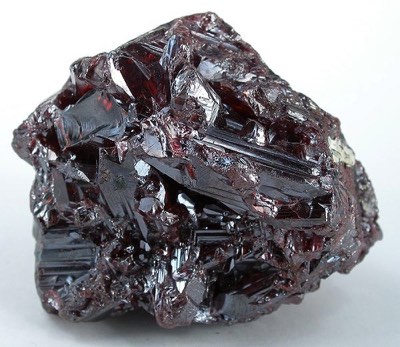
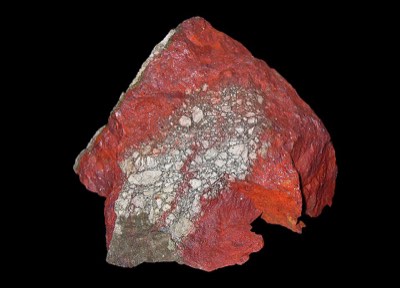
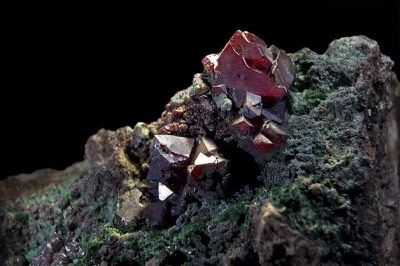
What is pyrargyrite often confused with?
Pyrargyrite is most often confused with Proustite, Cinnabar and Cuprite. Proustite is lighter scarlet and is the arsenic version, Ag₃AsS₃. Cinnabar is brighter red, heavier still, and is not a silver mineral. Cuprite is cubic and its streak is brownish red.
Think you could spot it from a blurry close-up?
Play today's Rocksday