 Rocksday
Phosphophyllite
Phosphophyllite is a mineral with a Mohs hardness of 3–3.5 and a vitreous luster, usually green or blue.
A rare blue-green zinc-iron phosphate. Almost all fine crystals came from one mine in Potosí, Bolivia.
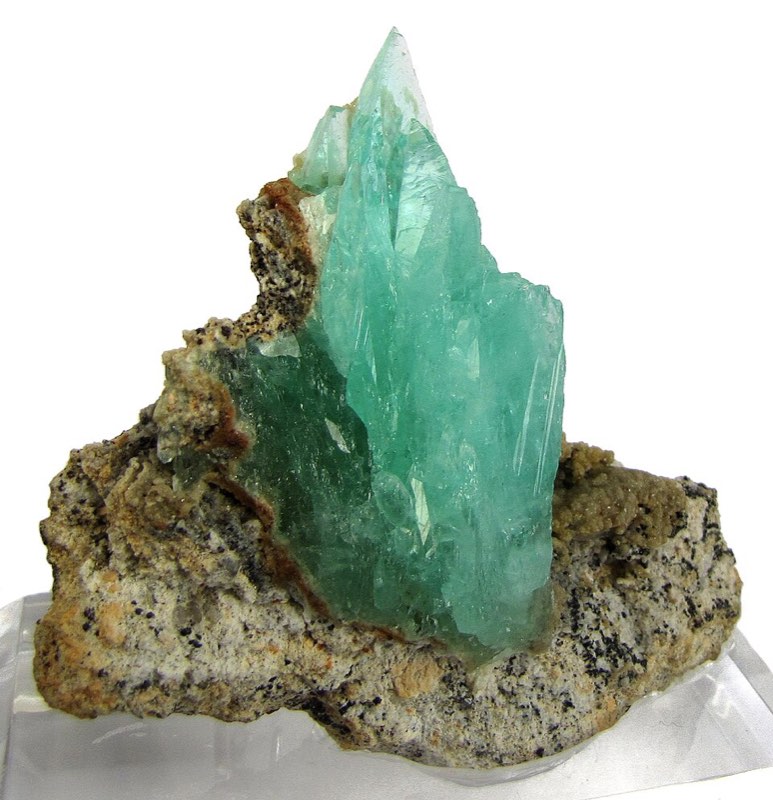
How to identify phosphophyllite
- Blue-green transparent blades.
- Hardness only 3–3.5, with a perfect cleavage.
- A knife scratches it easily.
Often confused with
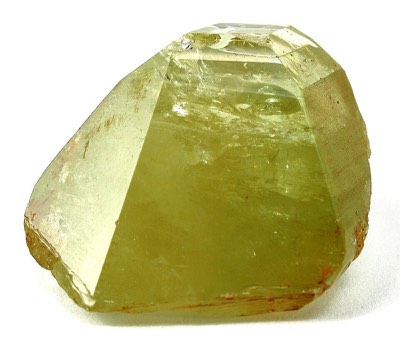 Brazilianite
 is yellow-green, harder (about 5.5) and forms wedge-shaped crystals.
Compare side by side
Where it's found
- Potosí, Bolivia
Uses
Collector specimens. Rarely cut, because it splits.
Rock tumbling
Not suitable for tumbling. Perfect cleavage and scarce.
Did you know?
The famous crystals are from the Unificada mine at Cerro Rico, Potosí, and gem cutters mostly leave them alone.
Phosphophyllite FAQ
What is phosphophyllite?
Phosphophyllite is a mineral with a Mohs hardness of 3–3.5 and a vitreous luster, usually green or blue. A rare blue-green zinc-iron phosphate. Almost all fine crystals came from one mine in Potosí, Bolivia.
How do you identify phosphophyllite?
Blue-green transparent blades. Hardness only 3–3.5, with a perfect cleavage. A knife scratches it easily.
How hard is phosphophyllite?
Phosphophyllite has a Mohs hardness of 3–3.5. A steel knife scratches Phosphophyllite, but a fingernail doesn't.
Where is phosphophyllite found?
Notable localities include Potosí, Bolivia.
What is phosphophyllite used for?
Collector specimens. Rarely cut, because it splits.
Can you tumble phosphophyllite?
It isn't a good choice for a rock tumbler. Perfect cleavage and scarce.
What is phosphophyllite often confused with?
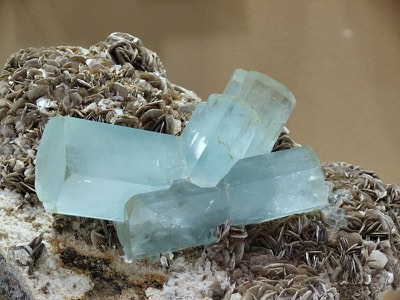
Phosphophyllite is most often confused with Aquamarine and Brazilianite. Aquamarine is much harder and is beryl. Brazilianite is yellow-green, harder (about 5.5) and forms wedge-shaped crystals.
Think you could spot it from a blurry close-up?
Play today's Rocksday