 Rocksday
Jamesonite
Jamesonite is a mineral (Pb₄FeSb₆S₁₄) with a Mohs hardness of 2–3 and a metallic luster, usually gray or black.
A lead-iron-antimony sulfide that forms soft, hair-like metallic fibers — one of the minerals called feather ore.
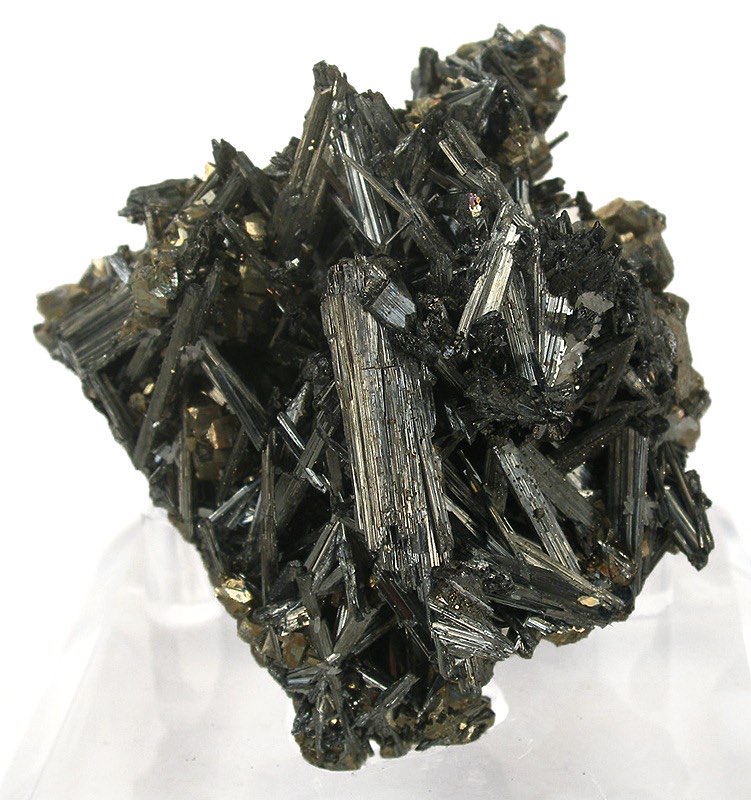
How to identify jamesonite
- Felted gray hairs or flexible needles.
- Metallic, and a fingernail can scratch it.
- Heavy. Dark gray streak.
Often confused with
Where it's found
- Cornwall, England
- Baia Mare, Romania
- Bolivia
- Idaho
Uses
A minor ore of lead and antimony.
Rock tumbling
Not suitable for tumbling.
Did you know?
The hair-like habit is why miners called it feather ore.
Jamesonite FAQ
What is jamesonite?
Jamesonite is a mineral (Pb₄FeSb₆S₁₄) with a Mohs hardness of 2–3 and a metallic luster, usually gray or black. A lead-iron-antimony sulfide that forms soft, hair-like metallic fibers — one of the minerals called feather ore.
How do you identify jamesonite?
Felted gray hairs or flexible needles. Metallic, and a fingernail can scratch it. Heavy. Dark gray streak.
How hard is jamesonite?
Jamesonite has a Mohs hardness of 2–3. Its hardness varies from 2 to 3, so scratch tests depend on the piece.
Where is jamesonite found?
Notable localities include Cornwall, England; Baia Mare, Romania; Bolivia; and Idaho.
What is jamesonite used for?
A minor ore of lead and antimony.
Can you tumble jamesonite?
It isn't a good choice for a rock tumbler.
What is jamesonite often confused with?
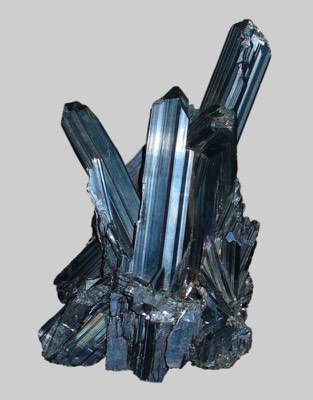
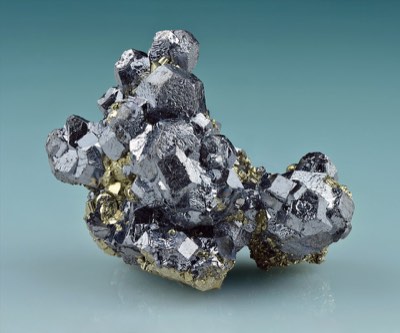
Jamesonite is most often confused with Stibnite and Galena. Stibnite forms stiff, striated blades, not a soft felt of hairs. Galena is cubic and breaks into little cubes.
Think you could spot it from a blurry close-up?
Play today's Rocksday