 Rocksday
Glaucophane
Glaucophane is a mineral with a Mohs hardness of 6–6.5 and a vitreous to silky luster, usually blue or gray.
The blue amphibole that colors blueschist, formed when ocean crust is dragged to depth and stays cool.
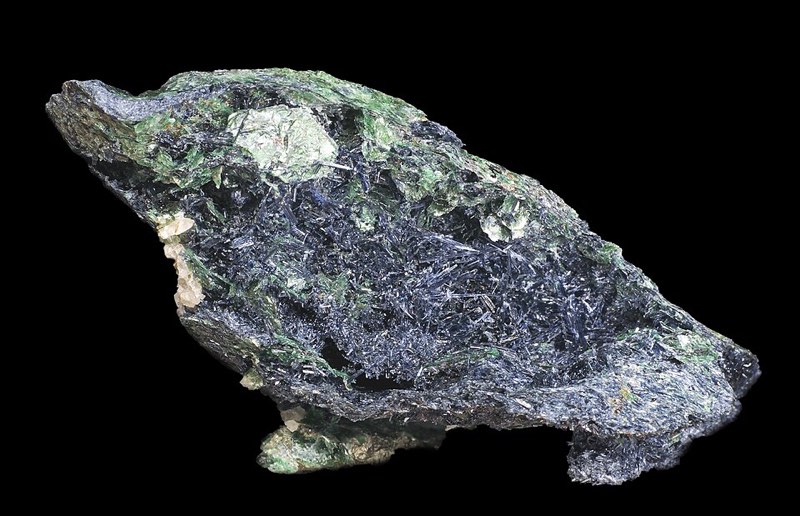
How to identify glaucophane
- Blue blades or fibrous patches in a tough metamorphic rock.
- Two amphibole cleavages.
- Hardness about 6.
Often confused with
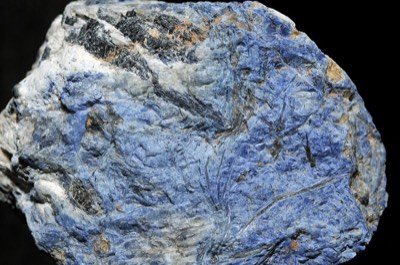 Dumortierite
 is harder and usually massive blue quartz, without amphibole cleavage.
Compare side by side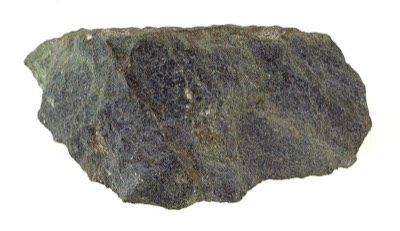
Where it's found
- Île de Groix, France
- Franciscan Complex, California
- Piedmont, Italy
Uses
A marker of high-pressure, low-temperature metamorphism.
Rock tumbling
Can be tumbled with care.
Did you know?
Its presence says a rock was pushed deep in a subduction zone without heating enough to become an ordinary schist.
Glaucophane FAQ
What is glaucophane?
Glaucophane is a mineral with a Mohs hardness of 6–6.5 and a vitreous to silky luster, usually blue or gray. The blue amphibole that colors blueschist, formed when ocean crust is dragged to depth and stays cool.
How do you identify glaucophane?
Blue blades or fibrous patches in a tough metamorphic rock. Two amphibole cleavages. Hardness about 6.
How hard is glaucophane?
Glaucophane has a Mohs hardness of 6–6.5. Glaucophane scratches glass, and a steel knife can't scratch it.
Where is glaucophane found?
Notable localities include Île de Groix, France; Franciscan Complex, California; and Piedmont, Italy.
What is glaucophane used for?
A marker of high-pressure, low-temperature metamorphism.
Can you tumble glaucophane?
Yes, with care.
What is glaucophane often confused with?
Glaucophane is most often confused with Dumortierite and Blueschist. Dumortierite is harder and usually massive blue quartz, without amphibole cleavage. Blueschist is the rock; glaucophane is the blue mineral in it.
Think you could spot it from a blurry close-up?
Play today's Rocksday