 Rocksday
Flint
Flint is a sedimentary rock with a Mohs hardness of about 6.5–7 and a waxy luster, usually black, gray or brown.
Dark nodules of microcrystalline quartz, especially the ones that grew in chalk. In North America the word is also used for any chert that was knapped into tools.
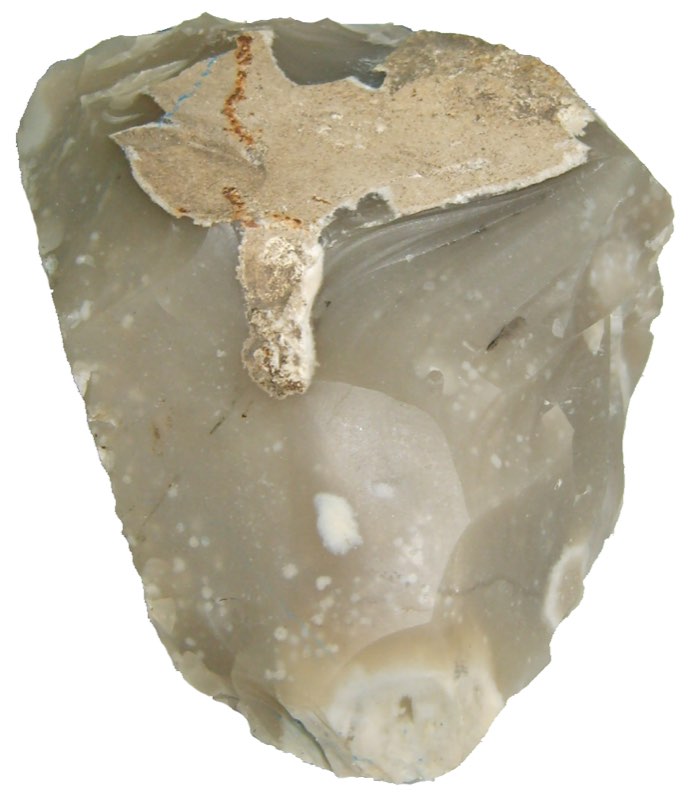
How to identify flint
- Dark gray to black nodules, often with a white chalky rind.
- Breaks in smooth curves with razor edges.
- Waxy on a fresh break, and it scratches glass.
- Sparks against steel.
Often confused with
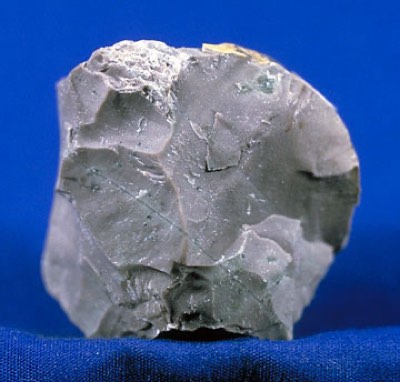 Chert
Chert is the broader rock; flint is the dark nodular kind in chalk, though the names get swapped.
Compare side by side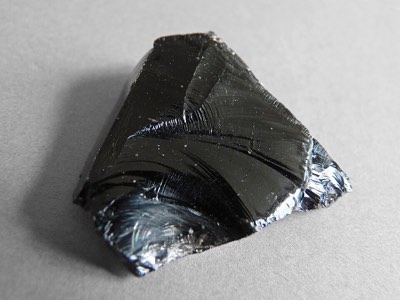 Obsidian
 is volcanic glass: softer, and thin edges are translucent brown.
Compare side by side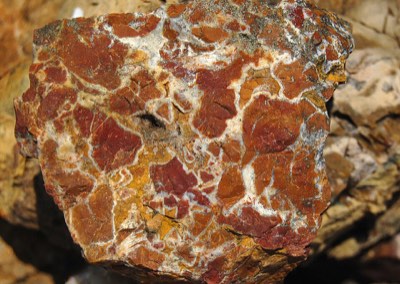
Where it's found
- Chalk cliffs of southern England
- Northern France
- Rügen, Germany
- Miorcani, Romania
Uses
Stone tools, gunflints and fire-starting.
Rock tumbling
Great for tumbling.
Did you know?
Nodules from the English chalk were knapped into blades for thousands of years and, much later, into the gunflints of flintlock firearms.
Flint FAQ
What is flint?
Flint is a sedimentary rock with a Mohs hardness of about 6.5–7 and a waxy luster, usually black, gray or brown. Dark nodules of microcrystalline quartz, especially the ones that grew in chalk. In North America the word is also used for any chert that was knapped into tools.
How do you identify flint?
Dark gray to black nodules, often with a white chalky rind. Breaks in smooth curves with razor edges. Waxy on a fresh break, and it scratches glass. Sparks against steel.
How hard is flint?
Flint has a Mohs hardness of about 6.5–7. Flint scratches glass, and a steel knife can't scratch it.
Where is flint found?
Notable localities include Chalk cliffs of southern England; Northern France; Rügen, Germany; and Miorcani, Romania.
What is flint used for?
Stone tools, gunflints and fire-starting.
Can you tumble flint?
Yes — it tumbles well.
What is flint often confused with?
Flint is most often confused with Chert, Obsidian and Jasper. Chert is the broader rock; flint is the dark nodular kind in chalk, though the names get swapped. Obsidian is volcanic glass: softer, and thin edges are translucent brown. Jasper is opaque and colorful rather than a dark chalk nodule.
Think you could spot it from a blurry close-up?
Play today's Rocksday