 Rocksday
Blue Lace Agate
Blue Lace Agate is a mineral (SiO₂) with a Mohs hardness of 6.5–7 and a waxy luster, usually blue or white.
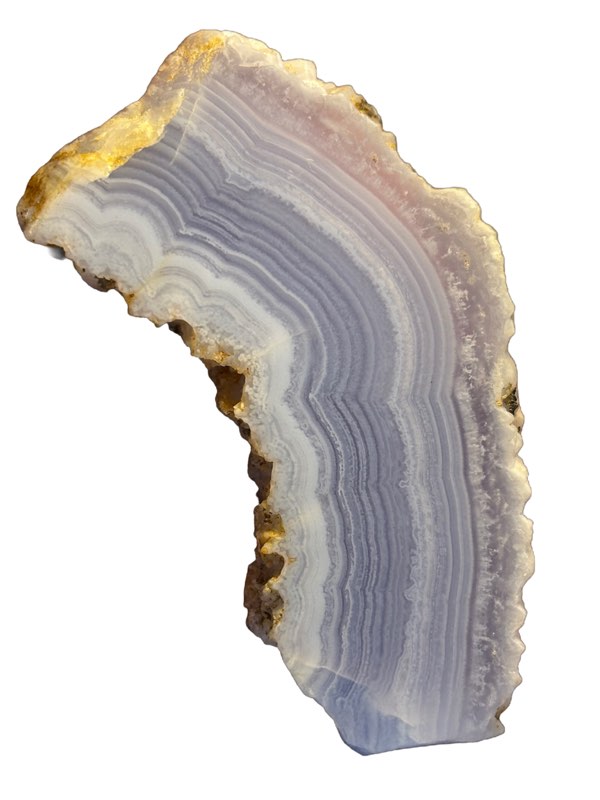
Pale blue and white chalcedony with wavy, lace-like bands. The classic rough came from one Namibian mine.
How to identify blue lace agate
- Soft sky blue and white in wavy bands, not a deep dyed blue.
- Translucent at the edges.
- Hard enough to scratch glass.
Often confused with
Where it's found
- Namibia
Uses
Cabochons, beads and carvings.
Rock tumbling
Great for tumbling.
Did you know?
The Namibian mine that supplied it closed in 2017, so new rough from that source is no longer being dug.
Blue Lace Agate FAQ
What is blue lace agate?
Blue Lace Agate is a mineral (SiO₂) with a Mohs hardness of 6.5–7 and a waxy luster, usually blue or white. Pale blue and white chalcedony with wavy, lace-like bands. The classic rough came from one Namibian mine.
How do you identify blue lace agate?
Soft sky blue and white in wavy bands, not a deep dyed blue. Translucent at the edges. Hard enough to scratch glass.
How hard is blue lace agate?
Blue Lace Agate has a Mohs hardness of 6.5–7. Blue Lace Agate scratches glass, and a steel knife can't scratch it.
Where is blue lace agate found?
Notable localities include Namibia.
What is blue lace agate used for?
Cabochons, beads and carvings.
Can you tumble blue lace agate?
Yes — it tumbles well.
What is blue lace agate often confused with?
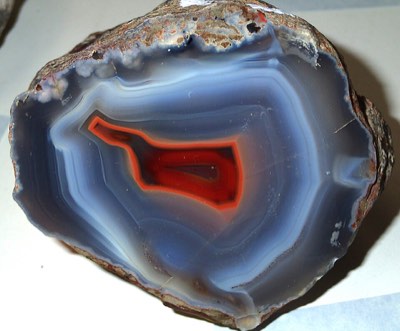
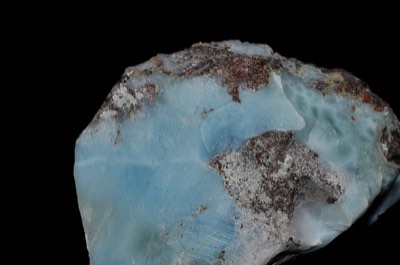
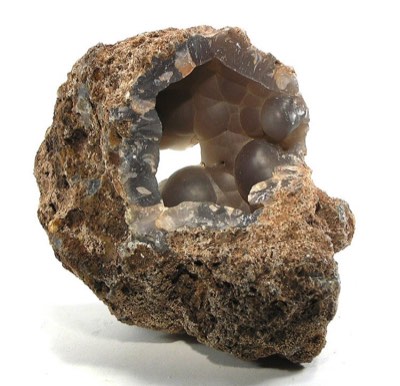
Blue Lace Agate is most often confused with Agate, Larimar and Chalcedony. Most agate is not this pale, even blue. Larimar is pectolite: softer, and usually a more opaque sea blue. Plain chalcedony lacks the tight lace banding.
Think you could spot it from a blurry close-up?
Play today's Rocksday