 Rocksday
Baculites
Baculites is a fossil with a Mohs hardness of about 3–4 and a dull to pearly luster, usually gray, brown, white or golden.
A straight-shelled ammonite from the Cretaceous. The shell is a long cone with complex, wavy suture lines.
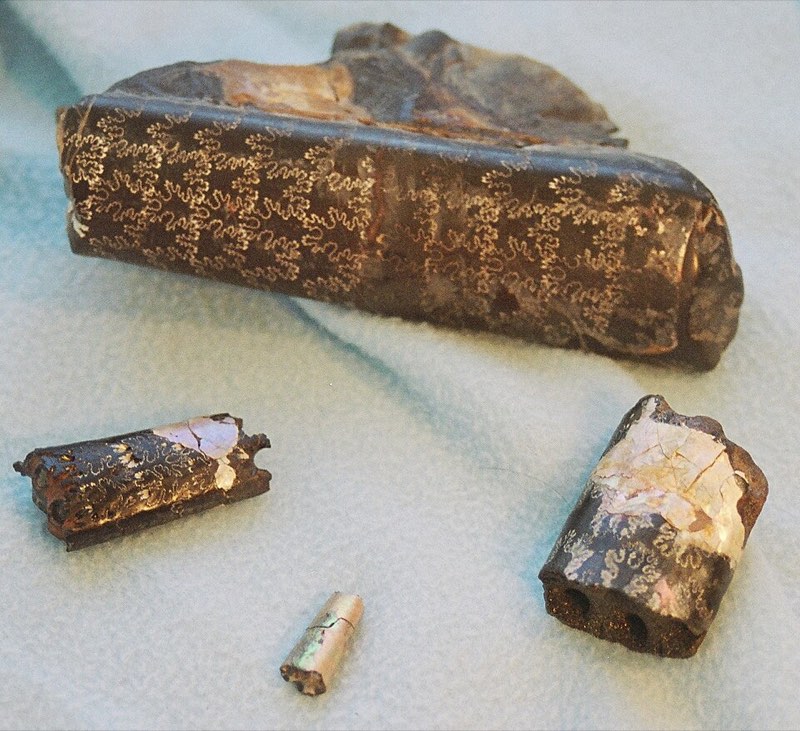
How to identify baculites
- A straight section of shell, not a coil.
- Wavy, branching suture lines where the chambers met the shell.
- Often in shale. Shell material may fizz; a mold may not.
Often confused with
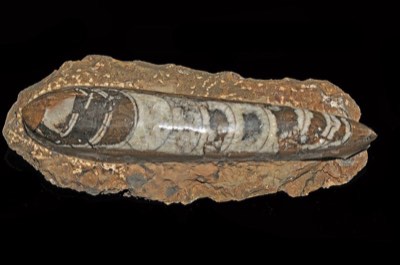 Orthoceras
 is a nautiloid with simple chamber walls, not frilled sutures.
Compare side by side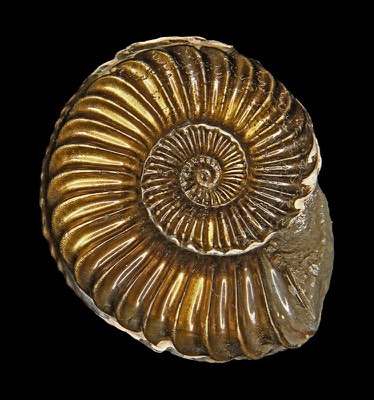
Where it's found
- Pierre Shale, South Dakota
- Montana
- Wyoming
- Morocco
Uses
Fossil collecting and dating Cretaceous rocks.
Rock tumbling
Not suitable for tumbling.
Did you know?
The shell grew straight, but the animal was still an ammonite — the sutures are as frilly as a coiled cousin's.
Baculites FAQ
What is baculites?
Baculites is a fossil with a Mohs hardness of about 3–4 and a dull to pearly luster, usually gray, brown, white or golden. A straight-shelled ammonite from the Cretaceous. The shell is a long cone with complex, wavy suture lines.
How do you identify baculites?
A straight section of shell, not a coil. Wavy, branching suture lines where the chambers met the shell. Often in shale. Shell material may fizz; a mold may not.
How hard is baculites?
Baculites has a Mohs hardness of about 3–4. A steel knife scratches Baculites, but a fingernail doesn't.
Where is baculites found?
Notable localities include Pierre Shale, South Dakota; Montana; Wyoming; and Morocco.
What is baculites used for?
Fossil collecting and dating Cretaceous rocks.
Can you tumble baculites?
It isn't a good choice for a rock tumbler.
What is baculites often confused with?
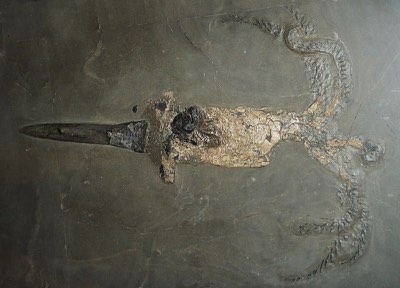
Baculites is most often confused with Orthoceras, Ammonite and Belemnite. Orthoceras is a nautiloid with simple chamber walls, not frilled sutures. Typical ammonites are coiled. A belemnite guard is a solid calcite rod with no sutures.
Think you could spot it from a blurry close-up?
Play today's Rocksday