 Rocksday
Tanzanite vs Zoisite
How to tell them apart
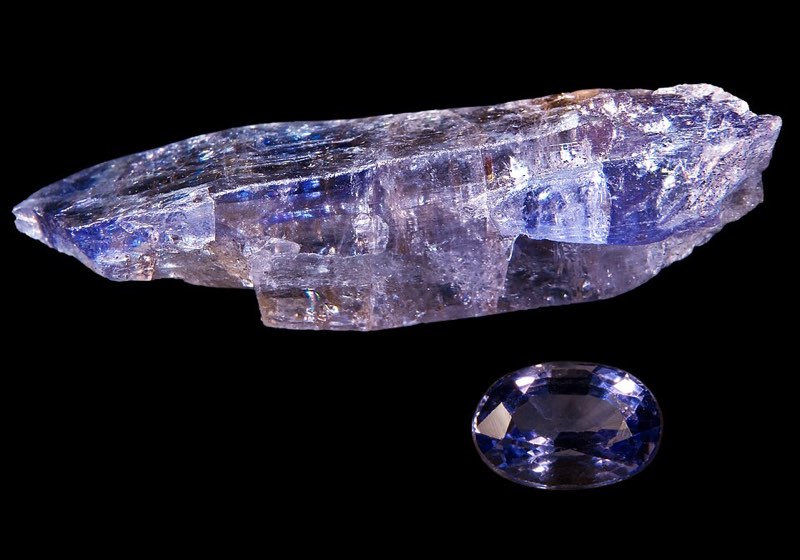
Blue-violet zoisite found in only one small area of Tanzania. It shows different colors from different directions.
Photo: Didier Descouens, CC BY 3.0
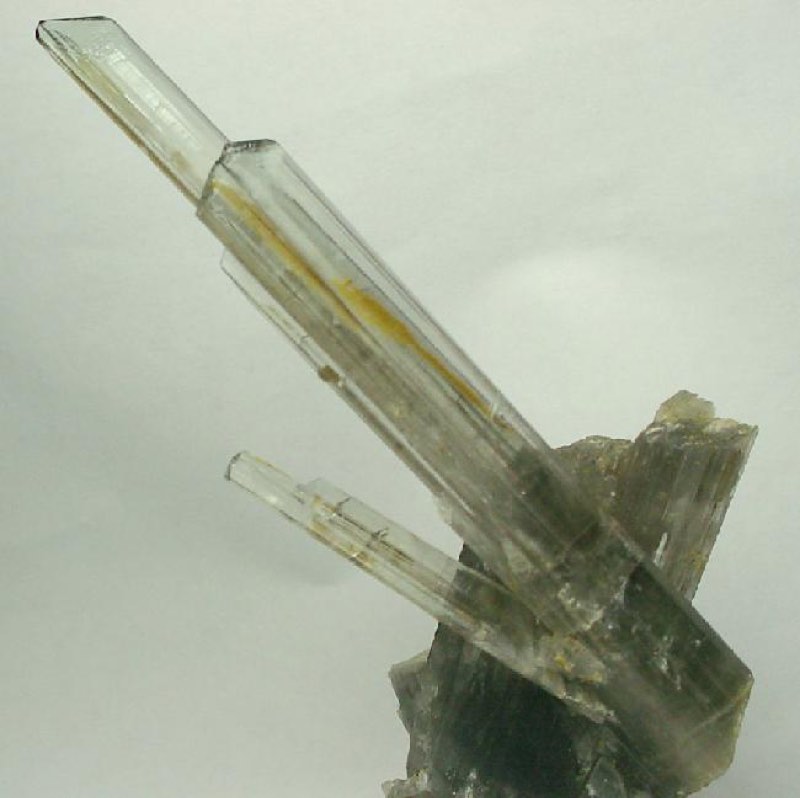
A calcium aluminum silicate best known as green rock studded with red ruby crystals.
Photo: Robert M. Lavinsky, CC BY-SA 3.0
Key differences
- Tanzanite is the blue-violet gem variety of zoisite.
Side by side
| Property | Tanzanite | Zoisite |
|---|---|---|
| Type | Mineral | Mineral |
| Mohs hardness | 6–7 | 6–7 |
| Luster | Vitreous | Vitreous |
| Streak | White | White |
| Colors | Blue, Purple | Green, Pink, Gray |
| Crystal system | Orthorhombic | Orthorhombic |
| Specific gravity | 3.35 | 3.15–3.38 |
| Formula | Ca₂Al₃(SiO₄)(Si₂O₇)O(OH) | Ca₂Al₃(SiO₄)(Si₂O₇)O(OH) |
| Found in | Merelani Hills, Tanzania | Longido, Tanzania; Norway |
Properties that are the same for both are grayed out.
How to identify tanzanite
- Blue to violet, shifting color as you rotate it.
- Hardness about 6.5 — softer than sapphire.
- Most rough is brownish until heated.
Crystal system: Orthorhombic
Full Tanzanite guide →How to identify zoisite
- Green massive stone, often with red ruby and black hornblende.
- Pink variety (thulite) is opaque.
- Hardness about 6.5.
Crystal system: Orthorhombic
Full Zoisite guide →More comparisons
Could you tell them apart from a blurry close-up?
Play today's Rocksday