 Rocksday
Pyrite vs Pyrrhotite
How to tell them apart
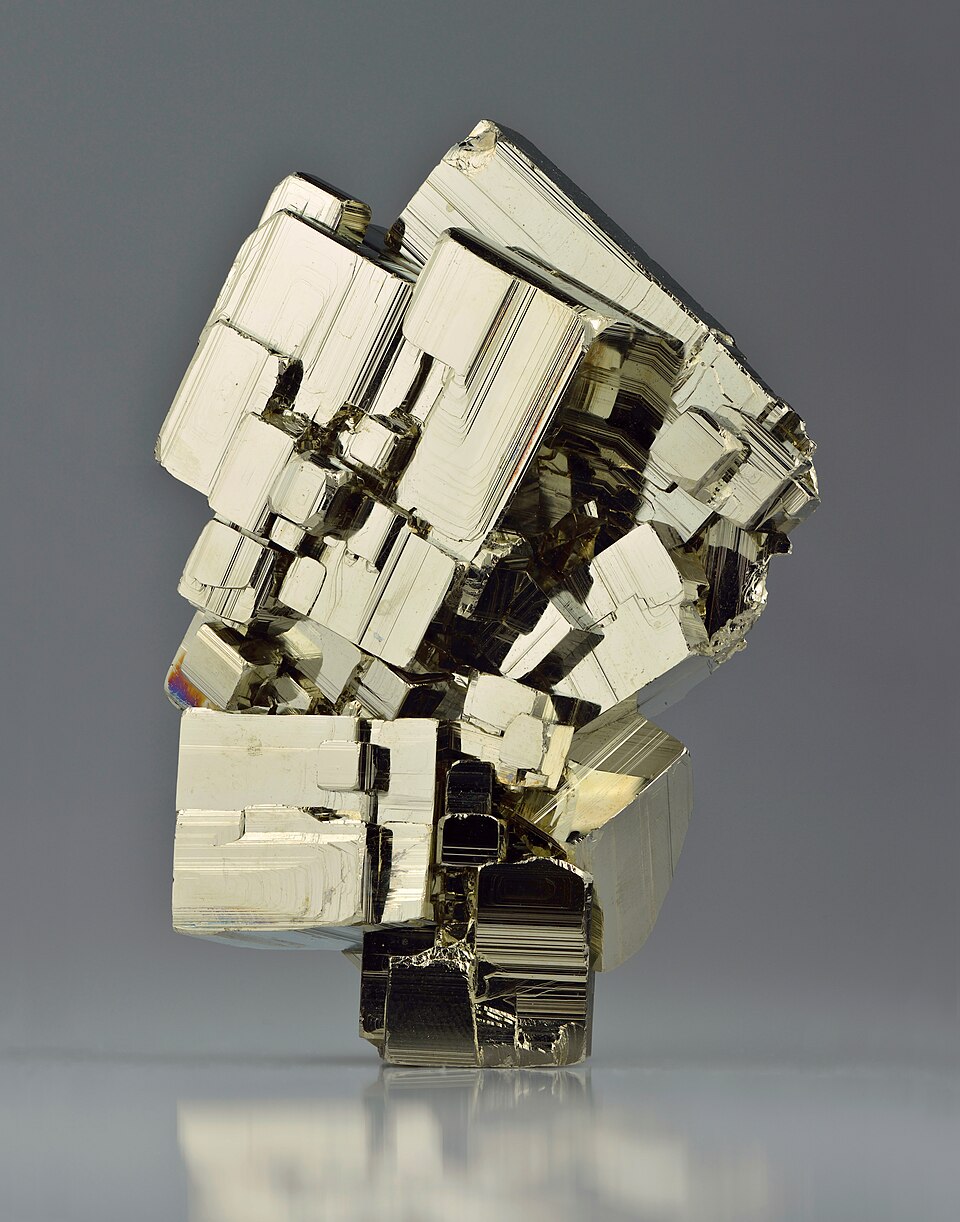
Brassy iron sulfide famous as 'fool's gold'. It often forms startlingly perfect cubes with fine parallel lines on the faces.
Photo: Ivar Leidus, CC BY-SA 4.0
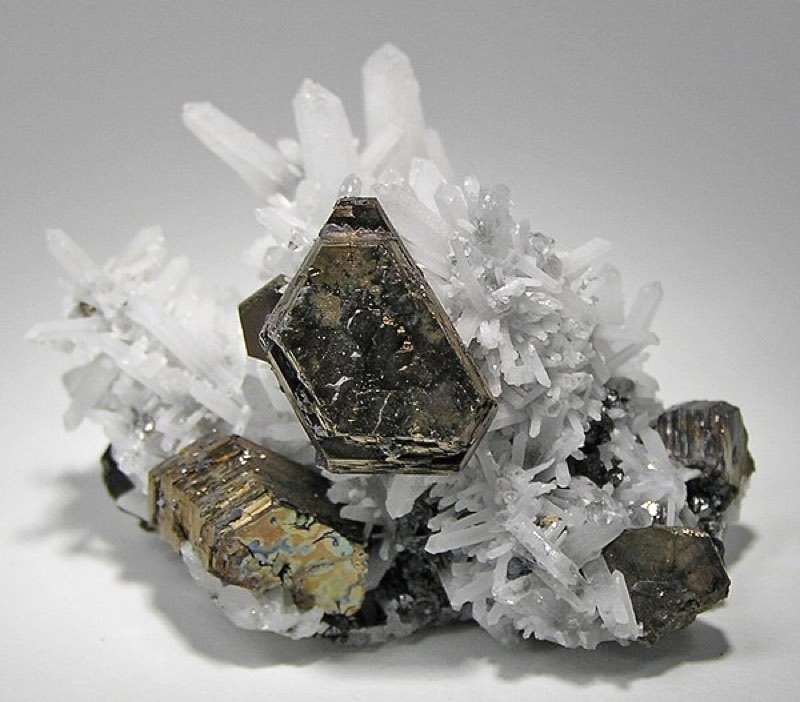
A bronze iron sulfide that is noticeably magnetic.
Photo: Robert M. Lavinsky, CC BY-SA 3.0
Quick tests
- Scratch glass: Pyrite scratches glass (Mohs 6–6.5); Pyrrhotite can't (Mohs 3.5–4.5).
- Magnet: A magnet sticks to Pyrrhotite but not to Pyrite.
- Streak (rub on unglazed porcelain): Pyrite leaves a greenish black streak; Pyrrhotite leaves grayish black.
Key differences
- Pyrite is harder, paler and not magnetic.
Side by side
| Property | Pyrite | Pyrrhotite |
|---|---|---|
| Type | Mineral | Mineral |
| Mohs hardness | 6–6.5 | 3.5–4.5 |
| Luster | Metallic | Metallic |
| Streak | Greenish black | Grayish black |
| Colors | Gold | Gold, Brown |
| Crystal system | Cubic | Monoclinic |
| Specific gravity | 4.95–5.1 | 4.6–4.7 |
| Formula | FeS₂ | Fe₁₋ₓS |
| Found in | Navajún, Spain; Huanzala, Peru | Sudbury, Ontario; Dalnegorsk, Russia |
Properties that are the same for both are grayed out.
How to identify pyrite
- Pale brass-yellow metallic color.
- Streak is greenish black, not gold.
- Hard and brittle — it shatters rather than flattens when struck.
- Cubes with striated faces, or twelve-sided pyritohedrons.
Crystal system: Cubic
Full Pyrite guide →How to identify pyrrhotite
- Bronze-yellow, tarnishing brown.
- Attracted to a magnet.
- Softer than pyrite.
Crystal system: Monoclinic
Full Pyrrhotite guide →More comparisons
Could you tell them apart from a blurry close-up?
Play today's Rocksday