 Rocksday
Phyllite vs Slate
How to tell them apart
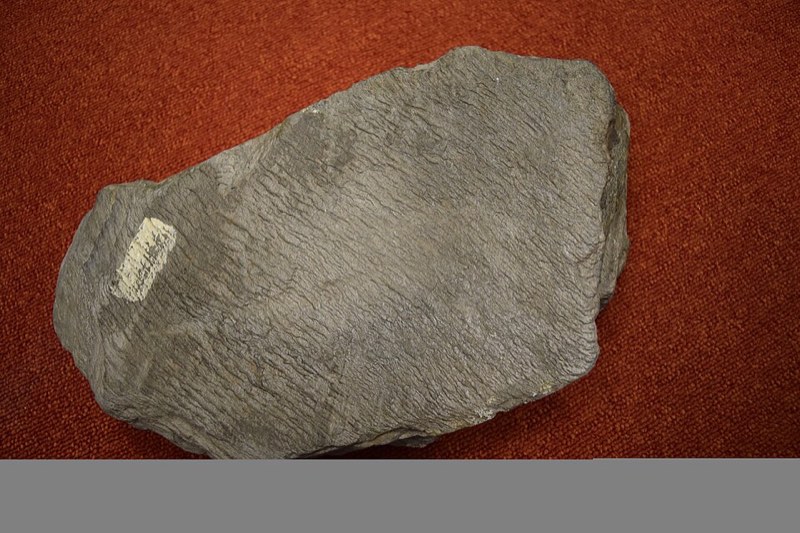
A step up from slate: fine-grained with a silky sheen from microscopic mica.
Photo: EdwardEMeyer, CC BY-SA 4.0
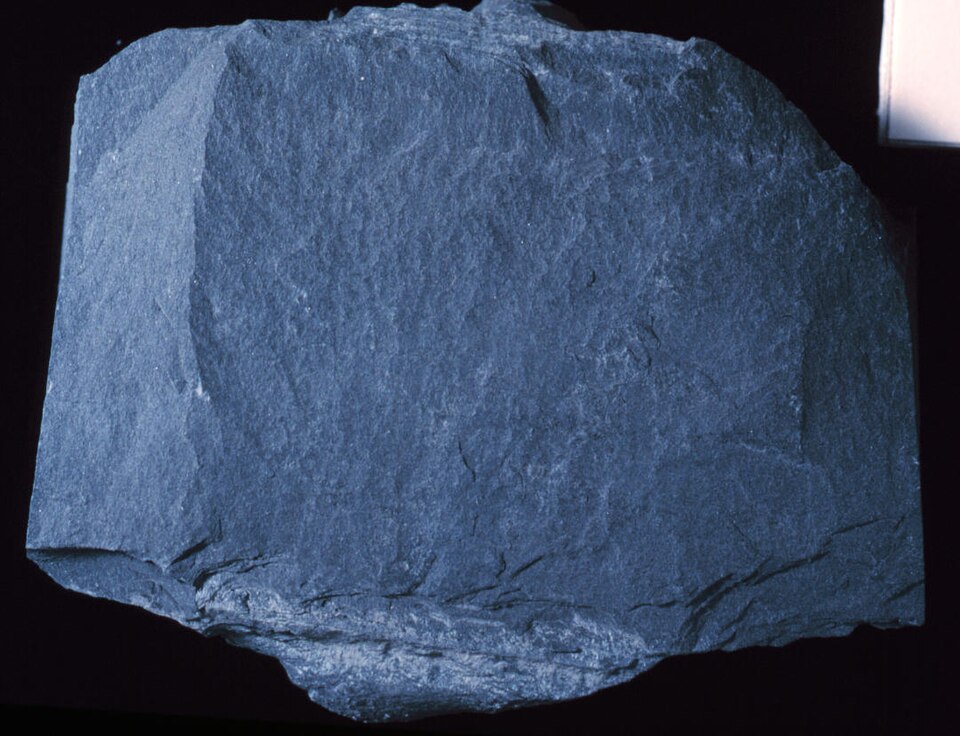
Shale transformed by low-grade metamorphism into a hard rock that splits into smooth, flat sheets.
Photo: Dexter Perkins, CC0
Key differences
- Slate is dull with flat surfaces.
Side by side
| Property | Phyllite | Slate |
|---|---|---|
| Type | Metamorphic rock | Metamorphic rock |
| Mohs hardness | 3–4 | 3–4 |
| Luster | Satiny sheen | Dull to faint sheen |
| Colors | Gray, Green, Silver | Gray, Black, Green, Purple |
| Crystal system / structure | Fine-grained, foliated, crinkled | Very fine, foliated (slaty cleavage) |
| Specific gravity | 2.7–2.9 | 2.7–2.8 |
| Found in | Vermont; Scottish Highlands | Gwynedd, Wales; Slate Valley, Vermont–New York |
Properties that are the same for both are grayed out.
How to identify phyllite
- Satin-like sheen on split surfaces.
- Often wavy or crinkled.
- Individual mica flakes too small to see.
Structure: Fine-grained, foliated, crinkled
Full Phyllite guide →How to identify slate
- Splits into thin, flat, smooth sheets.
- Rings when tapped.
- Harder than shale.
- Grains invisible.
Structure: Very fine, foliated (slaty cleavage)
Full Slate guide →More comparisons
Could you tell them apart from a blurry close-up?
Play today's Rocksday