 Rocksday
Phonolite vs Trachyte
How to tell them apart
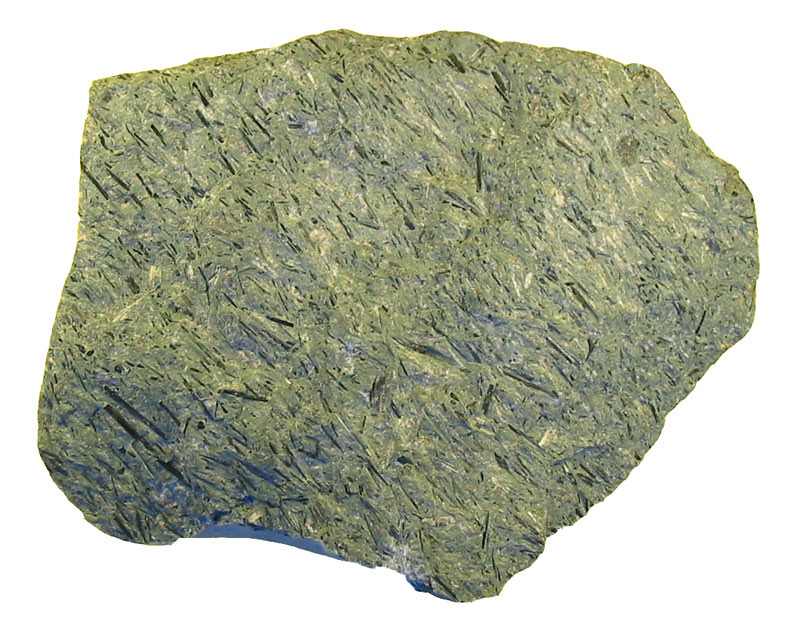
A silica-poor volcanic rock that splits into plates and rings when struck.
Photo: No machine-readable author provided. Siim assumed (based on copyright claims)., CC BY-SA 3.0
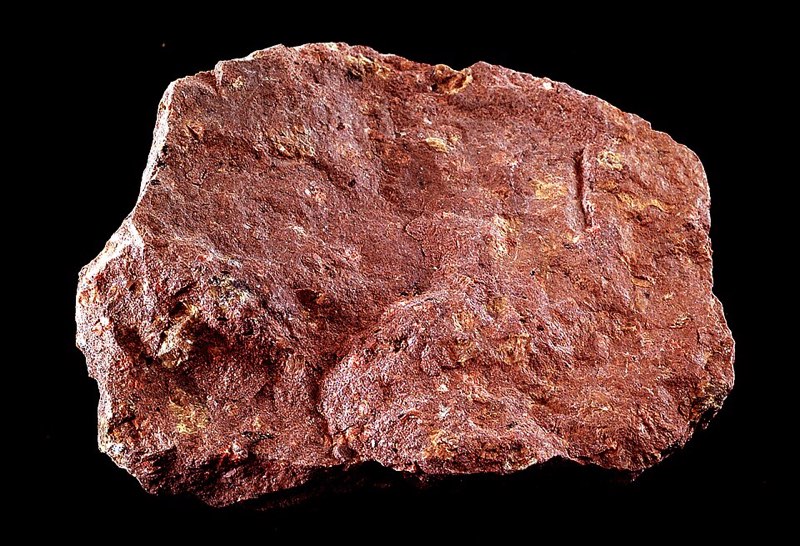
A pale volcanic rock rich in alkali feldspar, with a rough feel (its name means 'rough').
Photo: Joseph H. Hartman, CC0
Key differences
- Trachyte is rougher and contains no nepheline.
- Phonolite is greener and rings when struck.
Side by side
| Property | Phonolite | Trachyte |
|---|---|---|
| Type | Igneous rock | Igneous rock |
| Mohs hardness | 5.5–6 | 6 |
| Luster | Dull to greasy | Dull |
| Colors | Gray, Green | Gray, White, Brown |
| Crystal system / structure | Fine-grained, often platy | Fine-grained, aligned feldspar |
| Specific gravity | 2.4–2.6 | 2.4–2.6 |
| Found in | Devils Tower, Wyoming; Mount Teide, Canary Islands | Drachenfels, Germany; Euganean Hills, Italy |
Properties that are the same for both are grayed out.
How to identify phonolite
- Gray-green, fine-grained, slightly greasy.
- Splits into flat slabs.
- Rings like a bell when hit.
Structure: Fine-grained, often platy
Full Phonolite guide →How to identify trachyte
- Light gray to tan, rough to the touch.
- Small aligned feldspar laths.
- Little or no quartz.
Structure: Fine-grained, aligned feldspar
Full Trachyte guide →More comparisons
Could you tell them apart from a blurry close-up?
Play today's Rocksday