 Rocksday
Monazite vs Zircon
How to tell them apart
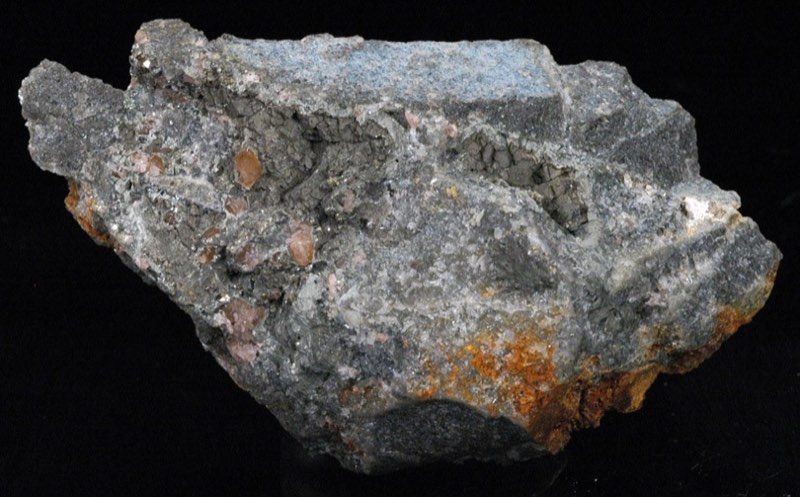
A rare-earth phosphate, slightly radioactive from thorium, concentrated in heavy beach sands.
Photo: Robert M. Lavinsky, CC BY-SA 3.0
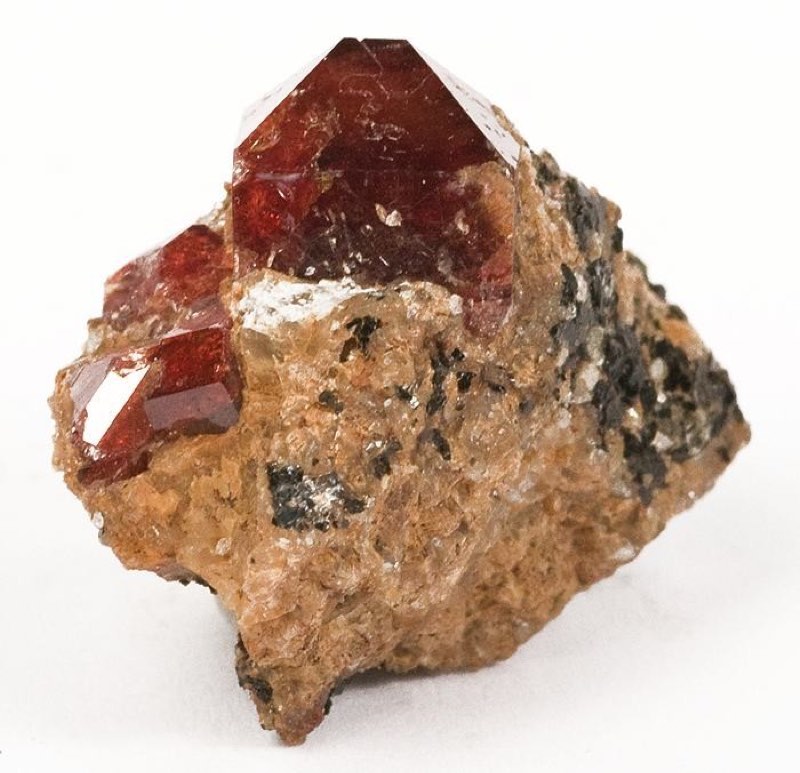
A heavy, brilliant silicate found as small crystals in many rocks. Natural zircon is not the same as synthetic cubic zirconia.
Photo: Robert M. Lavinsky, CC BY-SA 3.0
Quick tests
- Hardness: Zircon is clearly harder: Mohs 7.5 versus 5–5.5.
Key differences
- Zircon is harder and forms square prisms.
Side by side
| Property | Monazite | Zircon |
|---|---|---|
| Type | Mineral | Mineral |
| Mohs hardness | 5–5.5 | 7.5 |
| Luster | Resinous to vitreous | Adamantine |
| Streak | White | White |
| Colors | Brown, Yellow, Red | Brown, Red, Yellow, Blue, Clear |
| Crystal system | Monoclinic | Tetragonal |
| Specific gravity | 4.6–5.4 | 4.6–4.7 |
| Formula | (Ce,La,Nd,Th)PO₄ | ZrSiO₄ |
| Found in | Beach sands of Kerala, India; Brazil | Sri Lanka; Ratanakiri, Cambodia |
Properties that are the same for both are grayed out.
How to identify monazite
- Small yellow-brown grains or wedge crystals.
- Heavy for its color.
- Weakly radioactive.
Crystal system: Monoclinic
Full Monazite guide →How to identify zircon
- Square prisms capped with pyramids.
- Very bright luster and heavy for its size.
- Facet edges look doubled through a cut stone.
Crystal system: Tetragonal
Full Zircon guide →More comparisons
Could you tell them apart from a blurry close-up?
Play today's Rocksday