 Rocksday
Moldavite vs Tektite
How to tell them apart
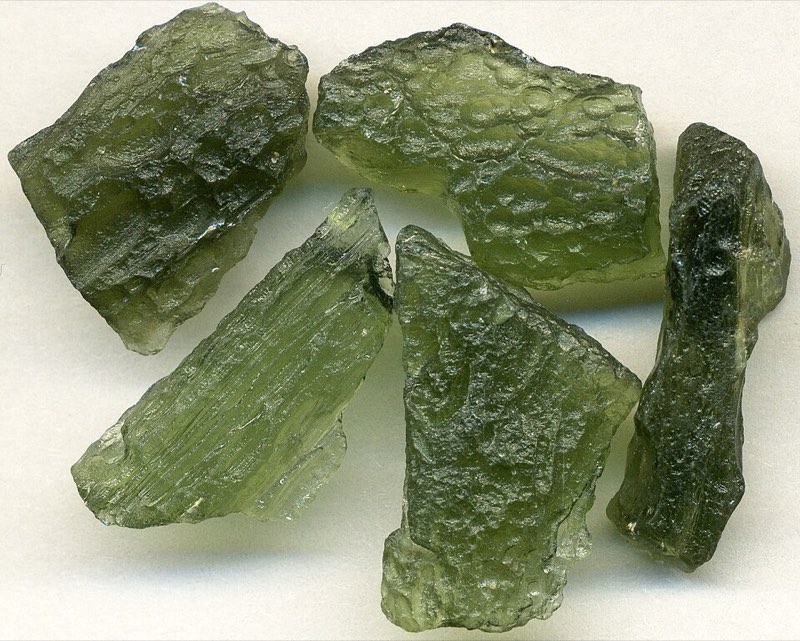
Bottle-green natural glass created by a meteorite impact in southern Germany about 15 million years ago.
Photo: James St. John, CC BY 2.0
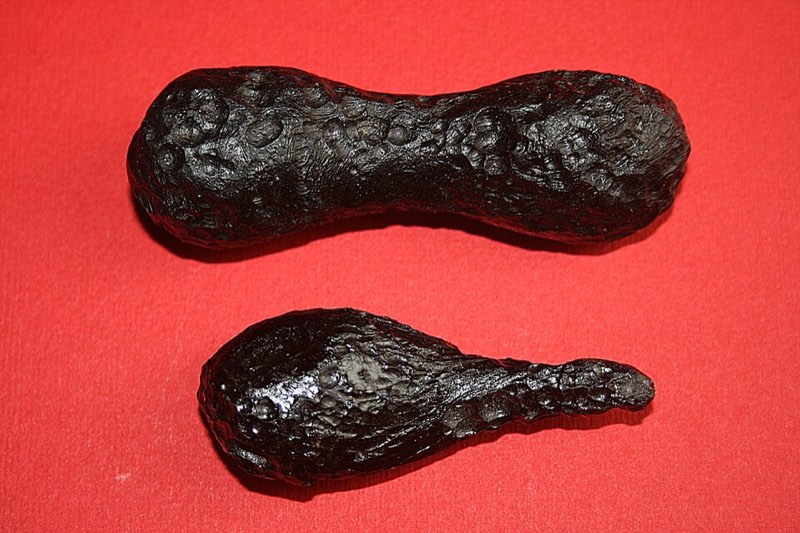
Natural glass blobs thrown out by meteorite impacts, often in aerodynamic shapes like buttons and teardrops.
Photo: Brocken Inaglory, CC BY-SA 3.0
Key differences
- Other tektites are black or brown, not green.
- Moldavite is green.
Side by side
| Property | Moldavite | Tektite |
|---|---|---|
| Type | Mineraloid | Mineraloid |
| Mohs hardness | 5.5–7 | 5.5–6.5 |
| Luster | Vitreous | Vitreous to dull |
| Colors | Green | Black, Brown |
| Crystal system / structure | Amorphous (impact glass) | Amorphous (impact glass) |
| Specific gravity | 2.32–2.38 | 2.3–2.5 |
| Found in | South Bohemia, Czech Republic; Ries crater area, Germany | Southeast Asia; Australia |
Properties that are the same for both are grayed out.
How to identify moldavite
- Translucent forest to olive green.
- Deeply sculpted, wrinkled surface.
- Tiny bubbles and swirls inside; fakes are often too clean and evenly colored.
Structure: Amorphous (impact glass)
Full Moldavite guide →How to identify tektite
- Black, pitted, often teardrop, disc or dumbbell shaped.
- Thin edges are dark brown, not clear.
- Lighter than they look.
Structure: Amorphous (impact glass)
Full Tektite guide →More comparisons
Could you tell them apart from a blurry close-up?
Play today's Rocksday