 Rocksday
Hemimorphite vs Smithsonite
How to tell them apart
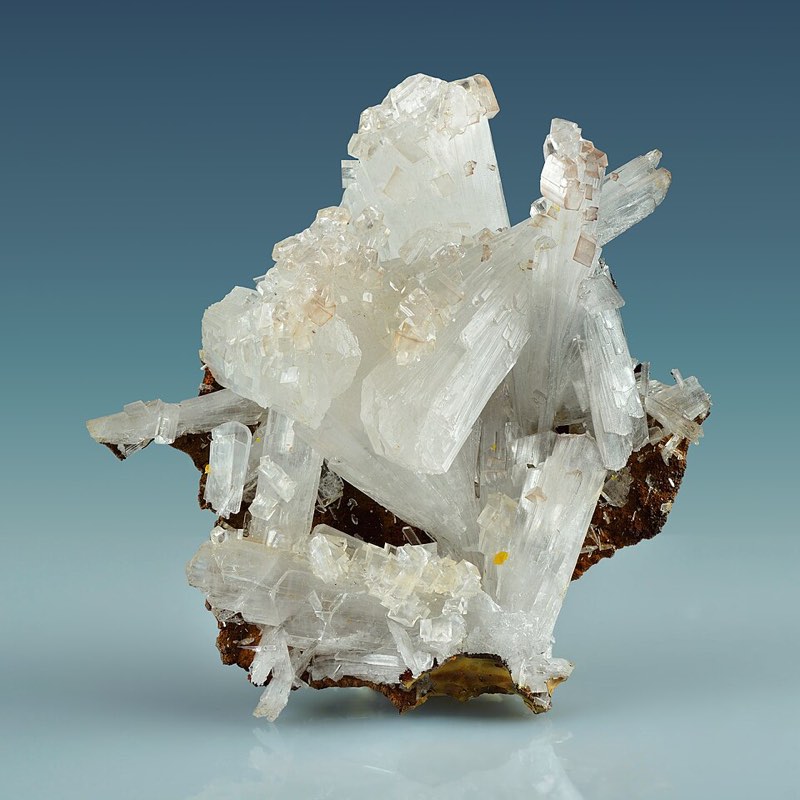
A zinc silicate forming sky-blue bubbly crusts or white bladed crystals.
Photo: Ivar Leidus, CC BY-SA 4.0
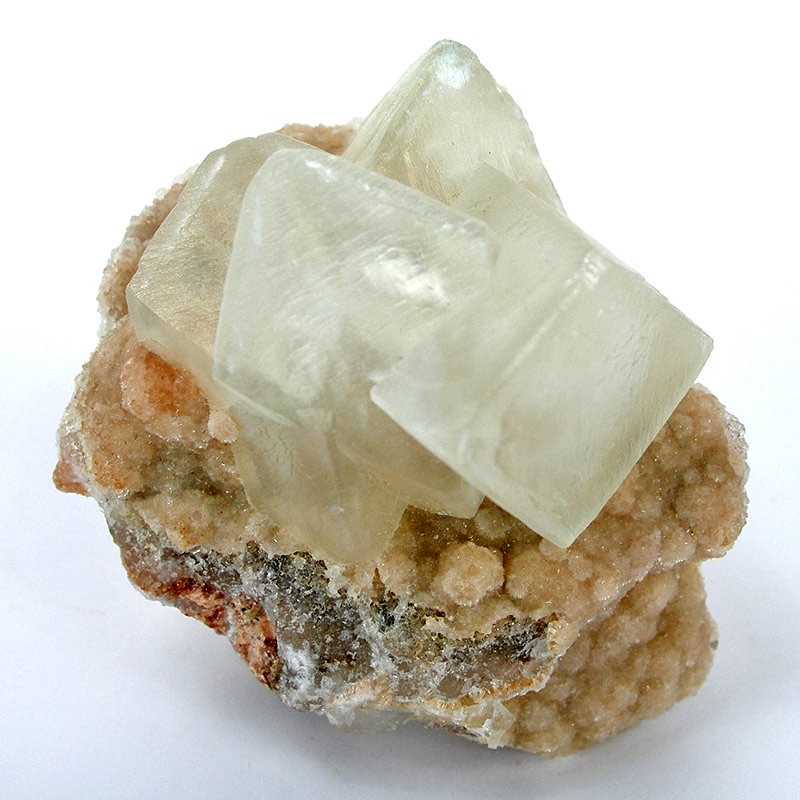
Zinc carbonate forming lustrous, bubbly crusts in pastel blue, green, pink and yellow.
Photo: Robert M. Lavinsky, CC BY-SA 3.0
Quick tests
- Acid (vinegar or dilute HCl): Smithsonite fizzes weakly, or only when powdered or warmed; Hemimorphite doesn't.
Key differences
- Smithsonite is heavier and fizzes in warm acid.
- Hemimorphite is lighter and doesn't fizz.
Side by side
| Property | Hemimorphite | Smithsonite |
|---|---|---|
| Type | Mineral | Mineral |
| Mohs hardness | 4.5–5 | 4.5 |
| Luster | Vitreous to silky | Vitreous to pearly |
| Streak | White | White |
| Colors | Blue, White, Clear | Blue, Green, Pink, Yellow |
| Crystal system | Orthorhombic | Trigonal |
| Specific gravity | 3.4–3.5 | 4.4–4.5 |
| Formula | Zn₄Si₂O₇(OH)₂·H₂O | ZnCO₃ |
| Found in | Yunnan, China; Chihuahua, Mexico | Kelly mine, New Mexico; Tsumeb, Namibia |
Properties that are the same for both are grayed out.
How to identify hemimorphite
- Pale sky-blue botryoidal crusts, or fans of colorless blades.
- Crystals have different shapes at each end.
- Does not fizz in acid.
Crystal system: Orthorhombic
Full Hemimorphite guide →How to identify smithsonite
- Botryoidal crusts with a satiny, pearly sheen.
- Heavy for its look.
- Fizzes in warm acid.
Crystal system: Trigonal
Full Smithsonite guide →More comparisons
Could you tell them apart from a blurry close-up?
Play today's Rocksday