 Rocksday
Grossular vs Vesuvianite
How to tell them apart
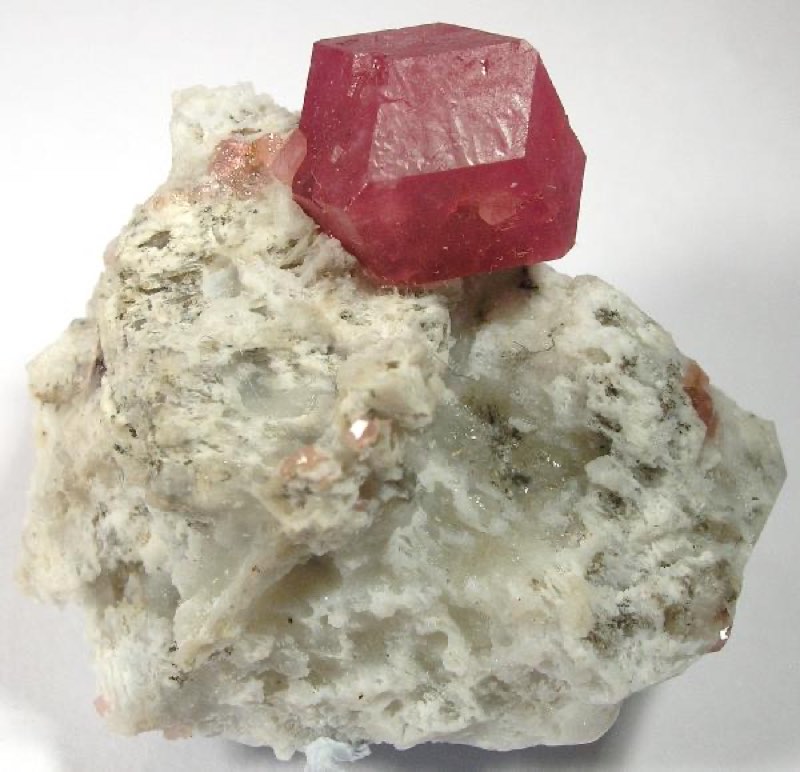
Calcium aluminum garnet in more colors than any other garnet — green tsavorite and cinnamon hessonite are the best known.
Photo: Robert M. Lavinsky, CC BY-SA 3.0
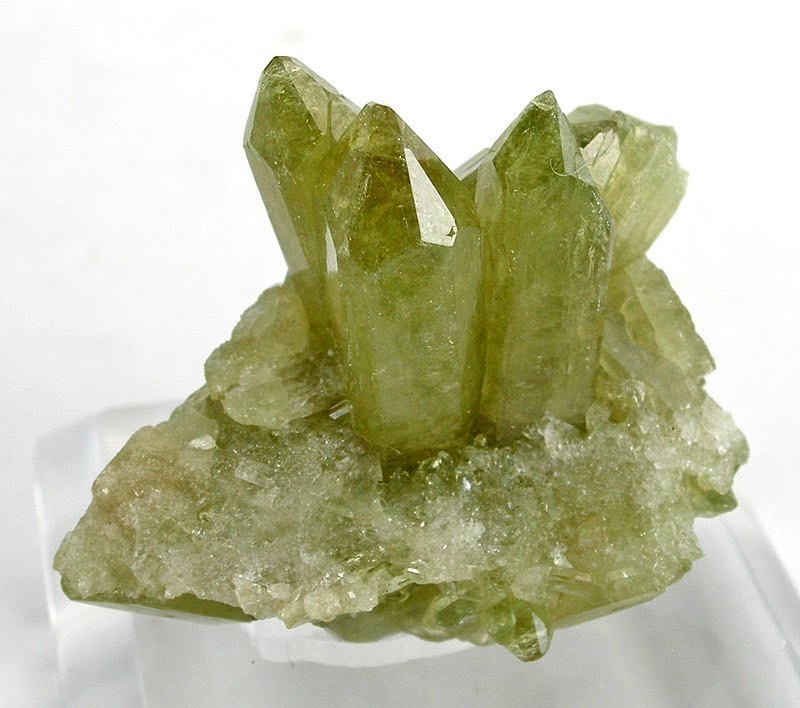
A silicate of contact-metamorphosed limestones, forming square prisms in greens and browns.
Photo: Robert M. Lavinsky, CC BY-SA 3.0
Key differences
- Grossular forms rounded garnet crystals.
Side by side
| Property | Grossular | Vesuvianite |
|---|---|---|
| Type | Mineral | Mineral |
| Mohs hardness | 6.5–7.5 | 6–7 |
| Luster | Vitreous | Vitreous to resinous |
| Streak | White | White |
| Colors | Green, Orange, Brown, Pink | Green, Brown, Yellow, Purple |
| Crystal system | Cubic | Tetragonal |
| Specific gravity | 3.57–3.73 | 3.32–3.43 |
| Formula | Ca₃Al₂(SiO₄)₃ | Ca₁₀(Mg,Fe)₂Al₄(SiO₄)₅(Si₂O₇)₂(OH,F)₄ |
| Found in | Tsavo, Kenya; Tanzania | Mount Vesuvius, Italy; Jeffrey mine, Quebec |
Properties that are the same for both are grayed out.
How to identify grossular
- Rounded garnet crystals in green, orange, pink or brown.
- Hardness about 7.
- Hessonite often looks 'swirly' inside, like syrup in water.
Crystal system: Cubic
Full Grossular guide →How to identify vesuvianite
- Square-sectioned prisms with striations.
- Olive green to brown, glassy.
- Hardness about 6.5.
Crystal system: Tetragonal
Full Vesuvianite guide →More comparisons
Could you tell them apart from a blurry close-up?
Play today's Rocksday