 Rocksday
Goshenite vs Phenakite
To tell Goshenite from Phenakite: Phenakite is heavier and forms rhombs, not long hexagonal prisms.
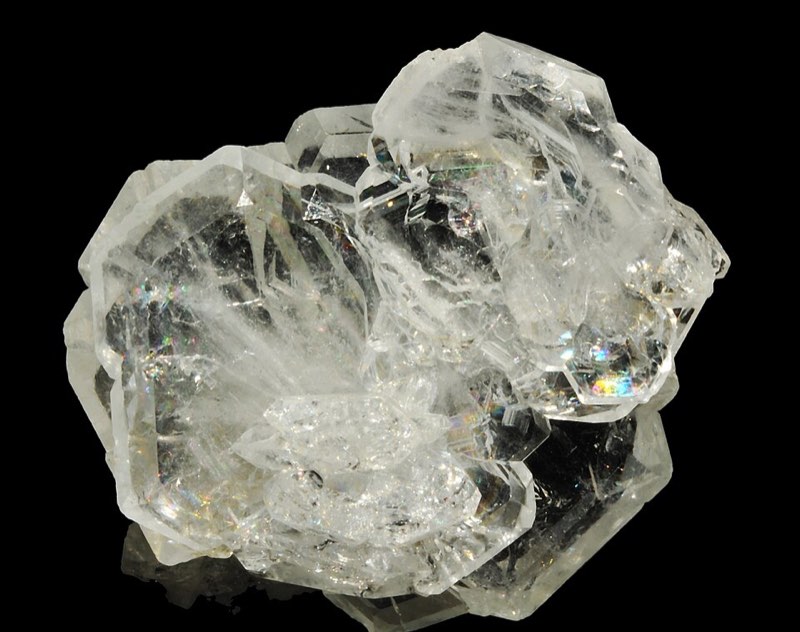
Colorless beryl — the same mineral as emerald and aquamarine, without the impurities that give those their color.
Photo: Géry PARENT, CC BY-SA 3.0
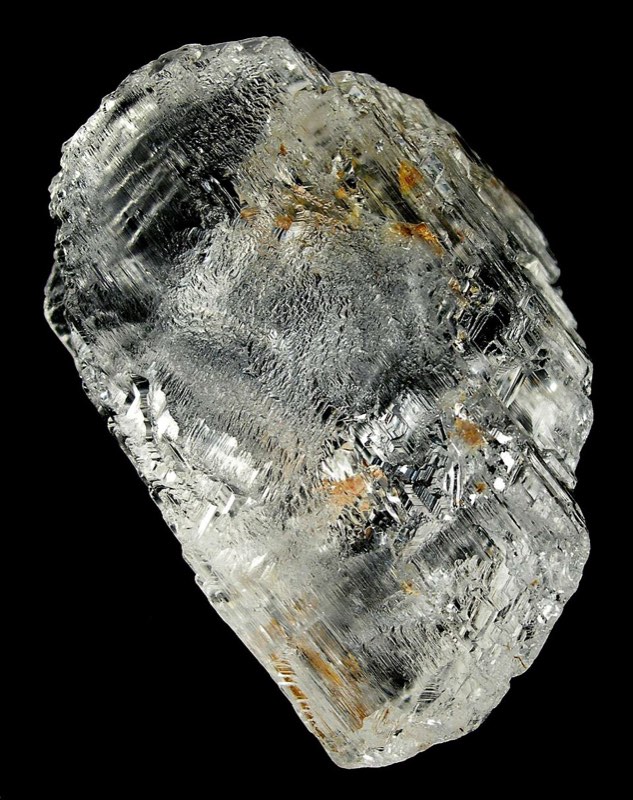
A rare, hard beryllium silicate that looks much like quartz.
Photo: Robert M. Lavinsky, CC BY-SA 3.0
Key differences
- Phenakite is heavier and forms rhombs, not long hexagonal prisms.
Side by side
| Property | Goshenite | Phenakite |
|---|---|---|
| Type | Mineral | Mineral |
| Mohs hardness | 7.5–8 | 7.5–8 |
| Luster | Vitreous | Vitreous |
| Streak | White | White |
| Colors | Clear, White | Clear, White, Yellow |
| Crystal system | Hexagonal | Trigonal |
| Specific gravity | 2.7–2.9 | 2.93–3 |
| Formula | Be₃Al₂Si₆O₁₈ | Be₂SiO₄ |
| Found in | Goshen, Massachusetts; Minas Gerais, Brazil | Ural Mountains, Russia; Minas Gerais, Brazil |
Properties that are the same for both are grayed out.
How to identify goshenite
- Water-clear six-sided columns with flat ends.
- Harder than quartz.
- Often in pegmatites with other beryl.
Crystal system: Hexagonal
Full Goshenite guide →How to identify phenakite
- Clear, glassy crystals — flat rhombohedral or short prisms.
- Harder than quartz.
- Often twinned into penetrating crystals.
Crystal system: Trigonal
Full Phenakite guide →More comparisons
Frequently asked questions
What is the difference between goshenite and phenakite?
Goshenite is a mineral (Be₃Al₂Si₆O₁₈) with a Mohs hardness of 7.5–8 and a vitreous luster, usually colorless or white. Phenakite is a mineral (Be₂SiO₄) with a Mohs hardness of 7.5–8 and a vitreous luster, usually colorless, white or yellow.
How can you tell goshenite from phenakite?
Phenakite is heavier and forms rhombs, not long hexagonal prisms.
Could you tell them apart from a blurry close-up?
Play today's Rocksday