 Rocksday
Goethite vs Limonite
How to tell them apart
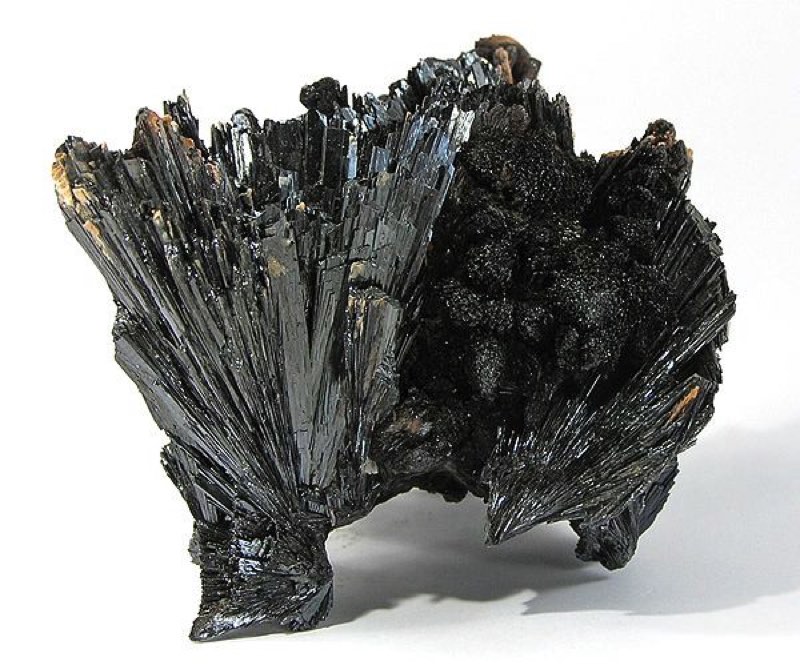
An iron oxyhydroxide forming dark bubbly or velvety masses, and the main component of rust.
Photo: Robert M. Lavinsky, CC BY-SA 3.0
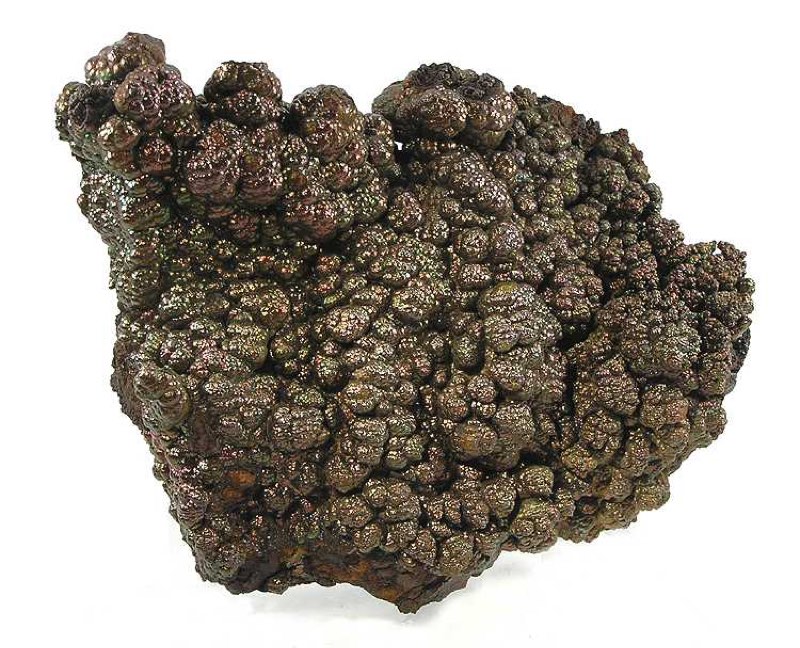
A rusty mixture of hydrated iron oxides, not a single mineral. It forms where iron-rich rocks weather.
Photo: Robert M. Lavinsky, CC BY-SA 3.0
Key differences
- Limonite is earthy and lacks crystal structure.
- Goethite is crystalline, often shiny and fibrous.
Side by side
| Property | Goethite | Limonite |
|---|---|---|
| Type | Mineral | Mineraloid |
| Mohs hardness | 5–5.5 | 4–5.5 |
| Luster | Adamantine to silky | Earthy to dull |
| Streak | Yellowish brown | Yellowish brown |
| Colors | Brown, Black, Yellow | Brown, Yellow, Orange |
| Crystal system / structure | Orthorhombic | Amorphous mixture |
| Specific gravity | 3.3–4.3 | 2.7–4.3 |
| Formula | FeO(OH) | FeO(OH)·nH₂O |
| Found in | Pikes Peak, Colorado; Cornwall, England | Bogs and weathered iron deposits worldwide |
Properties that are the same for both are grayed out.
How to identify goethite
- Black-brown botryoidal masses, often with iridescent tarnish.
- Yellow-brown streak.
- Radiating fibers when broken.
Crystal system: Orthorhombic
Full Goethite guide →How to identify limonite
- Rusty yellow-brown, earthy masses.
- Yellowish-brown streak.
- Often fills holes or replaces pyrite cubes.
Structure: Amorphous mixture
Full Limonite guide →More comparisons
Could you tell them apart from a blurry close-up?
Play today's Rocksday