 Rocksday
Gneiss vs Schist
How to tell them apart
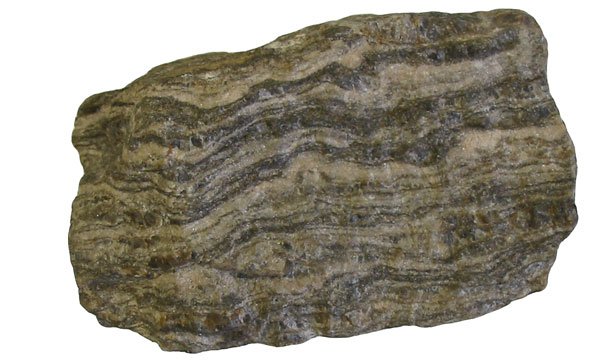
A high-grade metamorphic rock with bold light and dark bands, formed under intense heat and pressure.
Photo: No machine-readable author provided. Siim assumed (based on copyright claims)., CC BY-SA 3.0
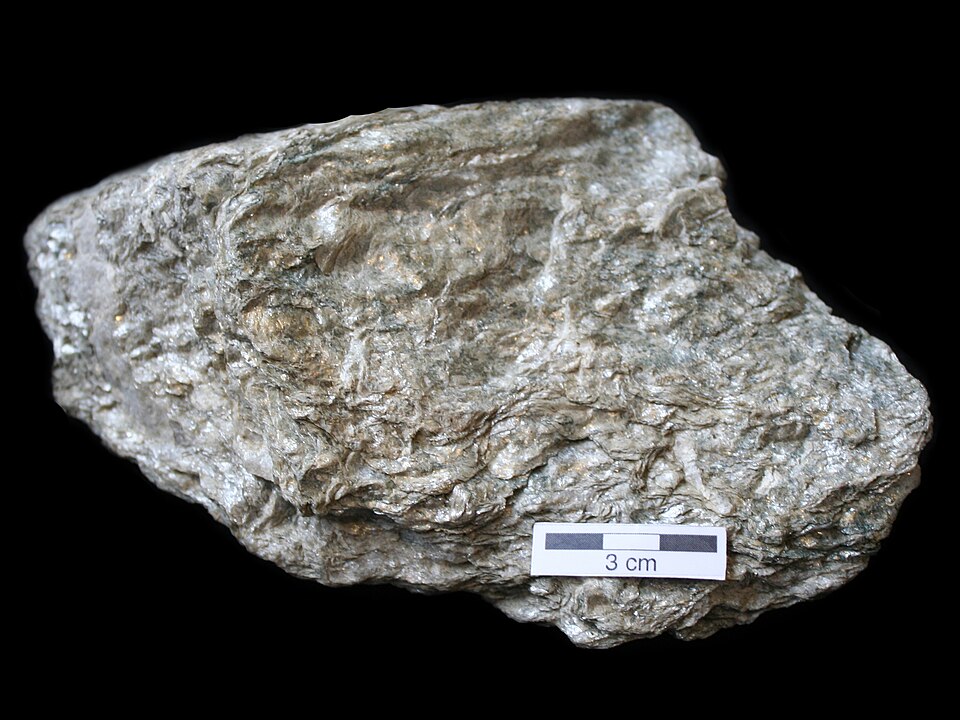
A shimmering metamorphic rock full of aligned mica flakes, often studded with garnets.
Photo: Michael C. Rygel, CC BY-SA 3.0
Quick tests
- Scratch glass: Gneiss scratches glass (Mohs 6–7); Schist can't (Mohs 4–5).
Key differences
- Schist is flakier and more mica-rich.
- Gneiss has distinct light/dark bands and less mica.
Side by side
| Property | Gneiss | Schist |
|---|---|---|
| Type | Metamorphic rock | Metamorphic rock |
| Mohs hardness | 6–7 | 4–5 |
| Luster | Granular | Glittery |
| Colors | Gray, White, Black, Pink | Silver, Gray, Green |
| Crystal system / structure | Coarse, banded | Medium-grained, foliated |
| Specific gravity | 2.6–2.9 | 2.7–3 |
| Found in | Acasta River, Canada; Outer Hebrides, Scotland | Manhattan, New York; Grand Canyon (Vishnu Schist) |
Properties that are the same for both are grayed out.
How to identify gneiss
- Alternating light and dark bands, often wavy.
- Coarse, visible grains.
- Hard; doesn't split into sheets.
- Bands may be folded.
Structure: Coarse, banded
Full Gneiss guide →How to identify schist
- Glitters with visible mica.
- Wavy, flaky layers.
- Often contains red garnets or other crystals.
- Splits unevenly along layers.
Structure: Medium-grained, foliated
Full Schist guide →More comparisons
Could you tell them apart from a blurry close-up?
Play today's Rocksday