 Rocksday
Fuchsite vs Muscovite
How to tell them apart
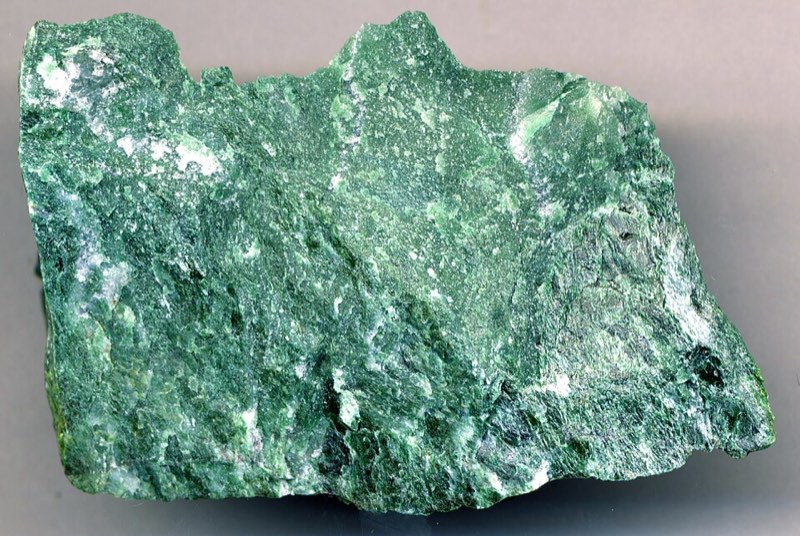
A sparkly green chromium-rich variety of muscovite mica.
Photo: James St. John, CC BY 2.0
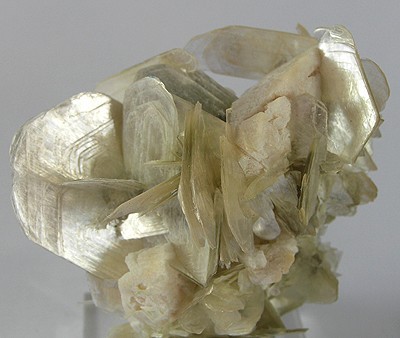
Light-colored mica that peels into paper-thin, transparent and flexible sheets. Its flakes are what make many rocks glitter.
Photo: Robert M. Lavinsky, CC BY-SA 3.0
Key differences
- Ordinary muscovite isn't green.
Side by side
| Property | Fuchsite | Muscovite |
|---|---|---|
| Type | Mineral | Mineral |
| Mohs hardness | 2–3 | 2–2.5 |
| Luster | Pearly | Vitreous to pearly |
| Streak | White | White |
| Colors | Green | Clear, Silver, Brown |
| Crystal system | Monoclinic | Monoclinic |
| Specific gravity | 2.8–2.9 | 2.76–2.88 |
| Formula | K(Al,Cr)₂(AlSi₃O₁₀)(OH)₂ | KAl₂(AlSi₃O₁₀)(OH)₂ |
| Found in | Minas Gerais, Brazil; India | Pegmatites of North Carolina; New Hampshire |
Properties that are the same for both are grayed out.
How to identify fuchsite
- Emerald-green glittery flakes.
- Peels into thin, flexible sheets.
- Soft — a fingernail scratches it.
Crystal system: Monoclinic
Full Fuchsite guide →How to identify muscovite
- Peels into thin sheets that spring back when bent.
- Transparent to silvery and sparkly.
- Soft — scratched by a fingernail across the sheets.
- Stacked 'books' of sheets in pegmatites.
Crystal system: Monoclinic
Full Muscovite guide →More comparisons
Could you tell them apart from a blurry close-up?
Play today's Rocksday